
Dizayn va qurish a bahorda rulon tayyorlash mashinasi oziq-ovqat texnikalarini dizaynini birlashtiradigan murakkab muhandislik loyihasidir, termodinamika, Avtomatlashtirishni boshqarish, Zanglamaydigan po'latdan yasalgan to'qnashuv, va xavfsizlikni sertifikatlash. Muzlatilgan bahor rulosiga global talab bilan, bahor rulosi, tuxum rulosi, va Vetnamlik rulolari tez sur'atlar bilan o'smoqda, Ko'proq fabrikalar bahor rulzi ishlab chiqaruvchisini sozlash yoki uyda ishlab chiqarishni ko'rib chiqmoqda.
Men ko'rsataman Qanday qilib bahorda rulon tayyorlash mashinasini qurish kerak, Bu qanday tarkibiy qismlar kerak, Har bir quyi tizim qanday ishlaydi, va qaysi muhandislik standartlari talab qilinadi. Uskunalar ishlab chiqaruvchilar uchun yozilgan, OEM / ODM dizaynerlari, Oziq-ovqat fabrikasi muhandislari, Bu bahorgi rulonni ishlab chiqarish liniyasini qanday loyihalashtirishni o'rganmoqda.
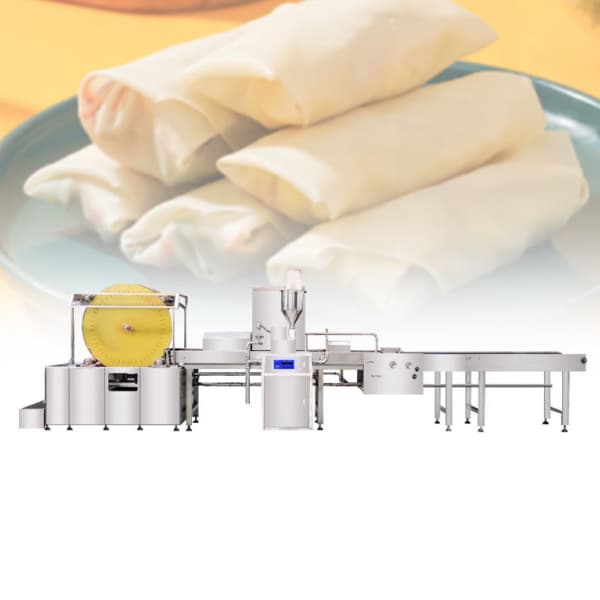
1. Bahor rulonini tayyorlash mashinasining maqsadini tushunish
Har qanday mashina loyihalashtirish yoki qurishdan oldin, Siz uning maqsadini aniqlashingiz kerak. A bahorda rulon tayyorlash mashinasi quyidagi muhim funktsiyalarni to'ldirish kerak:
- Aralashtirish va etkazib berish
- Yupqa ishlab chiqarish, Yagona pripper varaqalari
- Pishirish paketlari teng ravishda
- Sovutish va uzatish
- Omonatni to'g'ri to'ldiradi
- O'rash va buklash o'rash
- Izchil ishlab chiqarish, Yagona bahor rulosi
1.1 Umumiy ismlar va uzoq quyruq kalit so'zlari
Bahorda rulon tayyorlash mashinasi ham deyishi mumkin:
- Bahor rulosi ishlab chiqarish liniyasi
- Avtomatik bahor rulosi ishlab chiqaruvchisi
- Bahor rulosi shakllantirish mashinasi
- Tuxumlarni tayyorlash mashinasi
- Lumpia mashinasi
- Bahorgi rulonli pripper mashinasi
- Peshtaxtalar ishlab chiqaruvchisi
Ushbu uzoq quyruq kalit so'zlari uskunaning turli xilligini qidirishda mijozlarni jalb qilishga yordam beradi.
2. Bahor rulosi tayyorlash mashinasi ortidagi yadro muhandislik printsiplari
Professional mashinani yaratish, Siz uning orqasida muhandislik nazariyasini tushunishingiz kerak.
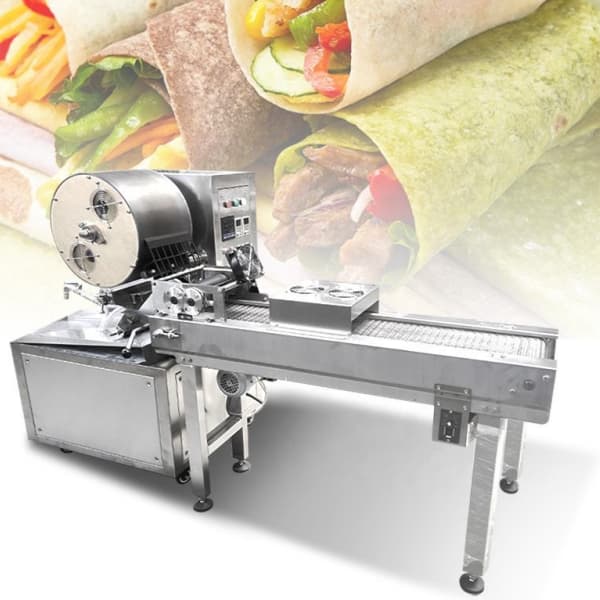
2.1 Issiqlikni uzatish va barabanni boshqarish
Tizim a ga aloqasi qizg'in aylanadigan baraban bu o'rashni pishiradi. Yagona issiqlik taqsimlanishi izchil tuzilish va qalinligini ta'minlaydi.
2.2 Tekshiruv avtomatlashtirish
Konveyer, omonatchi, o'rash mexanizmi, va aylantirish tizimi sinxronlashishda davom etishi kerak PLC nazorati, yoki o'rash muvaffaqiyatsiz bo'ladi.
2.3 Oziq-ovqat mahsulotlari tarkibiy dizayni
Barcha oziq-ovqat aloqa komponentlari foydalanishlari kerak Sys304 yoki Sys316 zanglamaydigan po'lat sanitariya payvandi bilan.
3. Bahor rulonchop mashinasining tarkibiy qismlari
To'liq Bahor rulosi ishlab chiqarish mashinasi to'qqizta asosiy kichik quyi tizimlardan iborat. Har bir quyi tizimni individual ravishda ishlab chiqilishi va sozlanishi kerak.
3.1 Aralash va oziqlantirish tizimi
Ushbu quyi tizim aralashmasi uni qizdirilgan barabanga o'tkazadi.
Asosiy tarkibiy qismlar
- Zanglamaydigan po'latdan yasalgan aralashtirish
- Agitator yoki yuqori tezlikda aralashtirish
- Batsozlik (tishli nasos yoki lob pompasi)
- Oqim stabilizator
- Sanitariya quvuri
Muhandislik masalalari
- Yopishqoqlik barqaror bo'lishi kerak
- Nasosni yumshatishi kerak, qabariqsiz urish
- CIP dizayni Tanlov vaqtini kamaytiradi
3.2 Qizg'in aylanadigan baraban (Pripper pishirish tizimi)
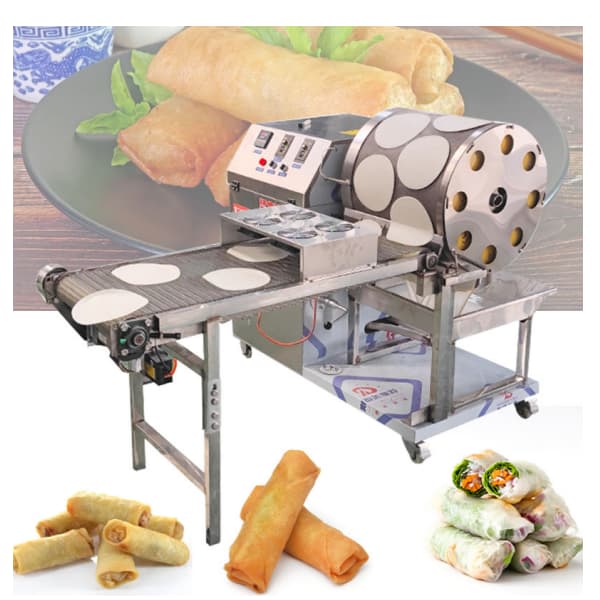
Baraban - bu yadro bahorgi rulonli pripper mashinasi.
Asosiy komponentlar
- Zanglamaydigan po'lat baraban
- Gaz yoki elektr isitish tizimi
- Harorat PID boshqaruvchisi
- Pichan pichog'i
- Baraban tezkor nazoratchi
Baraban talablari
- Yagona qalinlik
- To'liq parlatilgan sirt
- Hatto issiqlikni taqsimlash
- Imkoniyatni boshqarish uchun sozlanadigan tezlik
Yaxshi ishlab chiqarilgan baraban tijorat bahorgi ishlab chiqarish uchun mos keladigan ultra ingichka o'rashni keltirib chiqarishi mumkin.
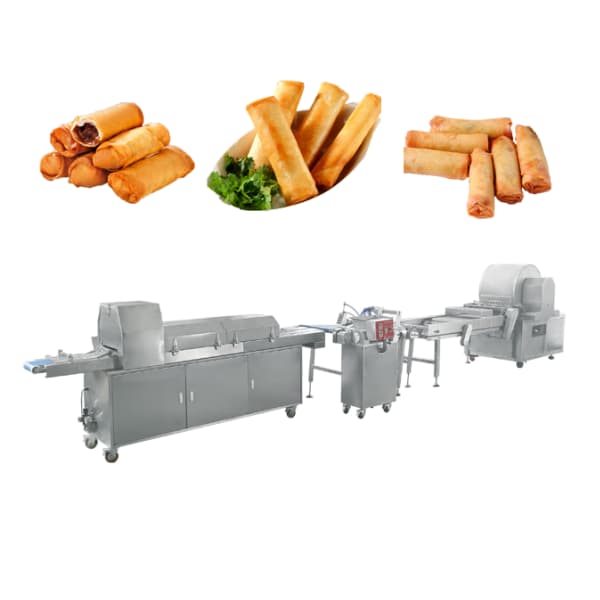
3.3 Peapper Peeling tizimi
Bir marta pishirilgan, o'rash barabanni bemalol tozalab qo'yilishi kerak.
Dizayn talablari
- Yuqori aniqlikdagi kattaroq
- Oziq-ovqat xavfsiz teflon qoplamasi
- Sozlanadigan qirrani burchak
- Issiqlikka chidamli qo'llab-quvvatlaydi
Kambag'al peeling tizimi yirtilgan o'rashda, ishlab chiqarish samaradorligini kamaytirish.
3.4 Konveyer tizimi tizimi
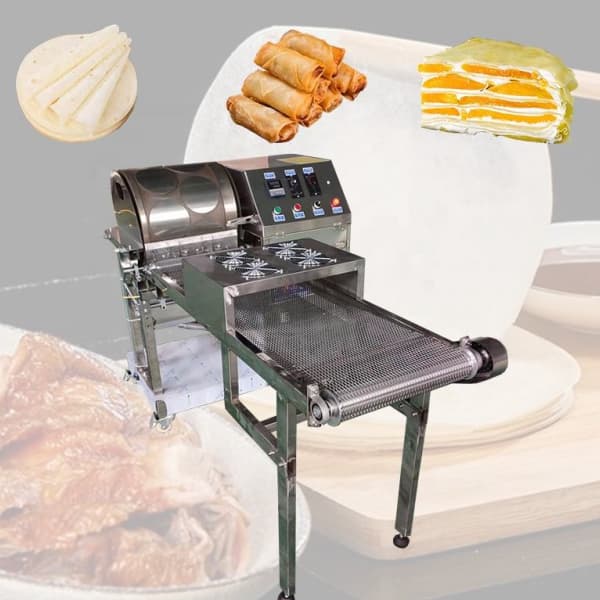
Konveyer o'rash stantsiyasiga o'ralgan.
Materiallar
- Silikon kamarlari
- PU Oziq-ovqat mahsulotlari kamarlari
- Teflon bilan qoplangan kamarlar
Vazifalar
- O'rashni sovutish
- Joylashtirish
- Sinxronlashtirishni davom ettirish
- Plomba bilan boqish
3.5 O'CHIRISH TIZIMI
To'ldirish a ning eng mos keladigan qismi bahorda rulon tayyorlash mashinasi.
Omonatchi turlari
- Taylang'och plomba
- Servo boshqaruvchisi
- Pnevmatik miqdoriy to'ldiruvchi plomba
- Konveyer + Kutter depozitori
Qiyinchiliklar
- To'ldirishni oldini olish
- Aniqlikni saqlang
- To'ldirish chiqindilarini kamaytirish
- Turli xil sabzavot yoki go'sht plombalariga moslashing
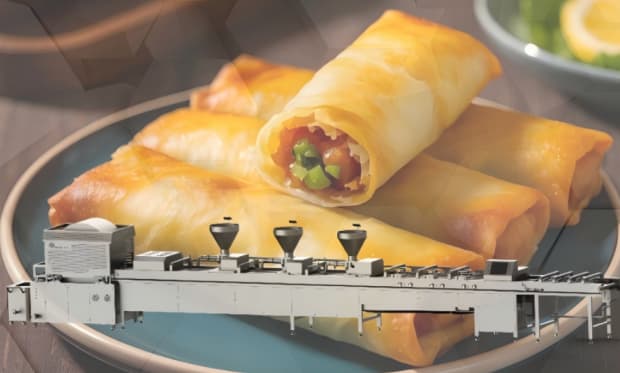
3.6 Katlama va aylantirish mexanizmi
Ushbu mexanizm bahorni yakuniy shaklini beradi.
Tarkibiy qismlar
- Sero tomonidan boshqariladigan katlanadigan qo'llar
- Pnevmatik silindrlar
- Yuvish kamarlari
- Katlama plitalari
Sozlanishi parametrlari
- O'rash hajmi
- Qattiqqo'llik
- Bosimni boshqarish
- Yakuniy diametr
Qovurilganda bo'shashmasdan tugatish yoki buzilishning oldini oladi.
3.7 PLC nazorati tizimi
The Avtomatik bahor rulosi ishlab chiqaruvchisi dasturlashtiriladigan nazoratni talab qiladi.
PLC xususiyatlari
- Retsept xotirasi
- Haroratni boshqarish
- Konveyer va baraban sinxronlash
- Signal tizimi
- Noto'g'ri diagnostika
Yaxshi ishlab chiqarilgan plc uzoq vaqt davomida ishlab chiqarish soatlari bo'yicha izchil sifatini ta'minlaydi.
3.8 Zanglamaydigan po'latdan va xavfsizlik tizimi
Oziq-ovqat mahsulotlari qurilishi o'z ichiga oladi:
- Zanglamaydigan po'latdan yasalgan ramka
- Suv o'tkazmaydigan elektr kabineti
- Shoshilinch to'xtatish tugmachalari
- Himoya qopqoqlari
- Slip bo'lmagan sozlash oyoqlari
- Oson toza tuzilmalar
3.9 Ixtiyoriy qo'shimcha tizimlar
Ishlab chiqaruvchilar ixtiyoriy modullarni qo'shishlari mumkin:
- Avtomatik aralashma liniyasi
- Oziq-ovqat tayyorlash tizimi
- Uzluksiz qovurdoq
- Spiral muzlatgich yoki IQF muzli tunnel
- Qadoqlash uskunalari
4. Bosqichma-bosqich qo'llanma: Qanday qilib bahorda rulon tayyorlash mashinasini qurish kerak
Ushbu dizayn yo'l xaritasi, sinovni rejalashtirishni rejalashtirishdan boshlab muhandislik jarayonini tushuntiradi.
4.1 Qadam 1: Ishlab chiqarish quvvatini aniqlang
Umumiy imkoniyatlar:
- 2000 PCS / soat
- 5000 PCS / soat
- 8000+ PCS / soat
Imkoniyat ta'sir qiladi:
- Baraban diametri
- Isitish quvvati
- Konveyer uzunligi
- Yuvish stantsiyalari soni
4.2 Qadam 2: Isitish usulini tanlang
Gaz isitish
- Tez isitish javobi
- Operatsion narxi
- Katta fabrikalar uchun mos
Elektr isitish
- Oson o'rnatish
- Kichik ustaxonalar uchun mos
- Gaz quvuri talab qilinmaydi
4.3 Qadam 3: Bir baraban dizayn
Asosiy dizayn elementlari o'z ichiga oladi:
- Baraban materiallari va qalinligi
- Baraban diametri
- Parlatish darajasi
- Isitish quvur yoki yonish tartibi
- Skrama pichog'i pozitsiyasi
Buzuqning sifati baraban dizayniga bog'liq.
4.4 Qadam 4: Mexanik tuzilishni quring
Foydalanish:
- CNC ishlov berish
- Lazer kesish
- Tigiter-sanitariya payvandlash
Ta'minlamoq:
- O'lik burchaklar yo'q
- Tozalangan sirtlar
- Suv o'tkazma ob'ekti
4.5 Qadam 5: Konveyerni o'rnating va sinxronizatsiya tizimini o'rnating
Motorlar bo'lishi kerak:
- Plc orqali sinxronlashtirildi
- O'zgaruvchan tezlik
- O'rash uzunligi va qalinligi bilan mos keladi
4.6 Qadam 6: To'ldirish tizimini integratsiyalash
Ushbu bosqichda, muhandislar yaxshi sozlashlari kerak:
- To'ldirish og'irlik
- To'ldirish harorati
- Oqim silliqligi
- Tekshiruvni kesish
4.7 Qadam 7: Yuvish va katlama birliklarini o'rnatish
Muhandislar moslashishi kerak:
- Bosim
- Vaqt
- Yo'llash tezligi
- Katlama burchaklari
4.8 Qadam 8: PLC dasturini ishlab chiqish
PLC boshqaruvi:
- Baraban harorati
- Vaqtni belgilash
- Hisoblash vaqtini to'ldirish
- Rolling mantig'i
- Motor sinxronlash
- Xavfsizlik signallari
4.9 Qadam 9: To'liq sinovni o'tkazing
Uchun sinov:
- O'rashning mustahkamligi
- To'ldirish aniqligini to'ldirish
- 24 soatlik ishonchlilik
- Yakuniy mahsulot bir xilligi
- Tozalash qulayligi
5. Bahor rulonini tayyorlash mashinasini qurish uchun xarajatlar smetasi
Odatda professional mashina xarajat qiladi:
| Tarkibiy qism | Hisoblangan narx |
|---|---|
| Zanglamaydigan po'latdan yasalgan materiallar | $3,000- $ 8,000 |
| Isitish tizimi | $2,000- $ 6,000 |
| Motors & konveyerlar | $3,000- $ 7,000 |
| To'ldirish tizimi | $5,000- $ 12,000 |
| PLC va elektronika | $2,000- $ 5,000 |
| Uydirma mehnati | $8,000- $ 20,000 |
Jami: $25,000 - $60,000 murakkablik va imkoniyatlarga qarab.
6. Agar siz bahorgi rulon mashinasini qurishingiz yoki shunchaki sotib olsangiz?
Bahorgi rulon mashinasini qurishda texnik jihatdan mumkin, bu talab qiladi:
- Tajribali mexanik muhandislar
- Elektr / plc dasturchilari
- Oziq-ovqat xavfsizligi bo'yicha bilimlar
- Oldindan ishlov berish vositalarlari
- Sinov vaqti
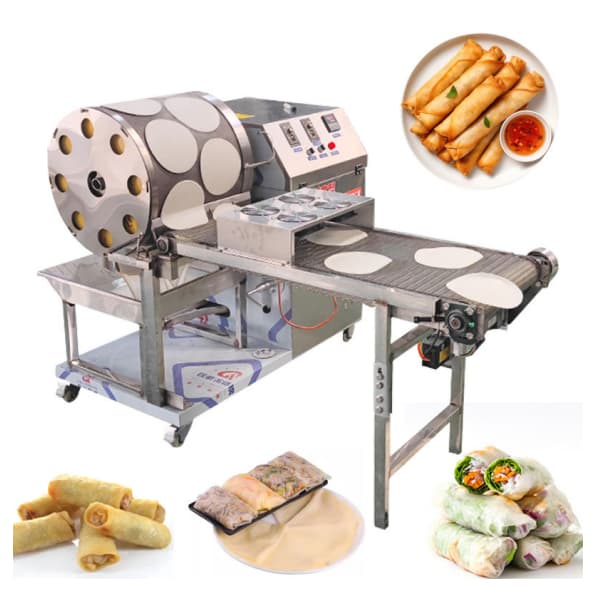
Oziq-ovqat fabrikasi uchun, Professional mashinani sotib olish tezroq, arzon, va yanada ishonchli.
Ishlab chiqaruvchilar DT oziq-ovqat mashinasi ta'minlay oladi:
- Shaxsiylashtirilgan o'rash hajmi
- Moslash materiallari tizimi
- Yuqori quvvatli ishlab chiqarish liniyalari
- Eksport-navli mashinalar
- Yamoq / Iso / XTKNN hujjatlari
Bahorgi rulon tayyorlash mashinasi dt Ovqat mashinasi
A bahorda rulon tayyorlash mashinasi issiqlik uzatilishida tajribani talab qiladi, Zanglamaydigan po'latdan yasalgan to'qnashuv, Avtomatlashtirish dizayni, va sinxronlashtirilgan nazorat. Bata aralashmasidan o'rash uchun pishirishga, to'ldirish, o'rash, yalang'och, va yakuniy shakllanish, Har bir quyi tizim izchil olib borishda muhim rol o'ynaydi, Tijorat sifatidagi bahor rulosi.
Ushbu to'liq qo'llanma dizayn mantig'ini tushuntiradi, Muhandislik printsiplari, Va professional bahor rulosi ishlab chiqarish liniyasining orqasida bosqichma-bosqich qurilish jarayoni, Ishlab chiqaruvchilarga mashina qanday ishlashini va noldan birini qurish uchun nima talab qilinadi.