
A procura global por frutas e vegetais processados continua a aumentar à medida que os consumidores procuram produtos mais saudáveis, mais seguro, e produtos alimentares mais convenientes. As fábricas de alimentos modernas contam com linhas avançadas de processamento de frutas e vegetais para melhorar a eficiência, manter a qualidade do produto, reduzir custos trabalhistas, e atender aos padrões internacionais de segurança alimentar.
Uma linha de processamento completa pode lidar com a lavagem, classificação, peeling, corte, branqueado, secagem, congelando, fritar, embalagem, e armazenamento. Esses sistemas são amplamente utilizados na produção de vegetais congelados, sucos de frutas, frutas secas, molhos, produtos enlatados, lanches, e alimentos prontos para consumo.
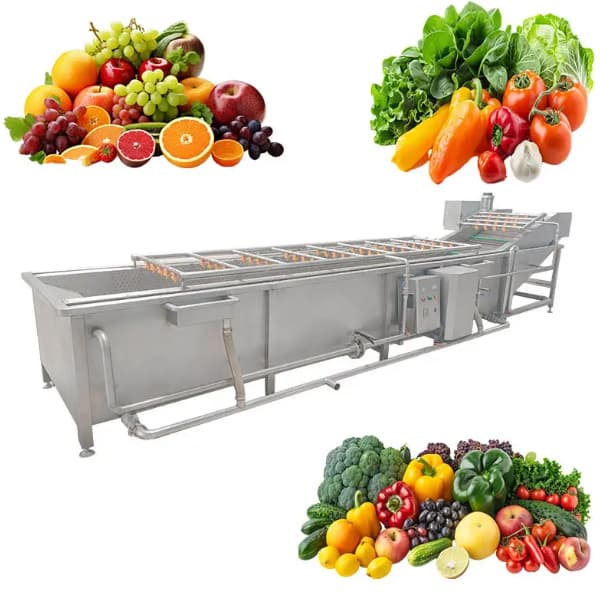
Introdução ao processamento de frutas e vegetais
O processamento de frutas e vegetais refere-se à transformação industrial de produtos agrícolas frescos em produtos alimentícios com maior prazo de validade e maior valor de mercado.. As tecnologias de processamento ajudam a preservar o frescor, melhorar a segurança alimentar, e criar produtos que sejam mais fáceis de transportar e armazenar.
Produtos frescos são altamente perecíveis. Sem manuseio adequado, frutas e vegetais podem estragar rapidamente durante o transporte e armazenamento. Portanto, as plantas de processamento usam máquinas especializadas e sistemas automatizados para manter a qualidade e aumentar a produtividade.
Hoje, fabricantes de alimentos processam uma ampla variedade de produtos, incluindo:
- Batatas fritas congeladas
- Batatas fritas
- Legumes congelados
- Pasta de tomate
- Purê de frutas
- Suco de frutas
- Pasta de alho
- Flocos de cebola
- Frutas secas
- Pós vegetais
- Misturas de vegetais prontas para cozinhar
As linhas de processamento industrial são projetadas para produção contínua e podem operar em capacidades que variam de centenas de quilogramas por hora a dezenas de toneladas por dia..
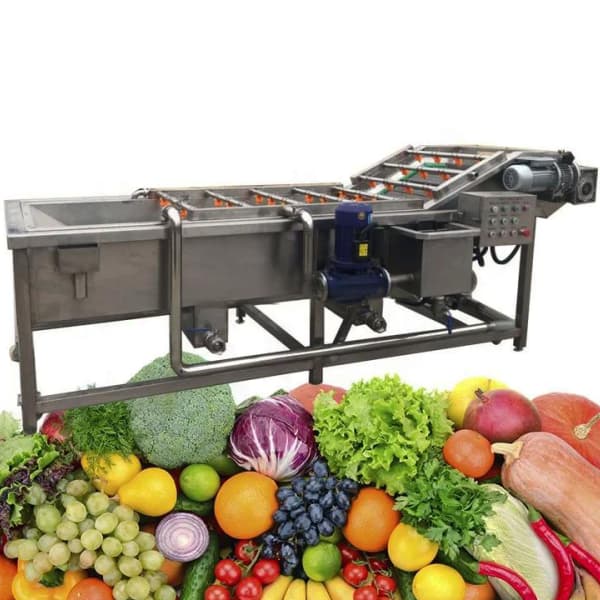
Importância do processamento de frutas e vegetais
A indústria de processamento de alimentos desempenha um papel vital na economia agrícola global. As modernas tecnologias de processamento ajudam a reduzir o desperdício de alimentos e, ao mesmo tempo, aumentam a disponibilidade do produto ao longo do ano.
Prolongando a vida útil
Frutas e vegetais frescos estragam rapidamente após a colheita. Métodos de processamento como congelamento, secagem, enlatados, e a pasteurização prolongam significativamente o tempo de armazenamento.
Aumentando o valor do produto
Processamento aumenta o valor comercial dos produtos agrícolas. Por exemplo:
- Batatas frescas transformam-se em batatas fritas ou batatas fritas congeladas
- Tomates viram ketchup ou pasta de tomate
- Mangas frescas transformam-se em suco ou salgadinhos de frutas secas
Os produtos processados geralmente geram lucros maiores do que as matérias-primas agrícolas.
Melhorar a segurança alimentar
Os sistemas de processamento industrial reduzem os riscos de contaminação através de lavagem controlada, esterilização, e procedimentos de embalagem higiênicos.
Reduzindo Perdas Pós-Colheita
Uma grande percentagem de produtos frescos é perdida durante o transporte e armazenamento. O processamento ajuda a reduzir o desperdício e melhorar a utilização de recursos.
Atendendo à demanda do consumidor
Os consumidores preferem cada vez mais alimentos convenientes que requerem um tempo mínimo de preparação. Os produtos processados de frutas e vegetais adaptam-se perfeitamente ao estilo de vida moderno.
Principais equipamentos utilizados no processamento de frutas e vegetais
As modernas fábricas de processamento de frutas e vegetais utilizam uma ampla gama de equipamentos especializados. Cada máquina executa uma tarefa específica dentro da linha de produção.
Sistemas de recebimento de matéria-prima
O processo de produção começa com o transporte de matéria-prima e sistemas de alimentação.
Equipamento comum inclui:
- Transportadores de correia
- Elevadores de caçamba
- Transportadores de rolos
- Alimentadores vibratórios
Esses sistemas transportam produtos de forma eficiente, reduzindo o trabalho manual e minimizando danos ao produto.
O aço inoxidável de qualidade alimentar é comumente usado porque é higiênico, durável, e resistente à corrosão.
Máquinas de lavar
A lavagem é uma das etapas mais importantes no processamento de alimentos porque os produtos frescos geralmente contêm sujeira, bactérias, pesticidas, pedras, e restos de plantas.
Diferentes sistemas de lavagem são usados dependendo do tipo de produto.
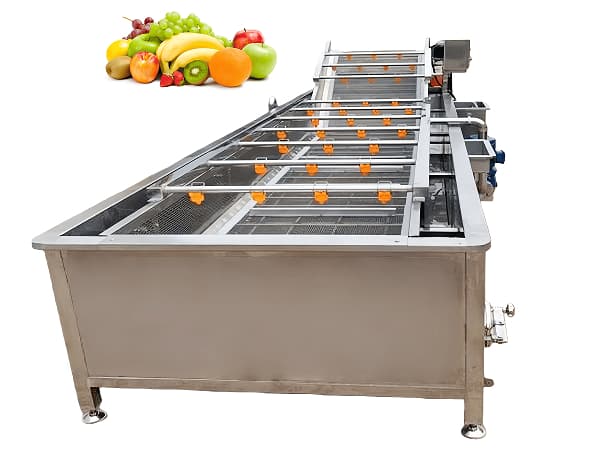
Máquina de lavar bolhas
Os sistemas de lavagem com bolhas usam bolhas de ar e água circulante para limpar delicadamente frutas e vegetais delicados.
Os produtos adequados incluem:
- Alface
- Espinafre
- Maçãs
- Tomates
- Morangos
Máquina de lavar rolo de escova
As lavadoras de escova usam rolos giratórios para remover a sujeira e a casca das raízes.
Aplicações comuns incluem:
- Batatas
- Cenouras
- Cassava
- Batata doce
- Ruivo
Sistema de lavagem por spray
Os sistemas de pulverização de alta pressão limpam os produtos de forma eficaz durante o transporte no transportador.
Equipamento de lavagem ultrassônica
A tecnologia ultrassônica remove contaminantes com mais precisão para produtos alimentícios premium.
Máquinas de classificação e classificação
Depois de lavar, os produtos são classificados de acordo com o tamanho, forma, cor, e qualidade.
As tecnologias modernas de classificação incluem:
- Graduadores de peso
- Motoniveladoras
- Sistemas de classificação óptica
- Máquinas de inspeção visual com IA
A classificação automatizada melhora a consistência e remove produtos defeituosos de forma eficiente.
Os sistemas de classificação óptica podem identificar:
- Descoloração
- Materiais estranhos
- Produtos danificados
- Variações de tamanho
Isso melhora a aparência do produto final e a qualidade da embalagem.
Equipamento de descascamento
Muitas frutas e vegetais precisam ser descascados antes de serem processados.
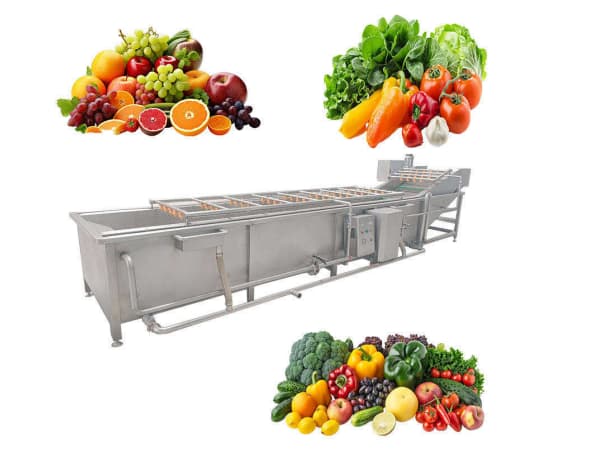
Máquina de descascar escova
Os descascadores de escova removem as películas externas finas por meio de fricção.
Adequado para:
- Batatas
- Cenouras
- Batata doce
Máquina de descascar a vapor
Os sistemas de peeling a vapor usam vapor de alta pressão para soltar a pele rapidamente.
As vantagens incluem:
- Baixa perda de material
- Superfície lisa do produto
- Alta eficiência de descascamento
Máquina descascadora de faca
Descascadores mecânicos de faca são utilizados para frutas com cascas mais grossas.
As aplicações incluem:
- Abacaxi
- Mangas
- Maçãs
Máquinas de corte e fatiamento
Equipamentos de corte transformam produtos em formatos e tamanhos específicos.
Os estilos de corte comuns incluem:
- Fatias
- Cubos
- Tiras
- Dados
- Fragmentos
- Cortes Julienne
Máquina de corte de batata
Usado para produção de batatas fritas e tiras de batata.
Máquina de cortar vegetais
Adequado para cebolas, cenouras, pimentão, pepinos, e produtos similares.
Máquina de fatiar frutas
Amplamente utilizado para maçãs, bananas, limões, e mangas.
O corte uniforme melhora:
- Consistência culinária
- Aparência do produto
- Eficiência de embalagem
- Velocidade de produção
Equipamento de branqueamento
O branqueamento é um processo curto de tratamento térmico usando água quente ou vapor.
Esta etapa ajuda:
- Inativar enzimas
- Preservar a cor natural
- Melhorar a textura
- Reduzir a contaminação microbiana
O branqueamento é comumente usado antes:
- Congelando
- Secagem
- Fritar
Sistemas comuns de branqueamento
- Branqueadores de água quente
- Branqueadores a vapor
- Máquinas de branqueamento contínuo
As fábricas de vegetais congelados utilizam amplamente sistemas de branqueamento contínuo.
Sistemas de resfriamento
Depois de escaldar ou cozinhar, os produtos devem ser resfriados rapidamente para evitar cozimento excessivo.
Os sistemas de refrigeração incluem:
- Tanques de resfriamento de água fria
- Túneis de resfriamento de ar
- Sistemas de resfriamento de água gelada
O resfriamento rápido mantém a textura do produto e a segurança alimentar.
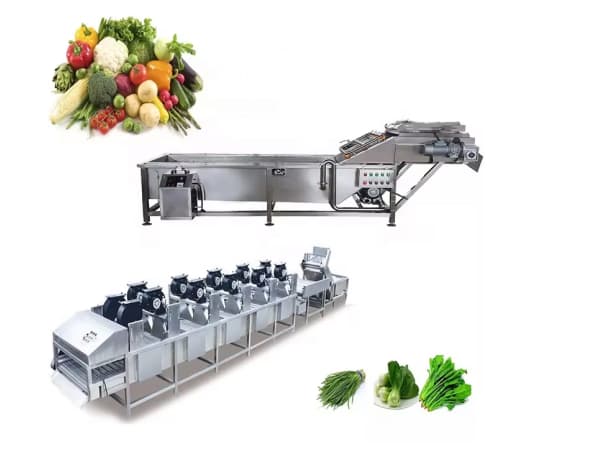
Equipamento de desidratação e secagem
A remoção do excesso de umidade melhora a qualidade do produto e a eficiência do processamento.
Máquina de desidratação vibratória
Usa vibração para remover água superficial.
Máquina de secagem de ar
Os sistemas de facas de ar removem a umidade por meio de fluxo de ar de alta pressão.
Máquina de desidratação centrífuga
A força centrífuga de alta velocidade remove a água de forma eficiente.
Esses sistemas são importantes antes do congelamento, fritar, ou embalagem.
Equipamento de fritura
Os sistemas de fritura são amplamente utilizados na produção de salgadinhos.
Produtos fritos populares incluem:
- Batatas fritas
- Batatas fritas
- Cebola frita
- Chips de banana
- Petiscos vegetais
Máquina de Fritura Contínua
Projetado para produção industrial em larga escala.
Máquina de fritar a vácuo
A fritura a vácuo usa temperaturas mais baixas para preservar os nutrientes, cor, e sabor.
Os sistemas avançados de fritura incluem:
- Filtragem automática de óleo
- Controle de temperatura
- Sistemas de alimentação contínua
- Tecnologia de circulação de óleo
Equipamento de congelamento
Produtos congelados de frutas e vegetais exigem tecnologia de congelamento rápido.
Congelador IQF
Os sistemas Quick Frozen individuais congelam os produtos separadamente em vez de em grandes blocos.
Os produtos IQF comuns incluem:
- Ervilhas
- Milho
- Morangos
- Cubos de manga
- Brócolis
Congelador Espiral
Os freezers espirais fornecem congelamento contínuo de alta capacidade para grandes fábricas.
O congelamento rápido ajuda:
- Preservar nutrientes
- Manter a textura
- Reduzir a formação de cristais de gelo
- Prolongue a vida útil
Equipamento de processamento de suco
A produção de suco de frutas requer maquinário especializado.
O equipamento típico de processamento de suco inclui:
- Trituradores de frutas
- Máquinas de polpação
- Extratores de suco
- Sistemas de filtragem
- Homogenistas
- Pasteurizadores
- Máquinas de enchimento
Produtos de suco comuns incluem:
- Suco de maçã
- Suco de laranja
- Suco de manga
- Suco de abacaxi
- Suco de tomate
A pasteurização garante a segurança microbiana enquanto prolonga a vida útil.
Equipamento de secagem
Os sistemas de secagem reduzem a umidade do produto para armazenamento a longo prazo.
Secador de ar quente
Amplamente utilizado na desidratação de vegetais e frutas.
Liofilizador
A liofilização preserva os nutrientes, textura, e sabor de forma eficaz.
Secador de microondas
Fornece secagem rápida e com baixo consumo de energia.
Produtos secos comuns incluem:
- Flocos de alho
- Cebola em pó
- Manga seca
- Chips de banana
- Pó vegetal
Máquinas de embalagem
A embalagem protege os produtos alimentícios durante o transporte e armazenamento.
Os formatos de embalagem populares incluem:
- Sacos de vácuo
- Sacos de travesseiro
- Garrafas
- Latas
- Bolsas
- Bandejas de plástico
O equipamento de embalagem pode incluir:
- Balanças multicabeçais
- Máquinas de embalagem vertical
- Sistemas de vedação a vácuo
- Máquinas de enchimento de garrafas
- Máquinas de rotulagem
Sistemas de embalagem automatizados reduzem custos de mão de obra e riscos de contaminação.
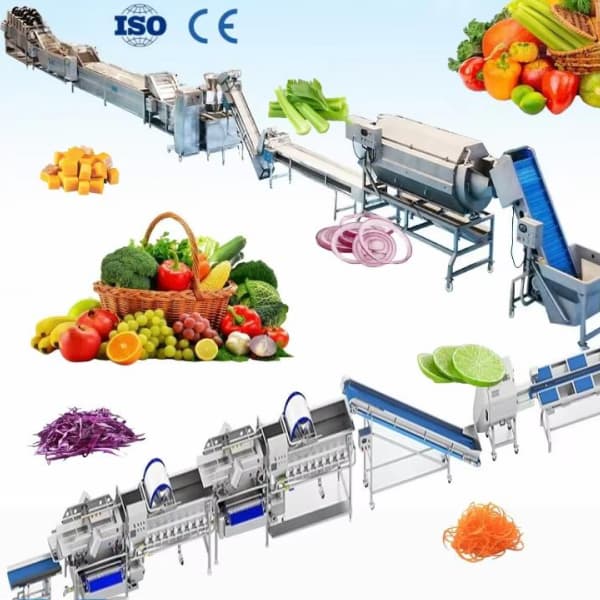
Etapas de produção em uma linha de processamento de frutas e vegetais
Embora produtos diferentes exijam tecnologias diferentes, a maioria das linhas de processamento segue um fluxo de trabalho semelhante.
Seleção de matéria-prima
Matérias-primas de alta qualidade são essenciais para a produção de produtos acabados de alta qualidade.
Fabricantes inspecionam:
- Frescura
- Maturação
- Tamanho
- Cor
- Condição da superfície
Produtos danificados ou estragados são removidos antes do processamento.
Lavagem e Limpeza
Os produtos são cuidadosamente lavados para remover contaminantes como:
- Solo
- Pó
- Pesticidas
- Pedras
- Resíduos vegetais
Algumas fábricas utilizam vários estágios de lavagem para melhor desempenho de limpeza.
Classificação e classificação
Os produtos são classificados de acordo com padrões de tamanho e qualidade.
Sistemas automatizados melhoram a eficiência e garantem a consistência do produto.
Peeling
Produtos que requerem remoção de pele entram em equipamentos de peeling.
Esta fase é comum para:
- Batatas
- Alho
- Cebolas
- Mangas
- Maçãs
Corte ou esmagamento
Os produtos são cortados nos formatos necessários ou triturados para extração do suco.
O corte uniforme melhora o desempenho do processamento posterior.
Branqueamento ou Pré-tratamento
O tratamento térmico estabiliza o produto antes do processamento posterior.
Algumas frutas também recebem tratamento anti-escurecimento para preservar a aparência.
Operação Principal de Processamento
A próxima etapa depende do produto final.
Exemplos incluem:
- Fritar para batatas fritas
- Secagem para pó vegetal
- Congelamento para vegetais IQF
- Pasteurização para suco de frutas
Resfriamento
Os produtos são resfriados rapidamente antes de serem embalados.
Esta etapa melhora a segurança alimentar e preserva a textura.
Embalagem
Os produtos acabados são selados usando sistemas de embalagem automatizados.
A embalagem adequada evita contaminação e prolonga a vida útil.
Armazenamento e Distribuição
Os produtos são armazenados sob condições controladas.
Os métodos de armazenamento incluem:
- Armazéns congelados
- Armazenamento refrigerado
- Armazéns secos
O gerenciamento da temperatura é fundamental para manter a qualidade dos alimentos.
Automação em Plantas de Processamento Modernas
A automação transformou significativamente a indústria de processamento de alimentos.
As modernas linhas de processamento utilizam tecnologias avançadas, como:
- Sistemas de controle do PLC
- Interfaces de tela sensível ao toque
- Sistemas de inspeção de IA
- Embalagem robótica
- Monitoramento de IoT
Vantagens da automação
Maior eficiência
Os sistemas automatizados operam continuamente com tempo de inatividade mínimo.
Custos de mão -de -obra reduzidos
As fábricas exigem menos trabalhadores manuais.
Melhor consistência do produto
As máquinas mantêm uma qualidade de processamento uniforme.
Higiene Melhorada
A redução do contato humano reduz os riscos de contaminação.
Gerenciamento de dados mais fácil
Sistemas digitais rastreiam registros de produção e dados de controle de qualidade.
Normas de Segurança e Higiene Alimentar
A segurança alimentar é essencial no processamento de frutas e vegetais.
Muitos fabricantes seguem padrões internacionais, como:
- HACCP
- ISO 22000
- BPF
- Requisitos da FDA
- Certificação CE
Projeto de Equipamentos Higiênicos
As modernas máquinas de processamento de alimentos incluem:
- Construção de aço inoxidável de grau alimentar
- Superfícies lisas para fácil limpeza
- Sistemas de limpeza CIP
- Sistemas de tubulação higiênicos
Esses recursos reduzem o crescimento bacteriano e melhoram a eficiência do saneamento.
Eficiência Energética em Plantas de Processamento
Os custos de energia são uma grande preocupação para os fabricantes de alimentos.
As modernas fábricas de processamento utilizam tecnologias de economia de energia para reduzir despesas operacionais.
Soluções comuns de economia de energia
Sistemas de recuperação de calor
Reutilize o calor residual dos processos de produção.
Unidades de frequência variável
Reduza o consumo de energia do motor.
Isolamento Térmico Eficiente
Mantenha temperaturas estáveis com menos perda de energia.
Sistemas de automação inteligentes
Otimize a operação da máquina automaticamente.
Fábricas energeticamente eficientes melhoram a sustentabilidade e reduzem os custos de produção.
Aplicações de Linhas de Processamento de Frutas e Vegetais
Equipamentos de processamento de frutas e vegetais são amplamente utilizados em vários setores.
Produção de vegetais congelados
Produtos comuns incluem:
- Ervilhas verdes
- Grãos de milho
- Brócolis
- Cenouras
- Espinafre
Processamento de Batata
Produtos populares incluem:
- Batatas fritas congeladas
- Batatas fritas
- Flocos de batata
Processamento de tomate
Os tomates são processados em:
- Pasta de tomate
- Purê de tomate
- Ketchup
- Molho de tomate
Produção de suco de frutas
As fábricas produzem:
- Suco de maçã
- Suco de manga
- Suco de laranja
- Suco de abacaxi
Processamento de alho e cebola
Produtos comuns incluem:
- Pasta de alho
- Alho em pó
- Cebola frita
- Flocos de cebola
Como escolher a linha de processamento certa
A escolha do equipamento certo depende dos objetivos de produção e dos requisitos do produto.
Capacidade de produção
Os fabricantes devem determinar a capacidade de produção desejada.
Exemplos incluem:
- 500 kg/hora
- 1 tonelada/h
- 5 toneladas/h
- 10 toneladas/h
Tipo de produto
Produtos diferentes requerem tecnologias de processamento diferentes.
A produção de alimentos congelados requer sistemas de congelamento, enquanto a produção de alimentos secos requer equipamento de desidratação.
Nível de automação
As fábricas podem escolher entre:
- Sistemas semiautomáticos
- Sistemas totalmente automáticos
Espaço de Fábrica
O layout do equipamento deve se adequar eficientemente à área de oficina disponível.
Planejamento orçamentário
Os custos de investimento variam dependendo da capacidade e do nível de automação.
Regulamentos Alimentares Locais
O equipamento deve estar em conformidade com os padrões regionais de segurança alimentar e requisitos de certificação.
Tendências futuras no processamento de frutas e vegetais
A indústria global de processamento de alimentos continua evoluindo rapidamente.
Fabricação Inteligente
As tecnologias de IA e IoT estão se tornando cada vez mais comuns.
Produção Sustentável
Os fabricantes se concentram na redução:
- Consumo de água
- Uso de energia
- Desperdício de alimentos
Crescimento Alimentar Baseado em Plantas
A demanda por alimentos à base de vegetais continua aumentando em todo o mundo.
Embalagem Ecológica
Soluções de embalagens biodegradáveis e recicláveis estão se tornando mais populares.
Robótica Avançada
Os sistemas robóticos melhoram a velocidade de produção e reduzem a dependência do trabalho.
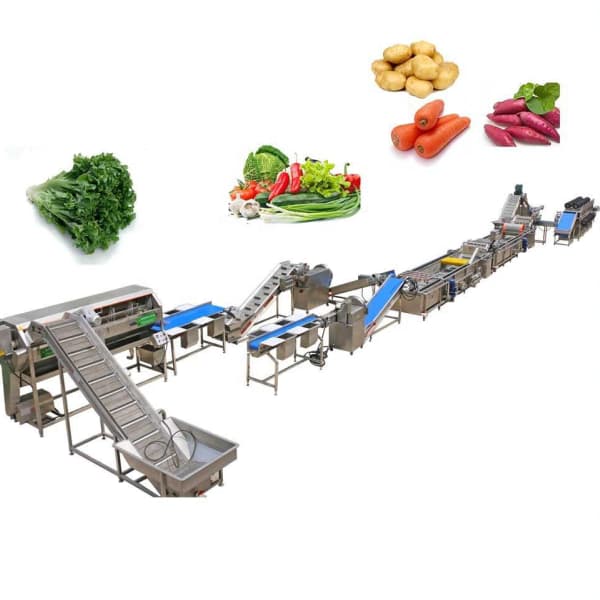
Linha de processamento de frutas e vegetais – Fabricante
As modernas linhas de processamento de frutas e vegetais desempenham um papel crítico na indústria alimentícia atual. Da lavagem e classificação ao descascamento, corte, congelando, secagem, fritar, e embalagem, cada etapa do processamento contribui para a qualidade do produto, segurança alimentar, e eficiência de produção.
À medida que a procura dos consumidores por alimentos processados continua a aumentar, fabricantes estão investindo em automação avançada, equipamento higiênico, e tecnologias energeticamente eficientes. Linhas de processamento de alta qualidade ajudam as fábricas a melhorar a produtividade, reduzir o desperdício, e permanecer competitivo no mercado global.
Seja produzindo vegetais congelados, suco de frutas, frutas secas, molhos, ou salgadinhos, selecionar o equipamento certo para processamento de frutas e vegetais é essencial para o sucesso a longo prazo na moderna indústria de processamento de alimentos.