Menyiapkan lini produksi mesin pembungkus lumpia dapat menjadi investasi cerdas bagi bisnis makanan. Seiring dengan meningkatnya permintaan global akan makanan enak, bungkus lumpia menjadi lebih populer di banyak pasar. Karena itu, membangun sistem produksi yang efisien dapat menciptakan peluang bisnis yang kuat.
Bagaimana merencanakan, membangun, dan mengoperasikan jalur produksi langkah demi langkah. Selain itu, tip praktis disertakan untuk membantu Anda menghindari kesalahan umum dan meningkatkan efisiensi.
1. Memahami Produk dan Pasar Mesin Pembungkus Lumpia
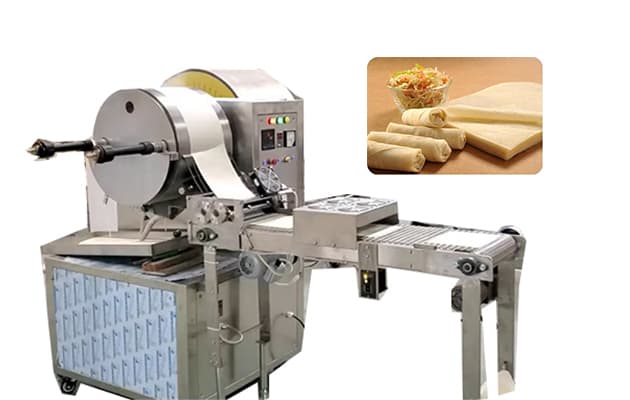
Sebelum membeli peralatan, Anda harus memahami produk Anda dengan jelas. Pembungkus lumpia adalah lembaran tipis yang sebagian besar terbuat dari tepung dan air. Namun, pasar yang berbeda mungkin memerlukan jenis yang berbeda.
Misalnya, beberapa pelanggan lebih menyukai bungkus segar, sementara yang lain membutuhkan produk beku. Selain itu, bungkus berbahan dasar beras sangat populer di daerah tertentu.
Karena ini, menentukan target pasar Anda sangat penting. Setelah pasar jelas, memilih mesin yang tepat menjadi lebih mudah.
2. Merencanakan Lini Produksi Anda
Rencana yang jelas membantu mengurangi biaya dan meningkatkan efisiensi. Tanpa perencanaan yang matang, masalah produksi mungkin muncul kemudian.
Pertama, Tentukan kapasitas produksi Anda. Misalnya, pabrik kecil dapat memilih 100 kg/jam, sementara pabrik-pabrik yang lebih besar mungkin memerlukan perbaikan 300 kg/jam. Berikutnya, pertimbangkan ruang dan anggaran Anda yang tersedia.
Sementara itu, tata letaknya harus mengikuti alur yang sederhana dan logis. Dengan kata lain, bahan harus bergerak dalam satu arah saja. Pendekatan ini mengurangi risiko kontaminasi dan menghemat waktu.
3. Peralatan Utama Diperlukan
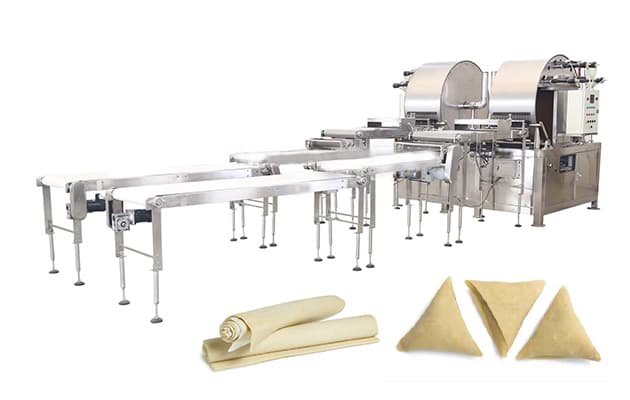
Memilih peralatan yang tepat adalah salah satu langkah terpenting. Setiap mesin memainkan peran tertentu dalam proses tersebut.
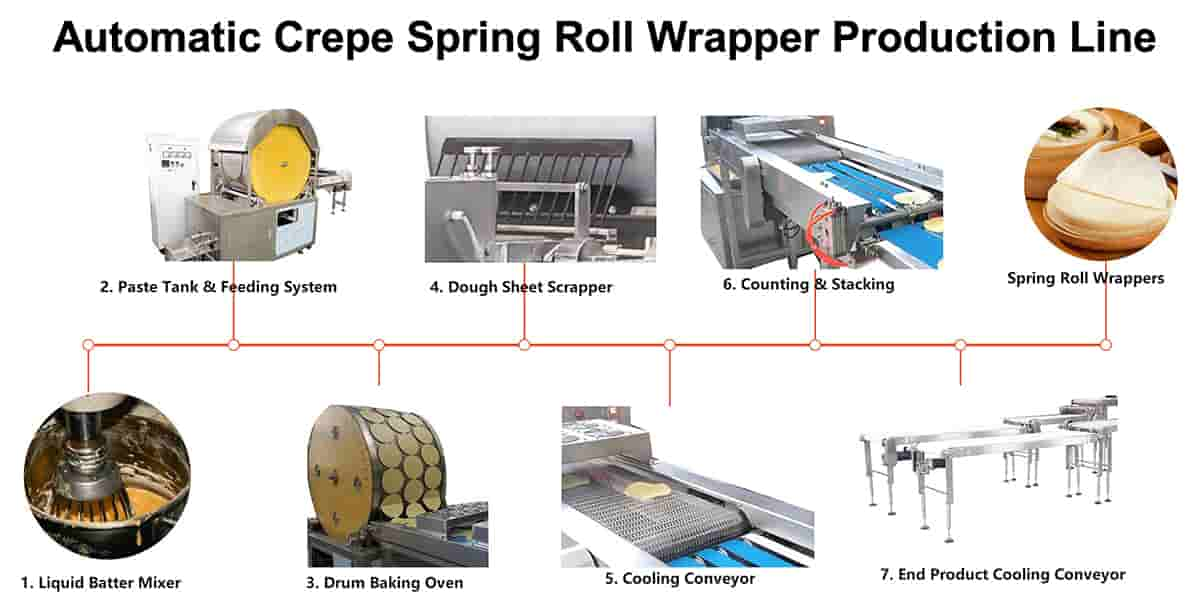
3.1 Mesin Pencampur Adonan
Mesin pencampur menyiapkan adonan. Ini menggabungkan tepung, air, dan bahan lainnya hingga tercampur rata.
Mixer yang baik menjamin kualitas yang konsisten. Selain itu, ini mengurangi pekerjaan manual dan meningkatkan efisiensi.
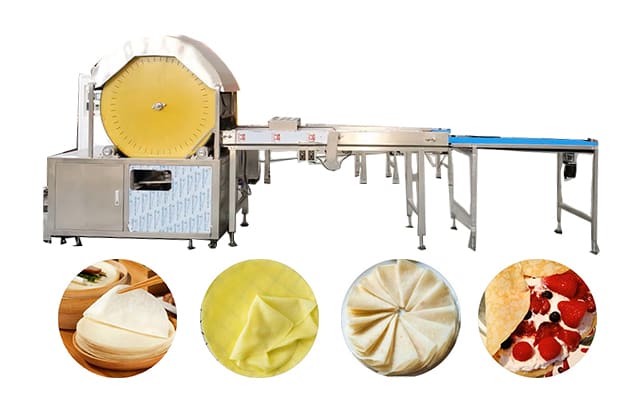
3.2 Mesin Pembungkus Lumpia
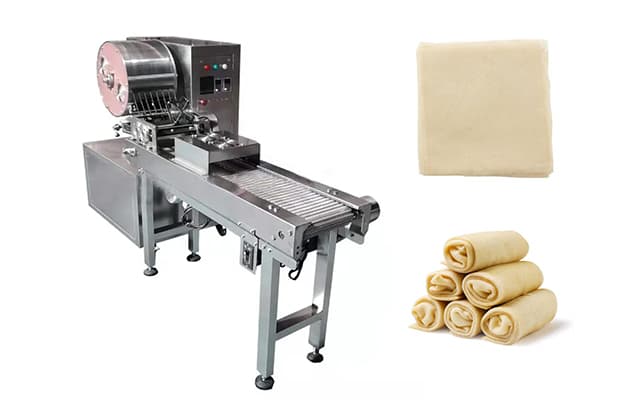
Mesin ini membentuk dan memasak bungkusnya. Ini menyebarkan adonan ke permukaan yang dipanaskan dan menghasilkan lembaran tipis.
Kontrol suhu sangat penting di sini. Jika panasnya terlalu tinggi, bungkusnya bisa terbakar. Di sisi lain, api kecil dapat menyebabkan kurang matang.
3.3 Konveyor pendingin
Setelah dipanggang, bungkusnya harus dingin. Jika tidak, mereka mungkin tetap bersatu.
Konveyor pendingin membantu menjaga bentuk dan kualitas. Pada saat yang sama, itu mempersiapkan produk untuk langkah berikutnya.
3.4 Sistem Pemotongan dan Penumpukan
Di banyak lini produksi, pemotongan dan penumpukan dilakukan secara otomatis. Sebagai akibat, biaya tenaga kerja menurun secara signifikan.
Lebih-lebih lagi, otomatisasi meningkatkan konsistensi dan kecepatan.
3.5 Mesin pengemasan
Akhirnya, produk dikemas. Langkah ini sangat penting terutama untuk produk beku.
Misalnya, kemasan tertutup membantu memperpanjang umur simpan. Selain itu, itu melindungi produk selama transportasi.
4. Proses Produksi Dijelaskan
Memahami seluruh proses membantu Anda mengelola produksi dengan lebih baik. Setiap langkah harus dikontrol dengan hati-hati.
Melangkah 1: Persiapan Bahan Baku
Pada awalnya, siapkan semua bahan mentah. Pastikan bahan-bahannya memenuhi standar kualitas.
Melangkah 2: Pencampuran Adonan
Berikutnya, campur bahan menjadi adonan halus. Jika muncul benjolan, kualitas produk akhir akan menurun.
Karena itu, waktu dan kecepatan pencampuran harus dikontrol dengan baik.
Melangkah 3: Membentuk dan Memanggang
Setelah pencampuran, adonan diolah menjadi lembaran tipis. Mesin menyebarkan adonan secara merata dan memasaknya.
Sementara itu, ketebalannya harus tetap konsisten. Jika tidak, beberapa pembungkus mungkin mudah pecah.
Melangkah 4: Pendinginan
Setelah matang, pembungkusnya berpindah ke bagian pendingin. Selama tahap ini, aliran udara yang tepat itu penting.
Jika pendinginan tidak mencukupi, masalah lengket mungkin terjadi. Sebagai akibat, kualitas produk akan turun.
Melangkah 5: Memotong dan Menumpuk
Setelah dingin, bungkusnya dipotong dan ditumpuk. Dalam sistem otomatis, proses ini cepat dan tepat.
Melangkah 6: Kemasan
Akhirnya, bungkusnya sudah dikemas. Tergantung pada pasar, metode pengemasan yang berbeda dapat digunakan.

5. Memilih Kapasitas Produksi yang Tepat
Pemilihan kapasitas bergantung pada tujuan bisnis Anda. Memilih sistem yang terlalu besar dapat meningkatkan biaya yang tidak diperlukan. Namun, memilih sistem yang terlalu kecil dapat membatasi pertumbuhan.
Untuk usaha kecil, garis yang kompak seringkali sudah cukup. Sementara itu, pabrik menengah biasanya lebih memilih sistem semi-otomatis. Pabrik-pabrik besar, di sisi lain, sering berinvestasi pada jalur yang sepenuhnya otomatis.
6. Persyaratan pengaturan pabrik
Pabrik yang dirancang dengan baik meningkatkan efisiensi dan keamanan.
Pertama, membagi ruang menjadi area yang berbeda. Misalnya, termasuk penyimpanan bahan baku, produksi, dan zona pengemasan.
Selain itu, ventilasi yang baik diperlukan. Aliran udara yang baik membantu menjaga kualitas produk dan kenyamanan pekerja.
7. Analisis biaya
Memahami biaya sangat penting sebelum memulai.
Pengeluaran utama termasuk mesin, tenaga kerja, dan bahan baku. Selain itu, biaya utilitas seperti listrik dan air harus dipertimbangkan.
Meskipun investasi awal mungkin tampak tinggi, produksi yang efisien dapat mengurangi biaya jangka panjang. Karena itu, merencanakan dengan hati-hati itu penting.
8. Kiat Kontrol Kualitas
Menjaga kualitas menjamin kepuasan pelanggan.
Misalnya, ketebalan adonan yang konsisten meningkatkan kinerja produk. Sementara itu, kontrol suhu yang tepat mencegah cacat.
Jika masalah muncul, penyesuaian harus dilakukan dengan cepat. Jika tidak, limbah dapat meningkat.
9. Tenaga Kerja dan Pelatihan
Bahkan jalur otomatis pun memerlukan pekerja terlatih.
Operator harus memahami fungsi mesin. Selain itu, mereka harus tahu bagaimana menangani masalah-masalah mendasar.
Pelatihan yang tepat mengurangi kesalahan. Sebagai akibat, produksi menjadi lebih stabil.
10. Otomatisasi vs Produksi Manual
Otomatisasi menawarkan banyak keuntungan. Misalnya, ini meningkatkan efisiensi dan mengurangi biaya tenaga kerja.
Namun, sistem manual memerlukan investasi yang lebih rendah. Karena itu, usaha kecil mungkin lebih memilihnya pada awalnya.
Dalam jangka panjang, otomatisasi biasanya memberikan keuntungan yang lebih baik.
11. Pengemasan dan Penyimpanan
Kemasan memegang peranan penting dalam kualitas produk.
Misalnya, produk beku memerlukan kemasan tertutup. Sebaliknya, produk segar mungkin menggunakan metode yang lebih sederhana.
Kondisi penyimpanan juga penting. Suhu rendah membantu memperpanjang umur simpan.
12. Memasarkan Produk Anda
Setelah produksi, menjual produk adalah langkah berikutnya.
Anda dapat menargetkan restoran, supermarket, dan distributor. Selain itu, pemasaran online dapat membantu menjangkau lebih banyak pelanggan.
Menawarkan sampel juga efektif. Sebagai akibat, pelanggan dapat menguji kualitas produk Anda secara langsung.
13. Kesalahan Umum yang Harus Dihindari
Beberapa kesalahan dapat mengurangi efisiensi.
Misalnya, perencanaan yang buruk dapat menyebabkan penundaan produksi. Selain itu, pemilihan mesin yang salah dapat meningkatkan biaya.
Karena itu, persiapan yang matang sangat penting.
14. Pemeliharaan dan Dukungan
Perawatan rutin menjaga mesin tetap berjalan dengan lancar.
Pembersihan harian itu penting. Sementara itu, memeriksa bagian-bagian penting membantu mencegah kerusakan.
Memilih pemasok yang dapat diandalkan juga penting. Dukungan yang baik dapat menyelesaikan masalah dengan cepat.
15. Pikiran Terakhir
Menyiapkan lini produksi pembungkus lumpia memerlukan perencanaan yang matang. Namun, dengan pendekatan yang tepat, ini bisa menjadi bisnis yang menguntungkan.
Dengan memilih peralatan yang sesuai dan menjaga kualitas, Anda dapat membangun sistem produksi yang kuat. Selain itu, perbaikan berkelanjutan akan membantu bisnis Anda berkembang seiring waktu.