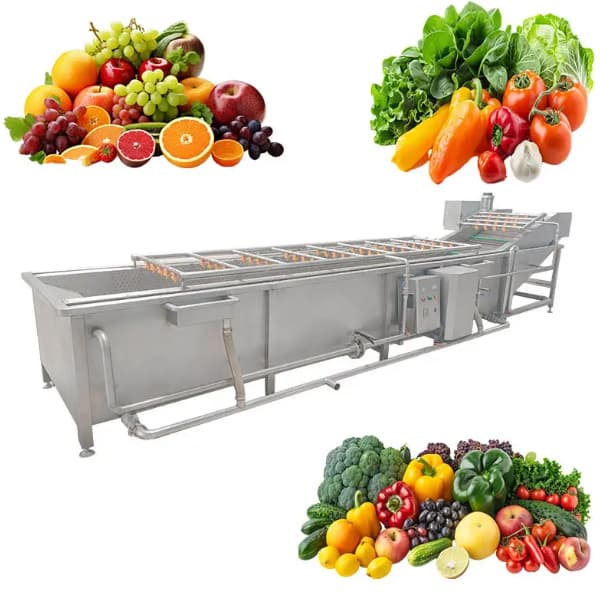
Permintaan global terhadap buah-buahan dan sayur-sayuran olahan terus meningkat karena konsumen mencari makanan yang lebih sehat, lebih aman, dan produk makanan yang lebih nyaman. Pabrik makanan modern mengandalkan jalur pemrosesan buah dan sayuran yang canggih untuk meningkatkan efisiensi, menjaga kualitas produk, mengurangi biaya tenaga kerja, dan memenuhi standar keamanan pangan internasional.
Jalur pemrosesan yang lengkap dapat menangani pencucian, penyortiran, mengelupas, pemotongan, pucat, pengeringan, pembekuan, penggorengan, kemasan, dan penyimpanan. Sistem ini banyak digunakan dalam produksi sayuran beku, jus buah, buah-buahan kering, saus, produk kaleng, makanan ringan, dan makanan siap saji.
Pengantar Pengolahan Buah dan Sayur
Pengolahan buah dan sayuran mengacu pada transformasi industri produk pertanian segar menjadi produk makanan dengan umur simpan lebih lama dan nilai pasar lebih tinggi. Teknologi pemrosesan membantu menjaga kesegaran, meningkatkan keamanan pangan, dan menciptakan produk yang lebih mudah untuk diangkut dan disimpan.
Produk segar sangat mudah rusak. Tanpa penanganan yang tepat, buah-buahan dan sayur-sayuran dapat cepat rusak selama pengangkutan dan penyimpanan. Karena itu, pabrik pengolahan menggunakan mesin khusus dan sistem otomatis untuk menjaga kualitas sekaligus meningkatkan produktivitas.
Hari ini, produsen makanan memproses berbagai macam produk, termasuk:
- Kentang goreng beku
- Keripik kentang
- Sayuran beku
- pasta tomat
- Haluskan buah
- Jus buah
- Pasta bawang putih
- Serpihan bawang
- Buah-buahan kering
- Bubuk nabati
- Campuran sayur siap masak
Jalur pemrosesan industri dirancang untuk produksi berkelanjutan dan dapat beroperasi pada kapasitas mulai dari beberapa ratus kilogram per jam hingga puluhan ton per hari.
Pentingnya Pengolahan Buah dan Sayur
Industri pengolahan makanan memainkan peran penting dalam perekonomian pertanian global. Teknologi pemrosesan modern membantu mengurangi limbah makanan sekaligus meningkatkan ketersediaan produk sepanjang tahun.
Memperpanjang Umur Simpan
Buah-buahan dan sayuran segar cepat rusak setelah dipanen. Metode pengolahan seperti pembekuan, pengeringan, pengalengan, dan pasteurisasi secara signifikan memperpanjang waktu penyimpanan.
Meningkatkan Nilai Produk
Pengolahan meningkatkan nilai komersial produk pertanian. Misalnya:
- Kentang segar menjadi kentang goreng atau keripik beku
- Tomat menjadi saus tomat atau pasta tomat
- Mangga segar dijadikan jus atau camilan buah kering
Produk olahan biasanya menghasilkan keuntungan lebih tinggi dibandingkan bahan mentah pertanian.
Meningkatkan Keamanan Pangan
Sistem pemrosesan industri mengurangi risiko kontaminasi melalui pencucian yang terkontrol, sterilisasi, dan prosedur pengemasan yang higienis.
Mengurangi Kerugian Pasca Panen
Sebagian besar produk segar hilang selama transportasi dan penyimpanan. Pemrosesan membantu mengurangi limbah dan meningkatkan pemanfaatan sumber daya.
Memenuhi Permintaan Konsumen
Konsumen semakin menyukai makanan praktis yang memerlukan waktu persiapan minimal. Produk olahan buah dan sayur sangat cocok dengan gaya hidup modern.
Peralatan Utama yang Digunakan dalam Pengolahan Buah dan Sayur
Pabrik pengolahan buah dan sayuran modern menggunakan berbagai peralatan khusus. Setiap mesin melakukan tugas tertentu dalam lini produksi.
Sistem Penerimaan Bahan Baku
Proses produksi diawali dengan transportasi bahan baku dan sistem feeding.
Perlengkapan umum meliputi:
- Konveyor sabuk
- Lift ember
- Konveyor rol
- Pengumpan bergetar
Sistem ini mengangkut produk secara efisien sekaligus mengurangi tenaga kerja manual dan meminimalkan kerusakan produk.
Baja tahan karat food grade umumnya digunakan karena higienis, tahan lama, dan tahan terhadap korosi.
Mesin Cuci
Pencucian merupakan salah satu tahapan terpenting dalam pengolahan pangan karena produk segar seringkali mengandung kotoran, bakteri, pestisida, Batu, dan sisa tanaman.
Sistem pencucian yang berbeda digunakan tergantung pada jenis produk.
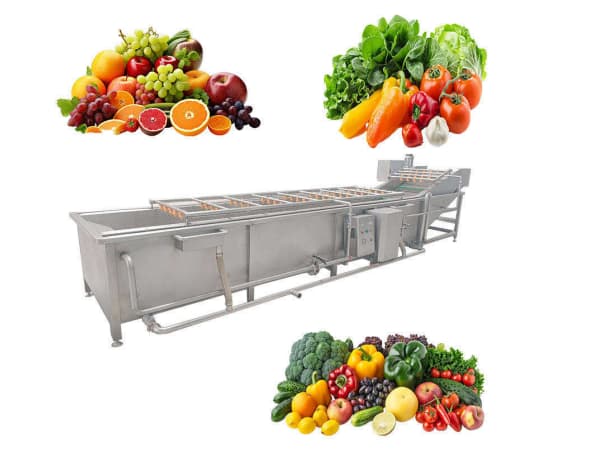
Mesin cuci gelembung
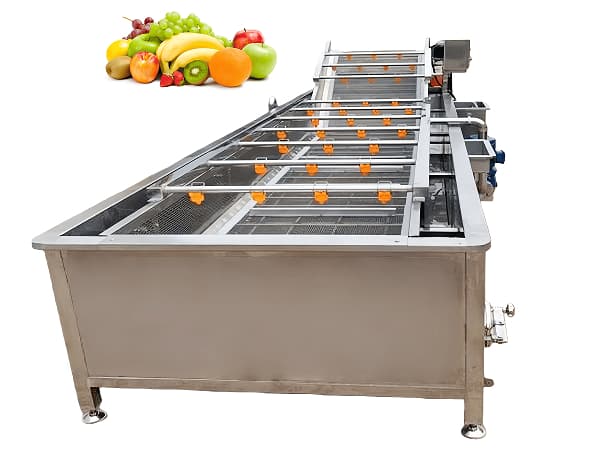
Sistem pencucian gelembung menggunakan gelembung udara dan sirkulasi air untuk membersihkan buah dan sayuran yang lembut dengan lembut.
Produk yang cocok antara lain:
- Selada
- Bayam
- Apel
- Tomat
- Stroberi
Mesin Cuci Rol Sikat
Mesin cuci sikat menggunakan rol berputar untuk menghilangkan kotoran dan kulit dari akar sayuran.
Aplikasi umum meliputi:
- kentang
- wortel
- Singkong
- Ubi jalar
- Jahe
Sistem Pencucian Semprot
Sistem semprotan bertekanan tinggi membersihkan produk secara efektif selama pengangkutan konveyor.
Peralatan Cuci Ultrasonik
Teknologi ultrasonik menghilangkan kontaminan dengan lebih tepat untuk produk makanan premium.
Mesin Sortasi dan Grading
Setelah dicuci, produk diurutkan berdasarkan ukuran, membentuk, warna, dan kualitas.
Teknologi penyortiran modern meliputi:
- Pengukur berat badan
- Siswa kelas rol
- Sistem penyortiran optik
- Mesin inspeksi visual AI
Penilaian otomatis meningkatkan konsistensi dan menghilangkan produk cacat secara efisien.
Sistem penyortiran optik dapat mengidentifikasi:
- Perubahan warna
- Bahan asing
- Produk rusak
- Variasi ukuran
Hal ini meningkatkan penampilan produk akhir dan kualitas kemasan.
Peralatan Pengupasan
Banyak buah dan sayuran perlu dikupas sebelum diproses lebih lanjut.
Mesin Pengupas Sikat
Pengupas sikat menghilangkan kulit luar yang tipis melalui gesekan.
Cocok untuk:
- kentang
- wortel
- Ubi jalar
Mesin Pengupas Uap
Sistem pengupasan uap menggunakan uap bertekanan tinggi untuk mengendurkan kulit dengan cepat.
Keuntungannya antara lain:
- Kerugian materi yang rendah
- Permukaan produk halus
- Efisiensi pengelupasan yang tinggi
Mesin Pengupas Pisau
Pengupas pisau mekanis digunakan untuk buah dengan kulit lebih tebal.
Aplikasi termasuk:
- nanas
- Mangga
- Apel
Mesin Pemotong dan Pengiris
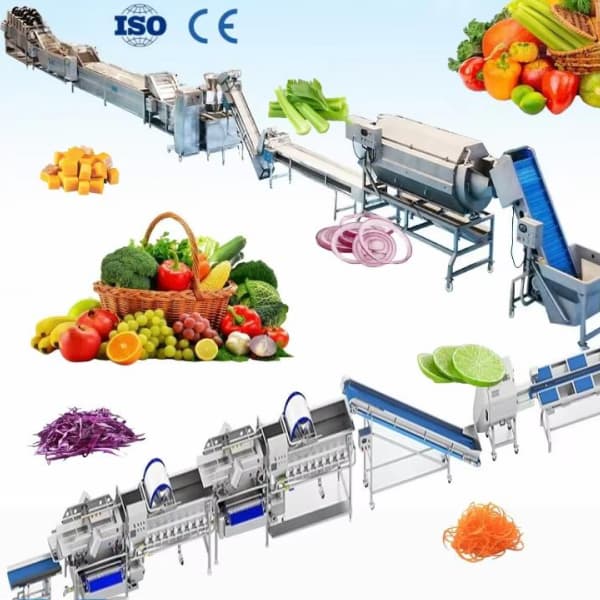
Peralatan pemotongan mengubah produk menjadi bentuk dan ukuran tertentu.
Gaya pemotongan yang umum meliputi:
- Irisan
- kubus
- Strip
- Dadu
- Sobekan
- Julienne memotong
Mesin Pemotong Kentang
Digunakan untuk produksi kentang goreng dan potongan kentang.
Mesin Potong Sayuran
Cocok untuk bawang, wortel, paprika, mentimun, dan produk serupa.
Mesin Pengiris Buah
Banyak digunakan untuk apel, pisang, lemon, dan mangga.
Pemotongan seragam menjadi lebih baik:
- Konsistensi memasak
- Penampilan produk
- Efisiensi pengemasan
- Kecepatan produksi
Peralatan Blanching
Blanching adalah proses perlakuan panas singkat dengan menggunakan air panas atau uap.
Langkah ini membantu:
- Nonaktifkan enzim
- Pertahankan warna alami
- Memperbaiki tekstur
- Mengurangi kontaminasi mikroba
Blanching biasanya digunakan sebelumnya:
- Pembekuan
- Pengeringan
- Penggorengan
Sistem Blanching Umum
- Blanchers air panas
- Blancher uap
- Mesin blansing terus menerus
Pabrik sayuran beku banyak menggunakan sistem blansing kontinyu.
Sistem Pendingin
Setelah direbus atau dimasak, produk harus didinginkan dengan cepat untuk mencegah terlalu matang.
Sistem pendingin meliputi:
- Tangki pendingin air dingin
- Terowongan pendingin udara
- Sistem pendingin air es
Pendinginan cepat menjaga tekstur produk dan keamanan pangan.
Peralatan Dewatering dan Pengeringan
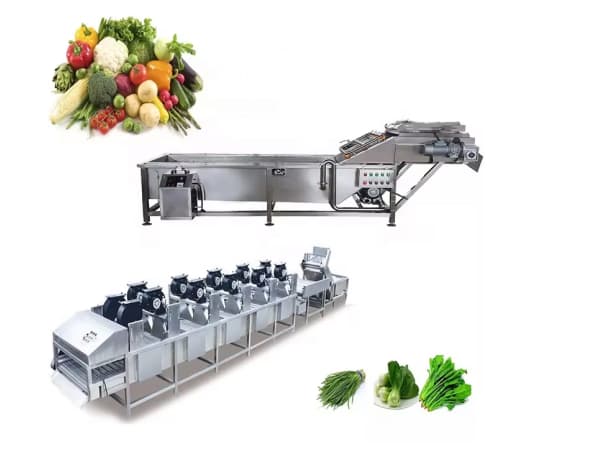
Menghilangkan kelembapan berlebih akan meningkatkan kualitas produk dan efisiensi pemrosesan.
Mesin Dewatering Bergetar
Menggunakan getaran untuk menghilangkan air permukaan.
Mesin Pengering Udara
Sistem pisau udara menghilangkan kelembapan melalui aliran udara bertekanan tinggi.
Mesin Dewatering Sentrifugal
Gaya sentrifugal berkecepatan tinggi menghilangkan air secara efisien.
Sistem ini penting sebelum dibekukan, penggorengan, atau kemasan.
Peralatan Penggorengan
Sistem penggorengan banyak digunakan dalam produksi makanan ringan.
Produk gorengan yang populer antara lain:
- Keripik kentang
- kentang goreng
- Bawang goreng
- Keripik pisang
- Camilan sayur
Mesin penggorengan kontinu
Dirancang untuk produksi industri skala besar.
Mesin Penggorengan Vakum
Penggorengan vakum menggunakan suhu yang lebih rendah untuk menjaga nutrisi, warna, dan rasa.
Sistem penggorengan tingkat lanjut meliputi:
- Filtrasi minyak otomatis
- Kontrol suhu
- Sistem pemberian makan berkelanjutan
- Teknologi sirkulasi minyak
Peralatan Pembekuan
Produk buah dan sayuran beku memerlukan teknologi pembekuan cepat.
IQF Freezer
Sistem Individual Quick Frozen membekukan produk secara terpisah, bukan dalam blok besar.
Produk IQF yang umum meliputi:
- Kacang polong
- Jagung
- Stroberi
- kubus mangga
- Brokoli
Pembeku Spiral
Freezer spiral menyediakan pembekuan berkelanjutan berkapasitas tinggi untuk pabrik besar.
Pembekuan cepat membantu:
- Pertahankan nutrisi
- Pertahankan tekstur
- Mengurangi pembentukan kristal es
- Memperpanjang umur simpan
Peralatan Pengolahan Jus
Produksi jus buah memerlukan mesin khusus.
Peralatan pengolahan jus yang khas meliputi:
- Penghancur buah
- Mesin pulping
- Ekstraktor jus
- Sistem filtrasi
- Homogenizer
- Pasteurisasi
- Mesin pengisi
Produk jus yang umum meliputi:
- jus apel
- Jus jeruk
- jus mangga
- Jus nanas
- Jus tomat
Pasteurisasi memastikan keamanan mikroba sekaligus memperpanjang umur simpan.
Peralatan Pengeringan
Sistem pengeringan mengurangi kelembapan produk untuk penyimpanan jangka panjang.
Pengering Udara Panas
Banyak digunakan dalam dehidrasi sayur dan buah.
Pengering Beku
Pengeringan beku menjaga nutrisi, tekstur, dan memberi rasa secara efektif.
Pengering Microwave
Menghasilkan pengeringan yang cepat dan hemat energi.
Produk kering yang umum meliputi:
- serpihan bawang putih
- Bubuk bawang
- Mangga kering
- Keripik pisang
- Bubuk sayur
Mesin Pengemasan
Pengemasan melindungi produk makanan selama transportasi dan penyimpanan.
Format kemasan yang populer meliputi:
- Kantong vakum
- Tas bantal
- Botol
- Kaleng
- kantong
- nampan plastik
Peralatan pengemasan mungkin termasuk:
- Timbangan multihead
- Mesin pengemasan vertikal
- Sistem penyegelan vakum
- Mesin pengisian botol
- Mesin pelabelan
Sistem pengemasan otomatis mengurangi biaya tenaga kerja dan risiko kontaminasi.
Langkah-Langkah Produksi di Jalur Pengolahan Buah dan Sayuran
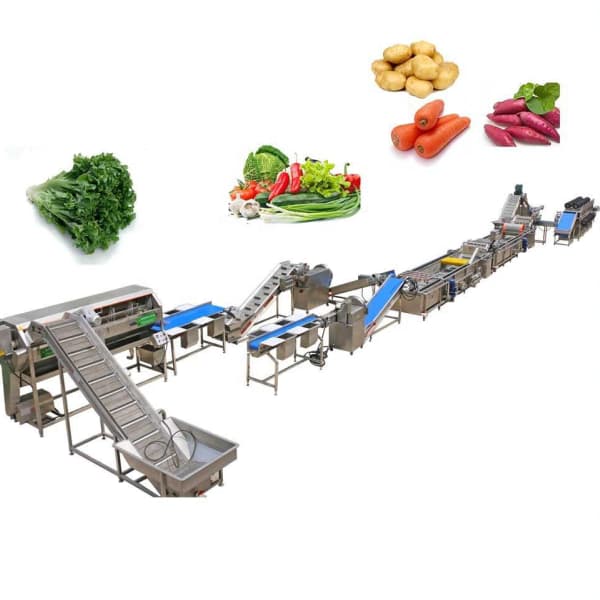
Meskipun produk yang berbeda memerlukan teknologi yang berbeda, sebagian besar jalur pemrosesan mengikuti alur kerja yang serupa.
Pemilihan Bahan Baku
Bahan baku berkualitas tinggi sangat penting untuk menghasilkan produk jadi berkualitas tinggi.
Produsen memeriksa:
- Kesegaran
- Kematangan
- Ukuran
- Warna
- Kondisi permukaan
Produk yang rusak atau rusak dikeluarkan sebelum diproses.
Mencuci dan Membersihkan
Produk dicuci secara menyeluruh untuk menghilangkan kontaminan seperti:
- Tanah
- Debu
- Pestisida
- Batu
- Residu tanaman
Beberapa pabrik menggunakan beberapa tahap pencucian untuk kinerja pembersihan yang lebih baik.
Penyortiran dan Penilaian
Produk disortir berdasarkan ukuran dan standar kualitas.
Sistem otomatis meningkatkan efisiensi dan memastikan konsistensi produk.
Mengelupas
Produk yang memerlukan penghilangan kulit masuk ke dalam peralatan peeling.
Tahap ini biasa terjadi pada:
- kentang
- Bawang putih
- Bawang
- Mangga
- Apel
Memotong atau Menghancurkan
Produk dipotong sesuai bentuk yang diinginkan atau dihancurkan untuk ekstraksi jus.
Pemotongan seragam meningkatkan kinerja pemrosesan hilir.
Blanching atau Pretreatment
Perlakuan panas menstabilkan produk sebelum diproses lebih lanjut.
Beberapa buah juga mendapat perawatan anti kecoklatan untuk menjaga penampilannya.
Operasi Pemrosesan Utama
Langkah selanjutnya tergantung pada produk akhir.
Contohnya termasuk:
- Menggoreng keripik kentang
- Pengeringan untuk bubuk sayur
- Pembekuan untuk sayuran IQF
- Pasteurisasi untuk jus buah
Pendinginan
Produk didinginkan dengan cepat sebelum dikemas.
Langkah ini meningkatkan keamanan pangan dan menjaga tekstur.
Kemasan
Produk jadi disegel menggunakan sistem pengemasan otomatis.
Pengemasan yang tepat mencegah kontaminasi dan memperpanjang umur simpan.
Penyimpanan dan Distribusi
Produk disimpan dalam kondisi terkendali.
Metode penyimpanan meliputi:
- Gudang beku
- Penyimpanan berpendingin
- Ruang penyimpanan kering
Manajemen suhu sangat penting untuk menjaga kualitas makanan.
Otomatisasi di Pabrik Pengolahan Modern
Otomasi telah mengubah industri pengolahan makanan secara signifikan.
Jalur pemrosesan modern menggunakan teknologi canggih seperti:
- Sistem kontrol PLC
- Antarmuka layar sentuh
- Sistem inspeksi AI
- Kemasan robot
- pemantauan IoT
Keuntungan Otomatisasi
Efisiensi yang lebih tinggi
Sistem otomatis beroperasi terus menerus dengan waktu henti minimal.
Mengurangi biaya tenaga kerja
Pabrik membutuhkan lebih sedikit pekerja manual.
Konsistensi Produk Lebih Baik
Mesin menjaga kualitas pemrosesan yang seragam.
Kebersihan yang lebih baik
Berkurangnya kontak dengan manusia akan menurunkan risiko kontaminasi.
Pengelolaan Data Lebih Mudah
Sistem digital melacak catatan produksi dan data kendali mutu.
Standar Keamanan dan Kebersihan Pangan
Keamanan pangan sangat penting dalam pengolahan buah dan sayuran.
Banyak produsen mengikuti standar internasional seperti:
- Haccp
- Iso 22000
- GMP
- Persyaratan FDA
- sertifikasi CE
Desain Peralatan Higienis
Mesin pengolah makanan modern meliputi:
- Konstruksi baja tahan karat kelas makanan
- Permukaan halus agar mudah dibersihkan
- Sistem Pembersihan CIP
- Sistem perpipaan yang higienis
Fitur-fitur ini mengurangi pertumbuhan bakteri dan meningkatkan efisiensi sanitasi.
Efisiensi Energi di Pabrik Pengolahan
Biaya energi merupakan kekhawatiran utama bagi produsen makanan.
Pabrik pengolahan modern menggunakan teknologi hemat energi untuk mengurangi biaya operasional.
Solusi Umum Hemat Energi
Sistem Pemulihan Panas
Memanfaatkan kembali limbah panas dari proses produksi.
Penggerak Frekuensi Variabel
Mengurangi konsumsi energi motor.
Isolasi Termal yang Efisien
Pertahankan suhu stabil dengan lebih sedikit kehilangan energi.
Sistem Otomasi Cerdas
Optimalkan pengoperasian mesin secara otomatis.
Pabrik hemat energi meningkatkan keberlanjutan sekaligus mengurangi biaya produksi.
Aplikasi Jalur Pengolahan Buah dan Sayur
Peralatan pengolahan buah dan sayuran banyak digunakan di berbagai industri.
Produksi Sayuran Beku
Produk umum meliputi:
- Kacang hijau
- Biji jagung
- Brokoli
- wortel
- Bayam
Pengolahan Kentang
Produk populer termasuk:
- Kentang goreng beku
- Keripik kentang
- Serpihan kentang
Pengolahan Tomat
Tomat diolah menjadi:
- pasta tomat
- Haluskan tomat
- Saus tomat
- saus tomat
Produksi Jus Buah
Pabrik memproduksi:
- jus apel
- jus mangga
- Jus jeruk
- Jus nanas
Pengolahan Bawang Putih dan Bawang Merah
Produk umum meliputi:
- Pasta bawang putih
- Bubuk bawang putih
- Bawang goreng
- Serpihan bawang
Cara Memilih Jalur Pemrosesan yang Tepat
Pemilihan peralatan yang tepat bergantung pada tujuan produksi dan kebutuhan produk.
Kapasitas produksi
Produsen harus menentukan kapasitas output yang diinginkan.
Contohnya termasuk:
- 500 kg/jam
- 1 ton/jam
- 5 ton/jam
- 10 ton/jam
Jenis Produk
Produk yang berbeda memerlukan teknologi pemrosesan yang berbeda.
Produksi makanan beku memerlukan sistem pembekuan, sedangkan produksi makanan kering membutuhkan peralatan dehidrasi.
Level Otomasi
Pabrik dapat memilih di antara keduanya:
- Sistem semi-otomatis
- Sistem sepenuhnya otomatis
Ruang Pabrik
Tata letak peralatan harus sesuai dengan area bengkel yang tersedia secara efisien.
Perencanaan Anggaran
Biaya investasi bervariasi tergantung pada kapasitas dan tingkat otomatisasi.
Peraturan Pangan Lokal
Peralatan harus mematuhi standar keamanan pangan regional dan persyaratan sertifikasi.
Tren Masa Depan dalam Pengolahan Buah dan Sayuran
Industri pengolahan makanan global terus berkembang pesat.
Manufaktur Cerdas
Teknologi AI dan IoT menjadi semakin umum.
Produksi Berkelanjutan
Produsen fokus pada pengurangan:
- Konsumsi air
- Penggunaan energi
- Limbah makanan
Pertumbuhan Pangan Nabati
Permintaan terhadap makanan berbahan nabati terus meningkat di seluruh dunia.
Kemasan Ramah Lingkungan
Solusi pengemasan yang dapat terurai secara hayati dan dapat didaur ulang menjadi lebih populer.
Robotika Tingkat Lanjut
Sistem robot meningkatkan kecepatan produksi dan mengurangi ketergantungan tenaga kerja.
Jalur Pengolahan Buah dan Sayuran – Pabrikan
Jalur pengolahan buah dan sayuran modern memainkan peran penting dalam industri makanan saat ini. Mulai dari mencuci, menyortir, hingga mengupas, pemotongan, pembekuan, pengeringan, penggorengan, dan pengemasan, setiap langkah pemrosesan berkontribusi terhadap kualitas produk, keamanan pangan, dan efisiensi produksi.
Seiring permintaan konsumen terhadap makanan olahan yang terus meningkat, produsen berinvestasi dalam otomatisasi tingkat lanjut, peralatan higienis, dan teknologi hemat energi. Jalur pemrosesan berkualitas tinggi membantu pabrik meningkatkan produktivitas, mengurangi limbah, dan tetap kompetitif di pasar global.
Apakah memproduksi sayuran beku, jus buah, buah-buahan kering, saus, atau makanan ringan, memilih peralatan pengolahan buah dan sayuran yang tepat sangat penting untuk keberhasilan jangka panjang dalam industri pengolahan makanan modern.