Introduction
The global food industry continues to expand rapidly because consumers increasingly demand healthier, safer, and more convenient food products. As a result, fruit and vegetable processing has become one of the most important sectors in modern food manufacturing. Processed fruits and vegetables are widely used in supermarkets, restaurants, frozen food factories, snack production plants, beverage industries, and ready-to-eat meal manufacturing.
For food factories, efficient fruit and vegetable processing can significantly improve production capacity while reducing labor costs and minimizing raw material waste. In addition, modern processing technology helps extend product shelf life, maintain nutritional value, and improve product consistency. Therefore, many food manufacturers are investing heavily in automated machinery, intelligent control systems, and hygienic production lines.
What Is Fruit and Vegetable Processing?
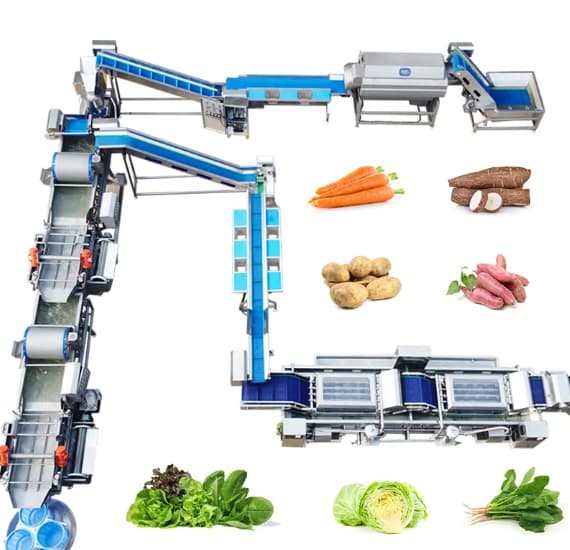
Fruit and vegetable processing refers to the industrial transformation of fresh agricultural products into processed foods with higher value, improved shelf life, and better convenience.
Generally, processing operations include:
- Washing
- Sorting
- Peeling
- Cutting
- Blanching
- Drying
- Freezing
- Frying
- Juicing
- Pureeing
- Sterilization
- Packaging
The main objective is to preserve freshness while making products easier to transport, store, and consume. Consequently, processed products can reach wider markets and remain stable for longer periods.
Today, common processed fruit and vegetable products include:
- Frozen vegetables
- Dried fruits
- Fruit juice
- Tomato paste
- French fries
- Vegetable chips
- Fruit puree
- Canned vegetables
- Fresh-cut salads
- Pickled vegetables
- Garlic and onion products
Why Fruit and Vegetable Processing Is Important
Reducing Post-Harvest Losses
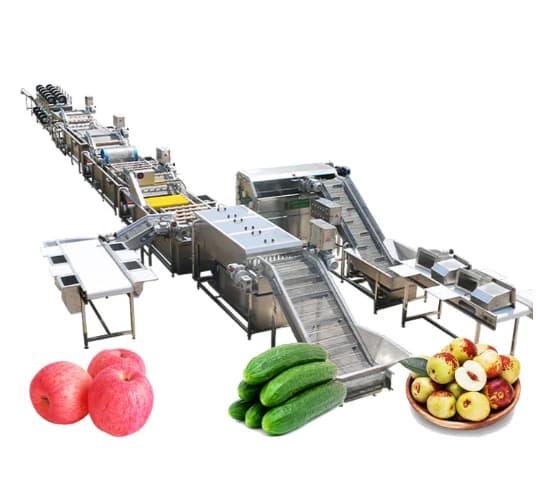
Fresh fruits and vegetables spoil quickly if they are not processed properly. Therefore, industrial processing helps reduce food waste and improve product utilization.
Increasing Product Value
Processed products usually generate much higher profits than raw agricultural products. For example, potatoes can become frozen french fries, while tomatoes can be converted into ketchup or tomato paste. Similarly, mangoes are often processed into dried snacks, juice, or puree.
Improving Food Safety
Modern processing equipment helps factories maintain strict hygiene standards. Moreover, automated systems reduce human contact during production, which further minimizes contamination risks.
Supporting Global Food Supply
Processed food products can be transported over long distances without rapid spoilage. Consequently, food factories can expand into international markets more easily.
Main Types of Fruit and Vegetable Processing
Fresh-Cut Processing
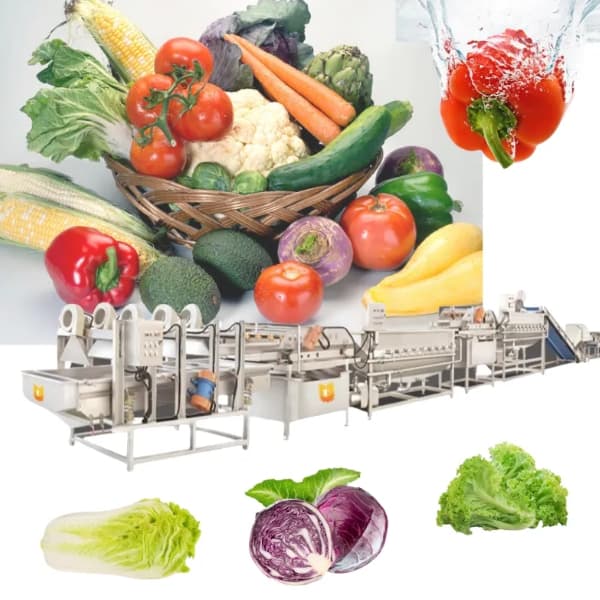
Fresh-cut processing involves washing, peeling, cutting, and packaging fresh produce while maintaining a fresh appearance and texture.
Common products include:
- Salad vegetables
- Sliced apples
- Cut carrots
- Ready-to-cook vegetables
Advantages of Fresh-Cut Processing
Fresh-cut products are increasingly popular because they provide convenience for consumers. Furthermore, these products require minimal preparation time.
Additional advantages include:
- Fresh appearance
- Short preparation time
- Higher convenience
- Growing market demand
Main Equipment Used
Factories typically use:
- Bubble washing machines
- Vegetable cutting machines
- Air drying systems
- Packaging machines
Freezing Processing
Frozen fruits and vegetables are highly popular worldwide because freezing preserves nutrients, color, and texture effectively.
Typical frozen products include:
- Frozen peas
- Frozen broccoli
- Frozen mango cubes
- Frozen french fries
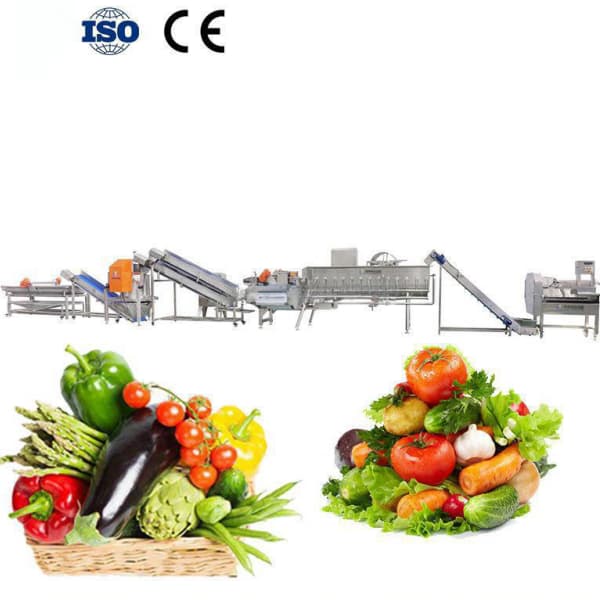
IQF Freezing Technology
Individual Quick Freezing (IQF) technology rapidly freezes products separately. As a result, products do not stick together and maintain better quality.
Advantages of Frozen Processing
Frozen processing provides several important benefits. For instance, frozen products have longer shelf life and excellent transportation stability.
Other advantages include:
- Better freshness retention
- Convenient storage
- Strong export demand
- Reduced spoilage
Main Equipment for Freezing Lines
A standard freezing line may include:
- Blanching machines
- Dewatering machines
- IQF freezers
- Packaging systems
Drying and Dehydration
Drying removes moisture from fruits and vegetables to prevent microbial growth and spoilage. Therefore, dehydrated products can remain stable for extended periods.
Popular dried products include:
- Dried mango
- Raisins
- Garlic flakes
- Onion powder
- Vegetable powder
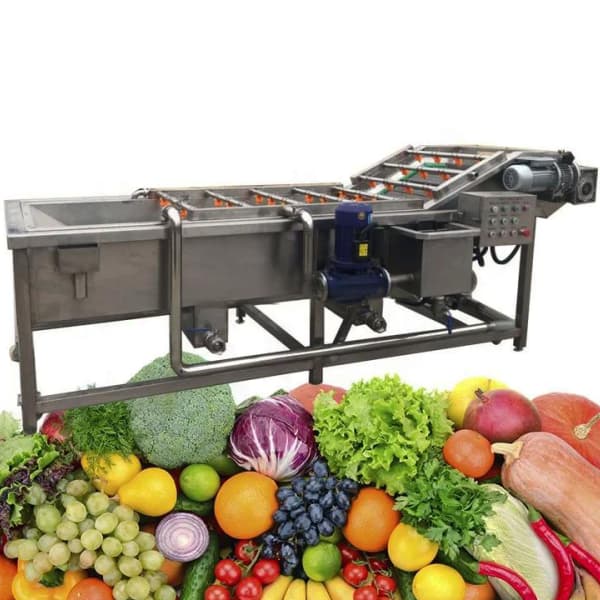
Common Drying Methods
Hot Air Drying
Hot air drying is widely used because it is economical and suitable for large-scale production.
Freeze Drying
Freeze drying preserves product structure and nutritional value more effectively. However, the investment cost is significantly higher.
Vacuum Drying
Vacuum drying is often used for premium food products with strict quality requirements.
Advantages of Drying Processing
Dehydrated products offer many commercial benefits. In particular, transportation and storage costs are much lower because of reduced weight and volume.
Juice and Beverage Processing
Fruit juice processing remains one of the largest sectors in the beverage industry. Moreover, consumer demand for healthy drinks continues to increase globally.
Popular juice products include:
- Orange juice
- Apple juice
- Mango juice
- Mixed vegetable juice
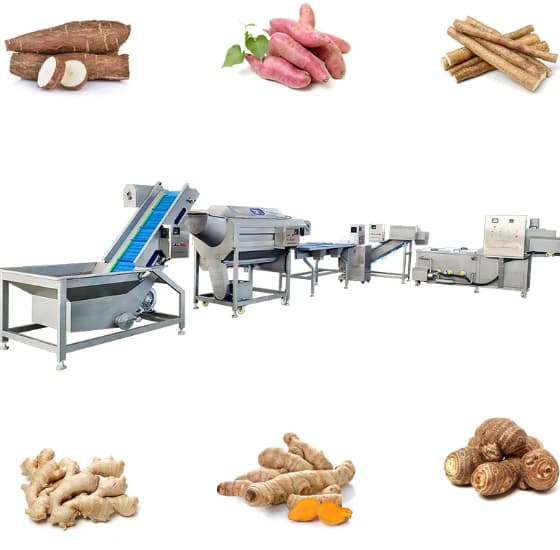
Juice Production Process
The typical production process includes:
- Washing
- Sorting
- Crushing
- Juice extraction
- Filtration
- Pasteurization
- Filling and packaging
Important Juice Processing Equipment
Common equipment includes:
- Fruit crushers
- Juice extractors
- Pasteurizers
- Filling machines
Canning Processing
Canned fruits and vegetables remain important because they provide excellent storage stability without refrigeration.
Examples include:
- Canned peaches
- Canned mushrooms
- Canned sweet corn
- Canned tomatoes
Advantages of Canning
Canning technology offers several benefits. For example, canned products can maintain stable quality for long periods.
Additional advantages include:
- Long shelf life
- Convenient transportation
- Reduced spoilage
- Easy storage
Key Requirements for Canning
To ensure product safety, factories must control:
- Sterilization
- Vacuum sealing
- Packaging hygiene
- Temperature management
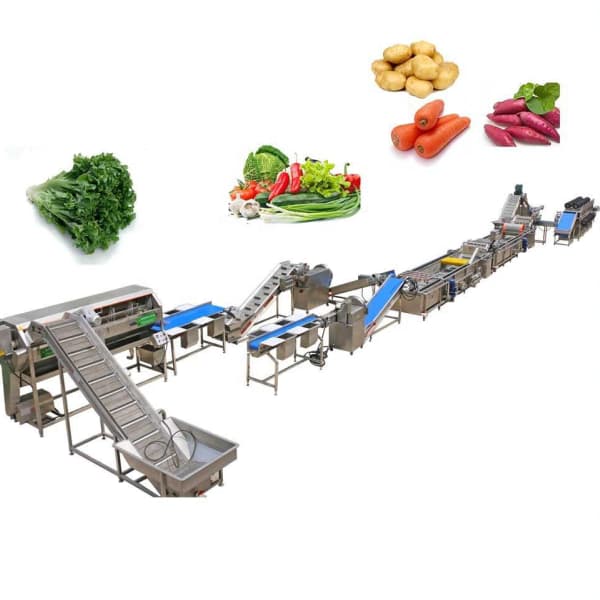
Frying Processing
Fried fruit and vegetable snacks are becoming increasingly popular in international markets. Therefore, many food factories are investing in automated frying production lines.
Popular products include:
- Potato chips
- Banana chips
- Fried onions
- Vegetable crisps
Main Production Steps
The process generally includes:
- Washing
- Peeling
- Slicing
- Blanching
- Frying
- De-oiling
- Seasoning
- Packaging
Important Frying Equipment
Factories commonly use:
- Slicing machines
- Continuous fryers
- De-oiling systems
- Seasoning machines
Complete Fruit and Vegetable Processing Line
Modern food factories usually combine multiple machines into fully automatic processing systems. Consequently, production efficiency and product consistency improve significantly.
Raw Material Receiving
Factories first inspect incoming produce carefully. Typically, quality inspectors evaluate:
- Freshness
- Size
- Ripeness
- Surface damage
- Foreign materials
High-quality raw materials are essential for producing premium finished products.
Washing and Cleaning
Proper washing removes contaminants and improves food safety. In addition, effective cleaning improves product appearance.
Factories usually remove:
- Dirt
- Sand
- Stones
- Pesticide residues
- Plant debris
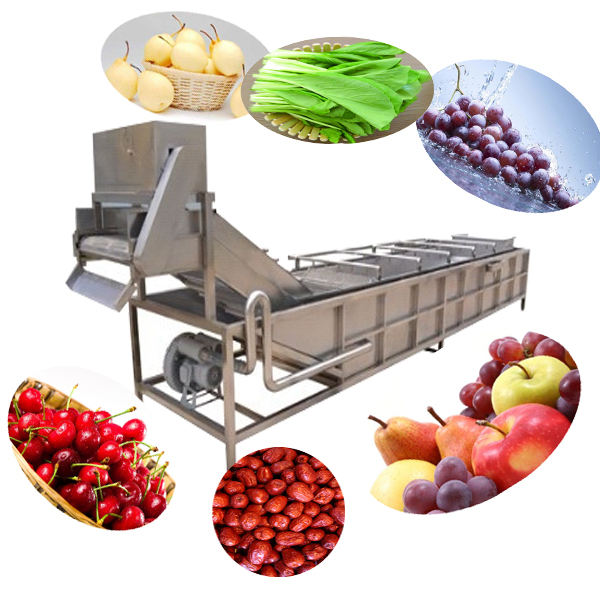
Common Washing Equipment
Bubble Washing Machines
These machines use air bubbles and water circulation for gentle cleaning.
Brush Washing Machines
Brush washers are suitable for potatoes, carrots, and root vegetables.
Spray Washers
Spray washers use high-pressure water systems for surface cleaning.
Sorting and Grading
Sorting systems improve product consistency and reduce defects. Nowadays, many factories use automated optical sorting technology.
Common Sorting Methods
- Manual sorting
- Weight grading
- Size grading
- Optical color sorting
Because AI vision systems are becoming more advanced, sorting accuracy is improving continuously.
Peeling
Different fruits and vegetables require different peeling technologies.
Common Peeling Methods
Mechanical Peeling
Mechanical peeling is commonly used for potatoes and carrots.
Steam Peeling
Steam peeling offers high efficiency for industrial production lines.
Chemical Peeling
Certain fruit processing applications use chemical peeling methods.
Cutting and Slicing
Precision cutting improves product uniformity and final appearance. Furthermore, consistent cutting helps improve cooking and freezing performance.
Cutting Types
- Dicing
- Slicing
- Cubing
- Shredding
- Strip cutting
Modern cutting machines offer adjustable sizes and high-speed processing capabilities.
Blanching
Blanching uses steam or hot water to improve product stability before freezing or drying.
This process helps:
- Inactivate enzymes
- Preserve color
- Improve texture
- Reduce bacteria
Therefore, blanching is an essential step in many production lines.
Drying or Frying
Depending on the final product, factories may use dryers, fryers, freeze dryers, or vacuum fryers. Meanwhile, energy efficiency has become increasingly important in these operations.
Packaging
Packaging protects food quality and extends shelf life. Moreover, attractive packaging improves market competitiveness.
Common Packaging Types
- Vacuum bags
- Pillow bags
- Plastic trays
- Stand-up pouches
- Metal cans
Advanced Packaging Technologies
Modern factories often use:
- Vacuum sealing
- Nitrogen flushing
- Modified atmosphere packaging
Important Fruit and Vegetable Processing Equipment
Washing Machines
Modern washing systems improve cleaning efficiency while minimizing product damage.
Main Features
- Stainless steel construction
- Water recycling systems
- Adjustable speed control
- Automatic filtration
Sorting Machines
Optical sorting systems use cameras and sensors to detect defective products automatically.
Main Benefits
- Reduced labor costs
- Higher sorting accuracy
- Better product consistency
Industrial Cutters
High-speed cutting machines process large production volumes efficiently.
Typical Applications
- French fries
- Vegetable cubes
- Fruit slices
- Salad ingredients
Blanching Machines
Industrial blanchers provide stable temperature control for consistent processing quality.
Common Types
- Continuous blanchers
- Steam blanchers
- Hot water blanchers
Drying Machines
Dryers are essential for dehydrated food production.
Popular Dryer Types
- Belt dryers
- Tray dryers
- Vacuum dryers
- Freeze dryers
Industrial Fryers
Continuous fryers are widely used in snack food production lines.
Main Features
- Automatic temperature control
- Oil filtration systems
- Continuous feeding
- Energy-saving design
Freezing Equipment
IQF freezers rapidly freeze products while maintaining quality and appearance.
Main Advantages
- Better texture
- Improved appearance
- Longer shelf life
Food Safety in Fruit and Vegetable Processing
Food safety is extremely important for every food factory. Therefore, processing plants must follow strict international standards.
HACCP System
Hazard Analysis and Critical Control Points (HACCP) helps factories identify and control food safety risks effectively.
Critical Control Areas
- Raw material inspection
- Washing quality
- Temperature control
- Metal detection
- Packaging hygiene
GMP Standards
Good Manufacturing Practices ensure hygienic production environments.
GMP Requirements
- Clean facilities
- Employee hygiene
- Pest control
- Equipment sanitation
Stainless Steel Equipment
Food-grade stainless steel is widely used because it resists corrosion and prevents contamination. Additionally, stainless steel equipment is easy to clean and maintain.
304 stainless steel is especially common in food factories.
Automation in Modern Food Factories
Automation is transforming the fruit and vegetable processing industry worldwide.
Benefits of Automation
Lower Labor Costs
Automated production lines reduce dependence on manual labor.
Higher Production Efficiency
Machines can operate continuously with stable performance.
Better Product Consistency
Automation improves size uniformity and quality control.
Reduced Food Waste
Accurate processing minimizes raw material losses.
Smart Factory Technologies
Modern factories increasingly adopt advanced technologies such as:
- PLC control systems
- Touchscreen interfaces
- AI visual inspection
- Robotic packaging
- IoT monitoring systems
As a result, production management becomes more efficient and reliable.
Energy Efficiency in Processing Plants
Energy costs remain a major concern for food manufacturers. Consequently, factories are investing in energy-saving technologies.
Energy-Saving Solutions
Heat Recovery Systems
These systems recover heat from fryers or dryers for reuse.
Variable Frequency Drives
Variable frequency drives reduce electricity consumption in motors.
Insulated Equipment
Insulation improves thermal efficiency and reduces energy loss.
Water Recycling Systems
Water recycling systems help reduce water consumption during washing operations.
Sustainable production is becoming a major competitive advantage in the global food industry.
Popular Fruit and Vegetable Products for Food Factories
Potato Products
Potatoes are among the most processed vegetables worldwide.
Common Potato Products
- French fries
- Potato chips
- Potato flakes
- Frozen potatoes
Tomato Products
Tomatoes are widely processed into:
- Tomato paste
- Ketchup
- Tomato sauce
- Puree
Onion and Garlic Products
Popular onion and garlic products include:
- Fried onions
- Garlic powder
- Onion flakes
- Garlic paste
Mango Products
Mango processing includes:
- Mango puree
- Dried mango
- Frozen mango cubes
- Mango juice
Apple Products
Apples are commonly processed into:
- Juice
- Dried snacks
- Apple sauce
- Frozen slices
Challenges in Fruit and Vegetable Processing
Seasonal Raw Material Supply
Factories must manage fluctuations in harvest seasons and raw material availability.
Product Shelf Life
Maintaining freshness and nutritional value remains a major challenge.
Rising Labor Costs
Because labor expenses continue to increase, automation is becoming increasingly important.
Food Safety Regulations
Factories must comply with strict international food safety standards.
Energy Consumption
Processing plants consume significant amounts of electricity and thermal energy.
Future Trends in Fruit and Vegetable Processing
Increased Automation
AI and robotics will continue replacing manual operations in food factories.
Healthy Snack Demand
Consumers increasingly prefer natural fruit and vegetable snacks.
Sustainable Manufacturing
Factories are investing in:
- Renewable energy
- Water recycling
- Eco-friendly packaging
Smart Manufacturing
Digital factories with real-time monitoring systems are becoming more common.
Plant-Based Food Growth
Processed vegetable ingredients are increasingly used in plant-based food products.
How to Choose Fruit and Vegetable Processing Equipment
Food factories should evaluate several factors before purchasing machinery.
Production Capacity
Factories should select equipment that matches daily production requirements.
Product Type
Different products require specialized processing technologies.
Automation Level
Manufacturers should balance labor savings with investment costs.
Material Quality
Food-grade stainless steel equipment is essential for hygiene and durability.
After-Sales Service
Reliable technical support is critical for industrial production.
Energy Consumption
Energy-efficient machines help reduce long-term operating costs.
Benefits of Investing in Modern Processing Lines
Modern processing systems help factories:
- Increase productivity
- Improve food safety
- Reduce labor costs
- Enhance product quality
- Expand export opportunities
- Improve profitability
Therefore, factories using advanced automation often achieve stronger market competitiveness.
Fruit and Vegetable Processing- DT Food Machine
Fruit and vegetable processing has become one of the most important sectors in modern food manufacturing. As global demand for convenient, healthy, and long-shelf-life food products continues to increase, food factories must adopt efficient and hygienic processing technologies to remain competitive.
From washing and sorting to freezing, drying, frying, and packaging, every processing stage plays a critical role in food safety and product quality. Furthermore, modern automated production lines help factories improve efficiency, reduce waste, lower labor costs, and achieve consistent production standards.
In the coming years, intelligent automation, sustainable manufacturing, and energy-efficient technologies will continue shaping the fruit and vegetable processing industry. Consequently, food factories that invest in advanced processing equipment and modern production systems will be better positioned for long-term growth and international market success.