
The global demand for processed fruits and vegetables continues to rise as consumers seek healthier, safer, and more convenient food products. Modern food factories rely on advanced fruit and vegetable processing lines to improve efficiency, maintain product quality, reduce labor costs, and meet international food safety standards.
A complete processing line can handle washing, sorting, peeling, cutting, blanching, drying, freezing, frying, packaging, and storage. These systems are widely used in the production of frozen vegetables, fruit juices, dried fruits, sauces, canned products, snacks, and ready-to-eat foods.
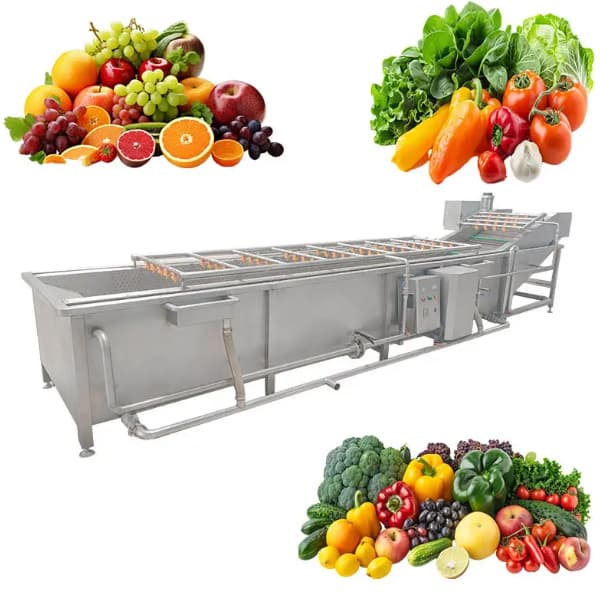
Introduction to Fruit and Vegetable Processing
Fruit and vegetable processing refers to the industrial transformation of fresh agricultural products into food products with longer shelf life and higher market value. Processing technologies help preserve freshness, improve food safety, and create products that are easier to transport and store.
Fresh produce is highly perishable. Without proper handling, fruits and vegetables can spoil quickly during transportation and storage. Therefore, processing plants use specialized machinery and automated systems to maintain quality while increasing productivity.
Today, food manufacturers process a wide variety of products, including:
- Frozen French fries
- Potato chips
- Frozen vegetables
- Tomato paste
- Fruit puree
- Fruit juice
- Garlic paste
- Onion flakes
- Dried fruits
- Vegetable powders
- Ready-to-cook vegetable mixes
Industrial processing lines are designed for continuous production and can operate at capacities ranging from several hundred kilograms per hour to dozens of tons per day.
Importance of Fruit and Vegetable Processing
The food processing industry plays a vital role in the global agricultural economy. Modern processing technologies help reduce food waste while increasing product availability throughout the year.
Extending Shelf Life
Fresh fruits and vegetables spoil rapidly after harvest. Processing methods such as freezing, drying, canning, and pasteurization significantly extend storage time.
Increasing Product Value
Processing increases the commercial value of agricultural products. For example:
- Fresh potatoes become frozen fries or chips
- Tomatoes become ketchup or tomato paste
- Fresh mangoes become juice or dried fruit snacks
Processed products usually generate higher profits than raw agricultural materials.
Improving Food Safety
Industrial processing systems reduce contamination risks through controlled washing, sterilization, and hygienic packaging procedures.
Reducing Post-Harvest Losses
A large percentage of fresh produce is lost during transportation and storage. Processing helps reduce waste and improve resource utilization.
Meeting Consumer Demand
Consumers increasingly prefer convenient foods that require minimal preparation time. Processed fruit and vegetable products fit modern lifestyles perfectly.
Main Equipment Used in Fruit and Vegetable Processing
Modern fruit and vegetable processing plants use a wide range of specialized equipment. Each machine performs a specific task within the production line.
Raw Material Receiving Systems
The production process begins with raw material transportation and feeding systems.
Common equipment includes:
- Belt conveyors
- Bucket elevators
- Roller conveyors
- Vibrating feeders
These systems transport products efficiently while reducing manual labor and minimizing product damage.
Food-grade stainless steel is commonly used because it is hygienic, durable, and resistant to corrosion.
Washing Machines
Washing is one of the most important stages in food processing because fresh produce often contains dirt, bacteria, pesticides, stones, and plant debris.
Different washing systems are used depending on the product type.
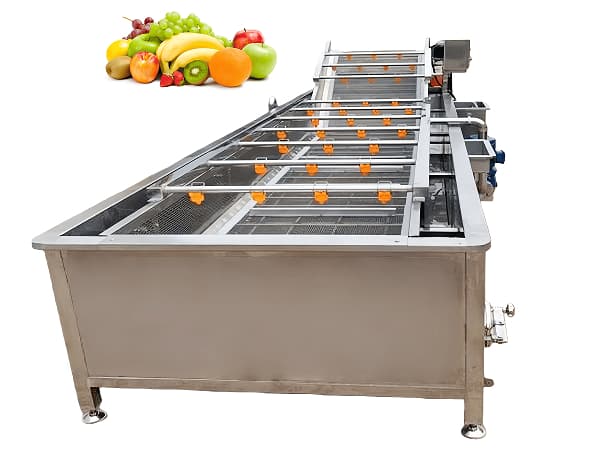
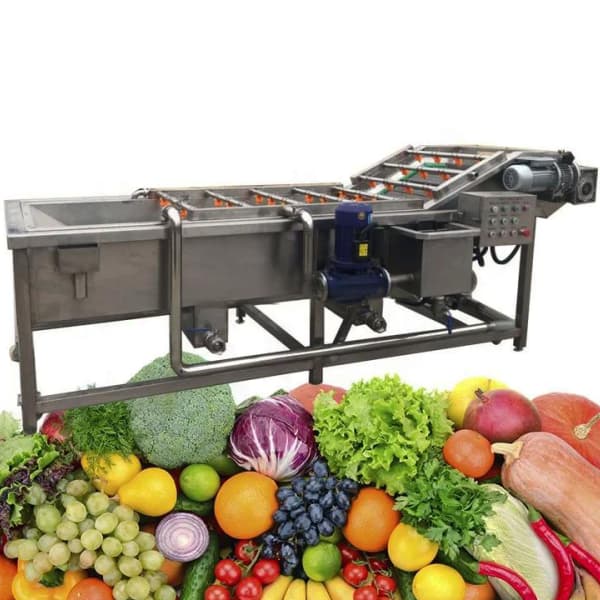
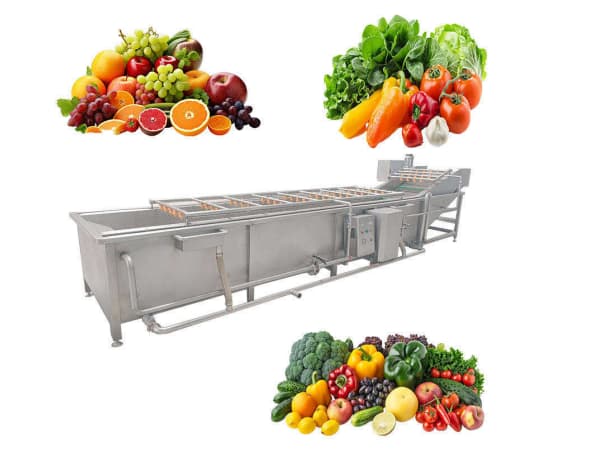
Bubble Washing Machine
Bubble washing systems use air bubbles and circulating water to clean delicate fruits and vegetables gently.
Suitable products include:
- Lettuce
- Spinach
- Apples
- Tomatoes
- Strawberries
Brush Roller Washing Machine
Brush washers use rotating rollers to remove dirt and peel from root vegetables.
Common applications include:
- Potatoes
- Carrots
- Cassava
- Sweet potatoes
- Ginger
Spray Washing System
High-pressure spray systems clean products effectively during conveyor transport.
Ultrasonic Washing Equipment
Ultrasonic technology removes contaminants more precisely for premium food products.
Sorting and Grading Machines
After washing, products are sorted according to size, shape, color, and quality.
Modern sorting technologies include:
- Weight graders
- Roller graders
- Optical sorting systems
- AI visual inspection machines
Automated grading improves consistency and removes defective products efficiently.
Optical sorting systems can identify:
- Discoloration
- Foreign materials
- Damaged products
- Size variations
This improves final product appearance and packaging quality.
Peeling Equipment
Many fruits and vegetables require peeling before further processing.
Brush Peeling Machine
Brush peelers remove thin outer skins through friction.
Suitable for:
- Potatoes
- Carrots
- Sweet potatoes
Steam Peeling Machine
Steam peeling systems use high-pressure steam to loosen skins quickly.
Advantages include:
- Low material loss
- Smooth product surface
- High peeling efficiency
Knife Peeling Machine
Mechanical knife peelers are used for fruits with thicker peels.
Applications include:
- Pineapples
- Mangoes
- Apples
Cutting and Slicing Machines
Cutting equipment transforms products into specific shapes and sizes.
Common cutting styles include:
- Slices
- Cubes
- Strips
- Dice
- Shreds
- Julienne cuts
Potato Cutting Machine
Used for French fries and potato strip production.
Vegetable Dicing Machine
Suitable for onions, carrots, peppers, cucumbers, and similar products.
Fruit Slicing Machine
Widely used for apples, bananas, lemons, and mangoes.
Uniform cutting improves:
- Cooking consistency
- Product appearance
- Packaging efficiency
- Production speed
Blanching Equipment
Blanching is a short heat treatment process using hot water or steam.
This step helps:
- Inactivate enzymes
- Preserve natural color
- Improve texture
- Reduce microbial contamination
Blanching is commonly used before:
- Freezing
- Drying
- Frying
Common Blanching Systems
- Hot water blanchers
- Steam blanchers
- Continuous blanching machines
Frozen vegetable factories widely use continuous blanching systems.
Cooling Systems
After blanching or cooking, products must be cooled quickly to prevent overcooking.
Cooling systems include:
- Cold water cooling tanks
- Air cooling tunnels
- Ice water cooling systems
Rapid cooling maintains product texture and food safety.
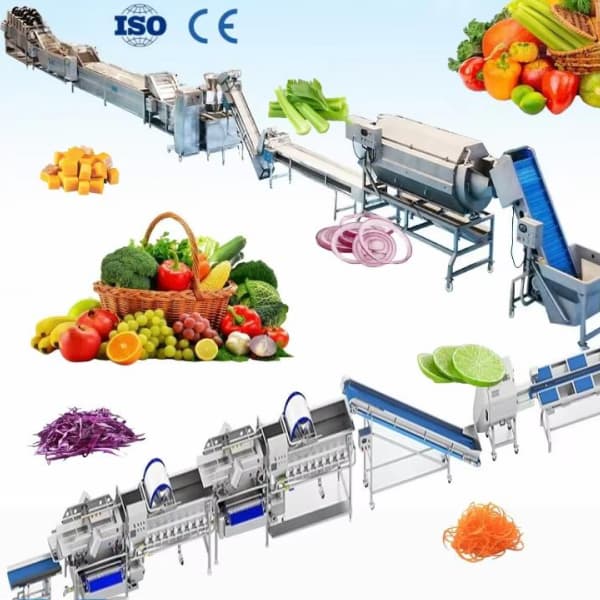
Dewatering and Drying Equipment
Removing excess moisture improves product quality and processing efficiency.
Vibrating Dewatering Machine
Uses vibration to remove surface water.
Air Drying Machine
Air knife systems remove moisture through high-pressure airflow.
Centrifugal Dewatering Machine
High-speed centrifugal force removes water efficiently.
These systems are important before freezing, frying, or packaging.
Frying Equipment
Frying systems are widely used in snack food production.
Popular fried products include:
- Potato chips
- French fries
- Fried onions
- Banana chips
- Vegetable snacks
Continuous Frying Machine
Designed for large-scale industrial production.
Vacuum Frying Machine
Vacuum frying uses lower temperatures to preserve nutrients, color, and flavor.
Advanced frying systems include:
- Automatic oil filtration
- Temperature control
- Continuous feeding systems
- Oil circulation technology
Freezing Equipment
Frozen fruit and vegetable products require rapid freezing technology.
IQF Freezer
Individually Quick Frozen systems freeze products separately instead of in large blocks.
Common IQF products include:
- Peas
- Corn
- Strawberries
- Mango cubes
- Broccoli
Spiral Freezer
Spiral freezers provide high-capacity continuous freezing for large factories.
Rapid freezing helps:
- Preserve nutrients
- Maintain texture
- Reduce ice crystal formation
- Extend shelf life
Juice Processing Equipment
Fruit juice production requires specialized machinery.
Typical juice processing equipment includes:
- Fruit crushers
- Pulping machines
- Juice extractors
- Filtration systems
- Homogenizers
- Pasteurizers
- Filling machines
Common juice products include:
- Apple juice
- Orange juice
- Mango juice
- Pineapple juice
- Tomato juice
Pasteurization ensures microbial safety while extending shelf life.
Drying Equipment
Drying systems reduce product moisture for long-term storage.
Hot Air Dryer
Widely used in vegetable and fruit dehydration.
Freeze Dryer
Freeze drying preserves nutrients, texture, and flavor effectively.
Microwave Dryer
Provides fast and energy-efficient drying.
Common dried products include:
- Garlic flakes
- Onion powder
- Dried mango
- Banana chips
- Vegetable powder
Packaging Machines
Packaging protects food products during transportation and storage.
Popular packaging formats include:
- Vacuum bags
- Pillow bags
- Bottles
- Cans
- Pouches
- Plastic trays
Packaging equipment may include:
- Multihead weighers
- Vertical packaging machines
- Vacuum sealing systems
- Bottle filling machines
- Labeling machines
Automated packaging systems reduce labor costs and contamination risks.
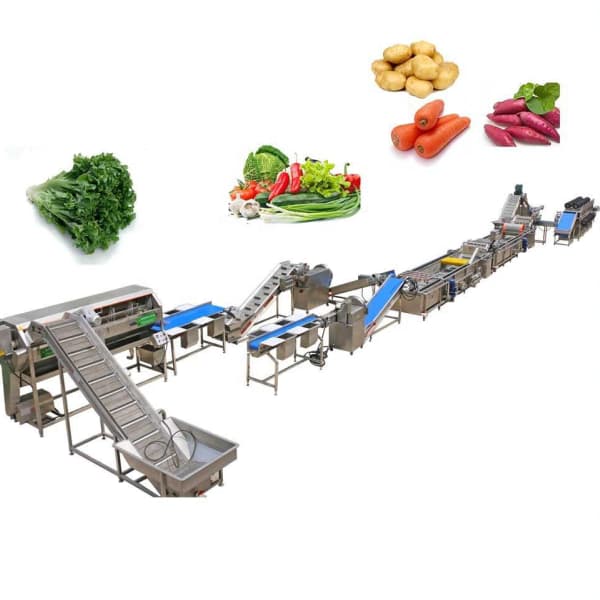
Production Steps in a Fruit and Vegetable Processing Line
Although different products require different technologies, most processing lines follow a similar workflow.
Raw Material Selection
High-quality raw materials are essential for producing high-quality finished products.
Manufacturers inspect:
- Freshness
- Ripeness
- Size
- Color
- Surface condition
Damaged or spoiled products are removed before processing.
Washing and Cleaning
Products are washed thoroughly to remove contaminants such as:
- Soil
- Dust
- Pesticides
- Stones
- Plant residues
Some factories use multiple washing stages for better cleaning performance.
Sorting and Grading
Products are sorted according to size and quality standards.
Automated systems improve efficiency and ensure product consistency.
Peeling
Products requiring skin removal enter peeling equipment.
This stage is common for:
- Potatoes
- Garlic
- Onions
- Mangoes
- Apples
Cutting or Crushing
Products are cut into required shapes or crushed for juice extraction.
Uniform cutting improves downstream processing performance.
Blanching or Pretreatment
Heat treatment stabilizes the product before further processing.
Some fruits also receive anti-browning treatment to preserve appearance.
Main Processing Operation
The next step depends on the final product.
Examples include:
- Frying for potato chips
- Drying for vegetable powder
- Freezing for IQF vegetables
- Pasteurization for fruit juice
Cooling
Products are cooled rapidly before packaging.
This step improves food safety and preserves texture.
Packaging
Finished products are sealed using automated packaging systems.
Proper packaging prevents contamination and extends shelf life.
Storage and Distribution
Products are stored under controlled conditions.
Storage methods include:
- Frozen warehouses
- Refrigerated storage
- Dry storage rooms
Temperature management is critical for maintaining food quality.
Automation in Modern Processing Plants
Automation has transformed the food processing industry significantly.
Modern processing lines use advanced technologies such as:
- PLC control systems
- Touchscreen interfaces
- AI inspection systems
- Robotic packaging
- IoT monitoring
Advantages of Automation
Higher Efficiency
Automated systems operate continuously with minimal downtime.
Reduced Labor Costs
Factories require fewer manual workers.
Better Product Consistency
Machines maintain uniform processing quality.
Improved Hygiene
Reduced human contact lowers contamination risks.
Easier Data Management
Digital systems track production records and quality control data.
Food Safety and Hygiene Standards
Food safety is essential in fruit and vegetable processing.
Many manufacturers follow international standards such as:
- HACCP
- ISO 22000
- GMP
- FDA requirements
- CE certification
Hygienic Equipment Design
Modern food processing machinery includes:
- Food-grade stainless steel construction
- Smooth surfaces for easy cleaning
- CIP cleaning systems
- Hygienic piping systems
These features reduce bacterial growth and improve sanitation efficiency.
Energy Efficiency in Processing Plants
Energy costs are a major concern for food manufacturers.
Modern processing plants use energy-saving technologies to reduce operating expenses.
Common Energy-Saving Solutions
Heat Recovery Systems
Reuse waste heat from production processes.
Variable Frequency Drives
Reduce motor energy consumption.
Efficient Thermal Insulation
Maintain stable temperatures with less energy loss.
Smart Automation Systems
Optimize machine operation automatically.
Energy-efficient factories improve sustainability while reducing production costs.
Applications of Fruit and Vegetable Processing Lines
Fruit and vegetable processing equipment is widely used across multiple industries.
Frozen Vegetable Production
Common products include:
- Green peas
- Corn kernels
- Broccoli
- Carrots
- Spinach
Potato Processing
Popular products include:
- Frozen French fries
- Potato chips
- Potato flakes
Tomato Processing
Tomatoes are processed into:
- Tomato paste
- Tomato puree
- Ketchup
- Tomato sauce
Fruit Juice Production
Factories produce:
- Apple juice
- Mango juice
- Orange juice
- Pineapple juice
Garlic and Onion Processing
Common products include:
- Garlic paste
- Garlic powder
- Fried onions
- Onion flakes
How to Choose the Right Processing Line
Choosing the right equipment depends on production goals and product requirements.
Production Capacity
Manufacturers must determine the desired output capacity.
Examples include:
- 500 kg/h
- 1 ton/h
- 5 tons/h
- 10 tons/h
Product Type
Different products require different processing technologies.
Frozen food production requires freezing systems, while dried food production requires dehydration equipment.
Automation Level
Factories can choose between:
- Semi-automatic systems
- Fully automatic systems
Factory Space
Equipment layout must fit the available workshop area efficiently.
Budget Planning
Investment costs vary depending on capacity and automation level.
Local Food Regulations
Equipment should comply with regional food safety standards and certification requirements.
Future Trends in Fruit and Vegetable Processing
The global food processing industry continues evolving rapidly.
Smart Manufacturing
AI and IoT technologies are becoming increasingly common.
Sustainable Production
Manufacturers focus on reducing:
- Water consumption
- Energy use
- Food waste
Plant-Based Food Growth
Demand for vegetable-based foods continues increasing worldwide.
Eco-Friendly Packaging
Biodegradable and recyclable packaging solutions are becoming more popular.
Advanced Robotics
Robotic systems improve production speed and reduce labor dependence.
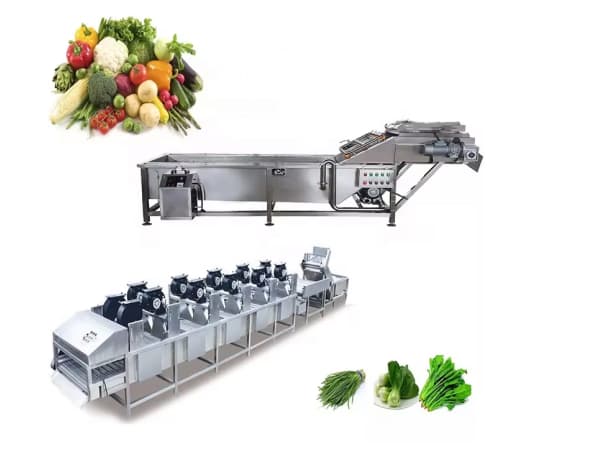
Fruit and Vegetable Processing Line – Manufacturer
Modern fruit and vegetable processing lines play a critical role in today’s food industry. From washing and sorting to peeling, cutting, freezing, drying, frying, and packaging, every processing step contributes to product quality, food safety, and production efficiency.
As consumer demand for processed food continues to increase, manufacturers are investing in advanced automation, hygienic equipment, and energy-efficient technologies. High-quality processing lines help factories improve productivity, reduce waste, and remain competitive in the global market.
Whether producing frozen vegetables, fruit juice, dried fruits, sauces, or snack foods, selecting the right fruit and vegetable processing equipment is essential for long-term success in the modern food processing industry.