
Instant noodles are a global convenience food enjoyed in almost every country. The industry is worth billions of dollars annually, with steady demand from both developing and developed markets. For food entrepreneurs, building an Шуурхай гоймонгийн үйлдвэрлэлийн шугам is an excellent investment, but it requires careful planning, specialized equipment, хүнсний аюулгүй байдлын стандартыг дагаж мөрдөх.
We provides a comprehensive guide on how to set up an instant noodle factory, including market considerations, step-by-step process design, machine selection, техникийн үзүүлэлт, зардлын хэмжүүр, and factory layout.
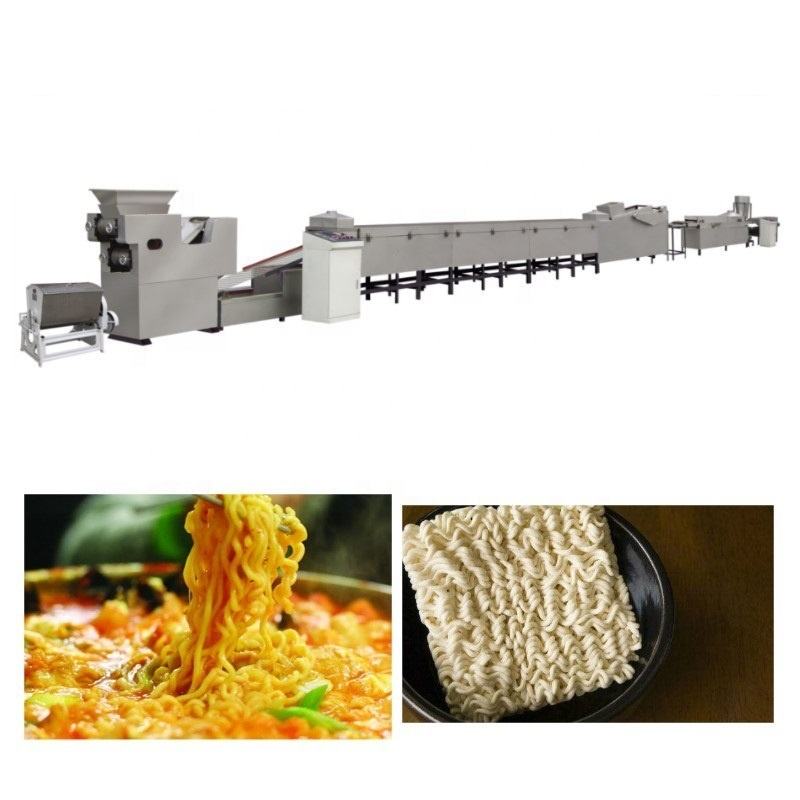
1. Global Market and Business Potential
1.1 Worldwide Demand for Instant Noodles
Шуурхай гоймонгийн холболтын дагуу, гүйцээх 120 Тэрбум Портинг are consumed globally every year. Key markets include:
- Хятад: Гүйцээх 40 billion servings annually.
- Үндэсний: More than 12 Тэрбум Портинг.
- Япот, АНУ, and South Korea: Mature markets with steady demand.
- Africa and South America: Fast-growing markets due to urbanization.
1.2 Product Trends
- Non-fried instant noodles are increasing in popularity due to health concerns.
- Ажгийн комог Цялаг гойм are popular in urban markets with younger demographics.
- Premium instant noodles with unique flavors are trending in developed countries.
Takeaway: Before building a line, identify your target consumer base and decide whether you will produce fried block noodles, шарсан махгүй гоймон, or cup noodles.
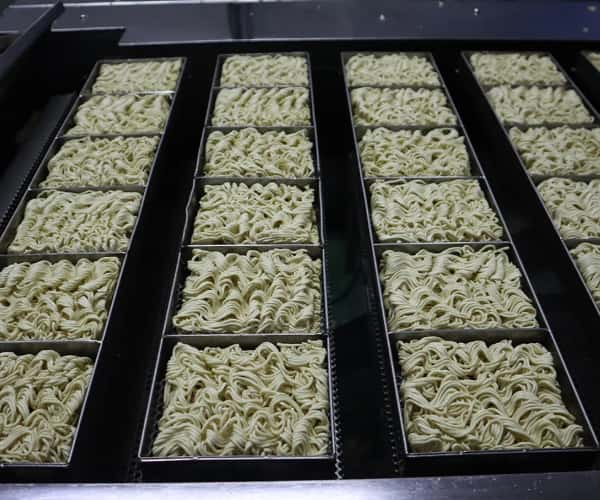
2. Planning Your Instant Noodle Production Line
2.1 Determining Production Capacity
Production lines are typically categorized as:
- Жижиг хэмжээний: 1,000–10,000 packs/day, suitable for startups.
- Дундын тулд: 10,000–100,000 packs/day, good for regional distribution.
- Олон нийтээр: 100,000+ Багцууд / өдөр, targeting nationwide or export markets.
2.2 Choosing Automation Level
- Semi-automatic lines: Require more labor but cost less to install.
- Fully automatic lines: High output, lower labor cost, but higher initial investment.
2.3 Space and Infrastructure Requirements
- Small plant: 500–800 m².
- Medium plant: 1,000-1,5 / ба02/1..
- Large plant: 2,000+ хязаа.
- Must include space for raw material storage, production line, сав баглаа боодол, quality control lab, and finished goods warehouse.
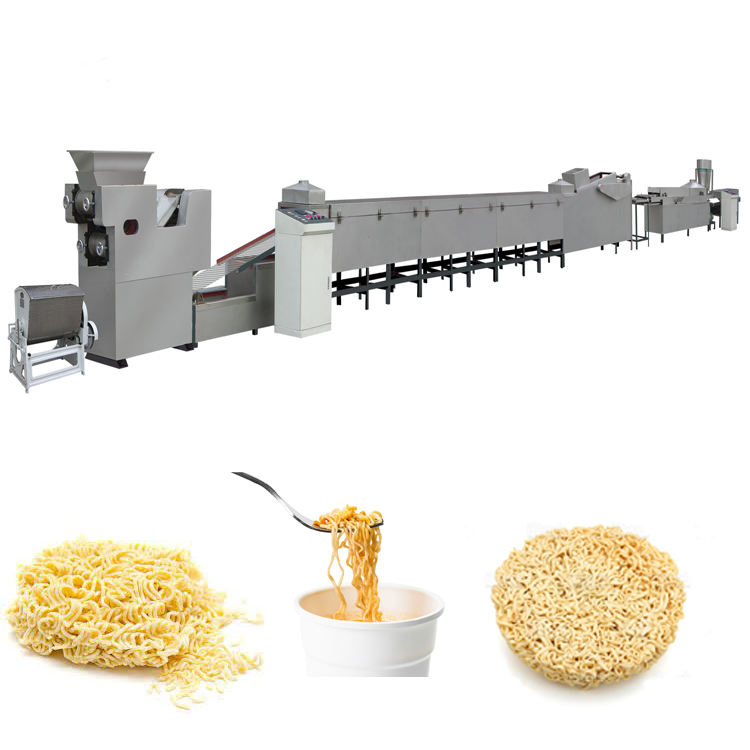
3. Step-by-Step Process of Instant Noodle Production
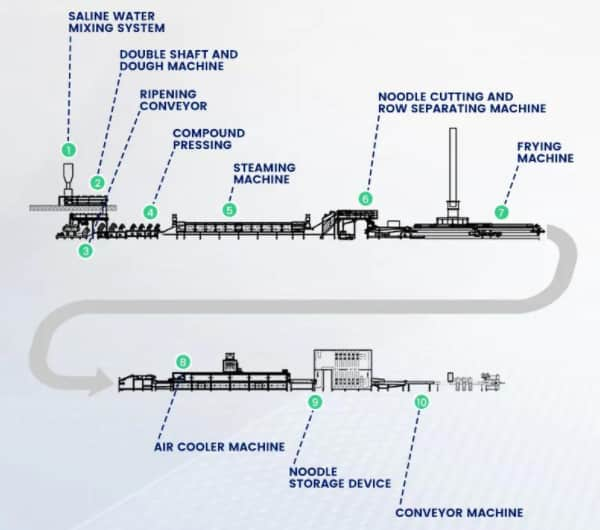
Дуусгах Шуурхай гоймонгийн үйлдвэрлэлийн шугам follows these steps:
3.1 Гурил холимог
- Найрлагын дэвтэр: Улаан буудайн гурил, ус, давс, шүлтлэг ус (Кансуи), ба нэмэлт.
- Машин: Automatic flour mixer ensures uniform hydration.
3.2 Dough Sheeting
- Dough is compressed into sheets by a compound roller.
- Multiple rolling stages improve gluten structure and elasticity.
3.3 Cutting and Slitting
- Sheets are cut into thin strands using a slitter cutter.
- Noodles may be straight or wavy depending on cutter design.
3.4 Уурын
- Strands are steamed in a tunnel at 100–105°C.
- Gelatinization ensures proper texture after cooking.
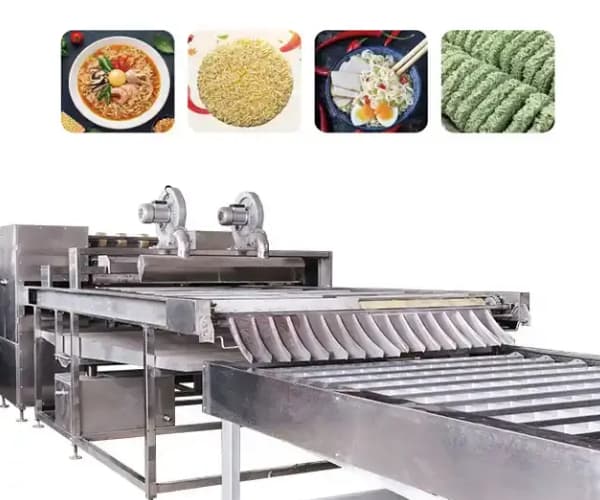
3.5 Shaping and Cutting
- Noodles are folded and placed into molds or cups.
3.6 Frying or Drying
- Шарсан гоймон: Dehydrated in edible oil at ~150°C for 1–2 minutes.
- Шарсан махгүй гоймон: Passed through a hot-air dryer at 70–90°C.
3.7 Тайвшуу
- Essential for stabilizing product before packaging.
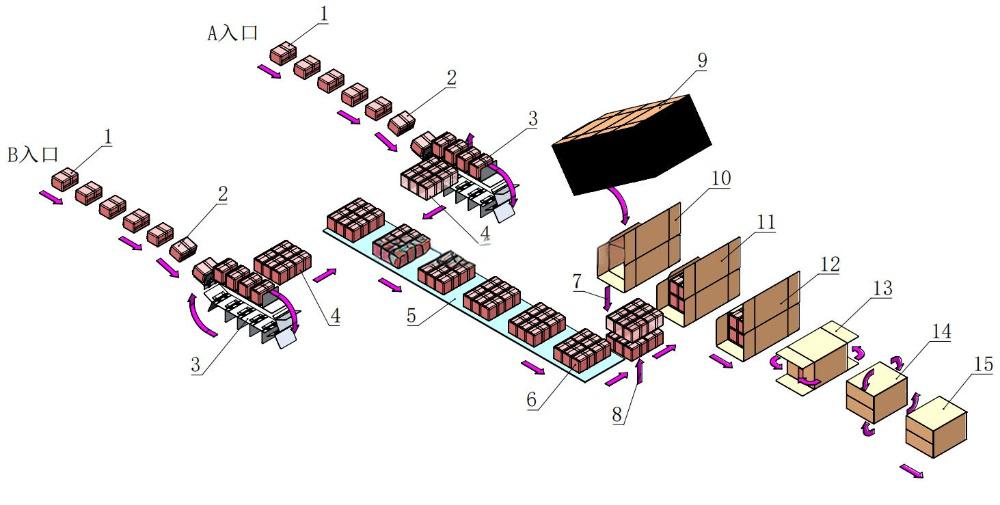
3.8 Сав баглаа боодол
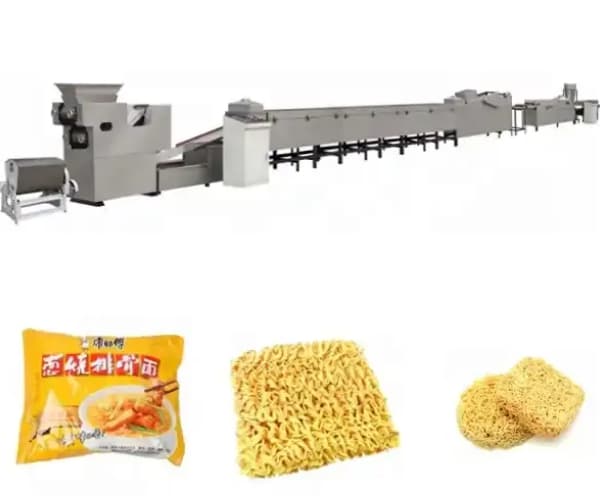
- Bag noodles: Дэр баглаа боодлын машин.
- Ажгийн комог Цялаг гойм: Cup sealing machine with seasoning sachet insertion…
4. Machinery and Technical Specifications
| Машин | Үүрэг | Хүчин чадал | Хүч | Цалиншил | Эд нэвтрэх |
|---|---|---|---|---|---|
| Flour Mixer | Mix flour & ус | 200-500 кг / цаг | 4–7 kW | 1500×900×1200 mm | Гааролтийн ган төмөр |
| Нийлмэл галзуу | Roll dough into sheets | 200-800 кг / цаг | 5-10 кв | 2000×1000×1500 mm | Тохируулж болох зузаан |
| Slitter Cutter | Cut sheets into strands | 200-500 кг / цаг | 2–5 kW | 1200×800х1100 мм | Customizable width |
| Хонгилыг жигнэх | Steam strands | 200-1000 кг / цаг | 20–30 kW | 6000×1200×2200 mm | Температур хянах |
| Хярагч | Fry noodles in oil | 200–1000 pcs/min | 25–45 kW | 7000×1600×2300 mm | Oil circulation |
| Dryer (Шингэн бус) | Dry noodles | 200-800 кг / цаг | 30-50 кв | 9000×1800×2500 mm | Hot-air drying |
| Хийнэлагын машин | Pack noodles | 30-120 багц / мин | 3–6 kW | 3500× 900 × 1400 мм | Bag/cup options |
5. Utility Requirements
- Цахилгаан: Industrial 3-phase supply for high-power machines.
- Steam Boiler: Required for steaming and frying.
- Water Supply: Цэвэр, filtered water for dough and cleaning.
- Агааржуулалт & Exhaust: To remove oil fumes from frying section.
- Wastewater treatment: Required by food safety regulations.
6. Quality Control in Production
6.1 Түүхий эд
- Wheat flour must meet protein content standards.
- Palm oil should be food-grade and filtered regularly.
6.2 In-Process Control
- Dough moisture checked every batch.
- Steaming tunnel temperature continuously monitored.
6.3 Finished Product Tests
- Чийг агууламж: Below 10%.
- Эрвлийн агох аглох (шарсан гоймон): 18–24%.
- Cooking time: 3–5 minutes.
- Shelf life: 6-12 сар.
7. Cost Analysis for Instant Noodle Production Line
7.1 Анхны хөрөнгө оруулалт
- Small-scale semi-automatic line: $100,000- 200,000 доллар.
- Medium-scale automatic line: $300,000–$600,000.
- Large-scale fully automatic line: $800,000–$1,500,000.
7.2 Үйл ажиллагааны зардал
- Түүхий эд: Гурил, Газрын тос, flavorings (50–60% of cost).
- Хөдөлмөр: Operators, хагас инженер, QC staff.
- Energy: Цахилгаан + steam fuel (gas or coal).
- Дэмжлэгэ: Spare parts and cleaning.
7.3 Profitability Example
- Cost per pack: $0.10–$0.15.
- Борлуулах үнэ: $0.25–$0.40 (depending on market).
- Gross margin: 50–60%.
8. Factory Layout Design
Олон бус factory layout follows this sequence:
- Raw Material Storage Area – flour silos, oil tanks, seasoning storage.
- Холд & Dough Room – flour mixing and dough sheet rolling.
- Уурын & Frying Area – requires steam boiler connection and exhaust system.
- Тайвшуу & Packaging Area – separated from hot processing areas.
- Quality Control Lab – small room for testing samples.
- Finished Product Warehouse – dry, ventilated, pest-free environment.
Flow should be linear, avoiding cross-contamination between raw and finished goods.
9. Regulatory and Safety Considerations
- Хүнсний аюулгүй байдлын стандартууд: HACC, Исаа 22000, Хуруу (for export).
- Worker Safety: Heat protection in frying section, slip-proof flooring.
- Fire Safety: Oil fryers must include fire suppression systems.
- Environmental Compliance: Proper oil filtration and wastewater treatment.
10. Tips for Success in the Instant Noodle Business
- Choose the right product type based on market demand.
- Invest in flavor R&Жар – consumers often choose noodles for taste.
- Partner with reliable machinery suppliers offering after-sales service.
- Start with scalable capacity and expand as sales grow.
- Focus on packaging design to stand out on store shelves.
Choose us as your Instant noodle production line manufacturer
Building an instant noodle production line requires significant investment but offers strong profitability in a global growth market. By carefully selecting the right equipment, designing an efficient production flow, and implementing strict quality control, manufacturers can produce noodles that meet both consumer demand and international food safety standards.
With the right strategy, an instant noodle factory can evolve from a regional supplier to an international brand.