Instalar una línea de producción de máquinas envolvedoras de rollitos de primavera puede ser una inversión inteligente para las empresas alimentarias. A medida que la demanda mundial de alimentos convenientes continúa creciendo, Los envoltorios para rollitos de primavera son cada vez más populares en muchos mercados.. Por lo tanto, Construir un sistema de producción eficiente puede crear fuertes oportunidades de negocio..
como planificar, construir, y operar una línea de producción paso a paso. Además, Se incluyen consejos prácticos para ayudarle a evitar errores comunes y mejorar la eficiencia..
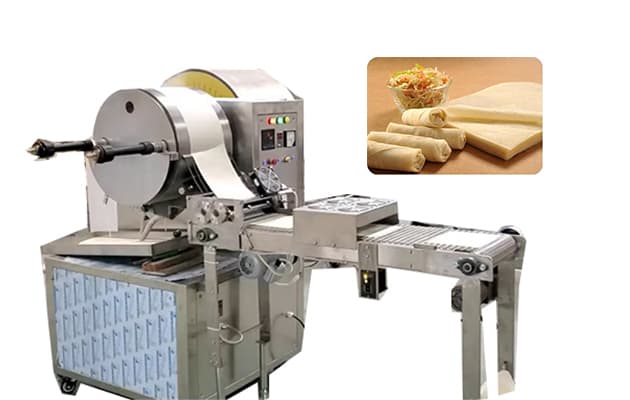
1. Comprensión del producto y del mercado Máquina envolvedora de rollitos de primavera
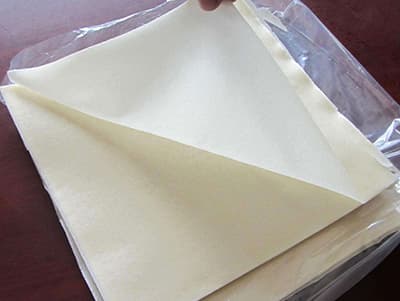
Antes de comprar equipo, debes entender claramente tu producto. Los envoltorios de rollitos de primavera son láminas finas elaboradas principalmente con harina y agua.. Sin embargo, diferentes mercados pueden requerir diferentes tipos.
Por ejemplo, algunos clientes prefieren envoltorios frescos, mientras que otros necesitan productos congelados. Además, Los envoltorios a base de arroz son populares en ciertas regiones..
Debido a esto, Definir tu mercado objetivo es esencial.. Una vez que el mercado esté despejado, elegir las máquinas adecuadas se vuelve mucho más fácil.
2. Planificación de su línea de producción
Un plan claro ayuda a reducir costos y mejorar la eficiencia. Sin una planificación adecuada, Los problemas de producción pueden aparecer más adelante..
Primero, decide tu capacidad de producción. Por ejemplo, las pequeñas fábricas pueden elegir 100 kg/hora, mientras que las fábricas más grandes pueden necesitar más 300 kg/hora. Próximo, considere su espacio disponible y presupuesto.
Mientras tanto, el diseño debe seguir un flujo simple y lógico. En otras palabras, Los materiales deben moverse en una sola dirección.. Este enfoque reduce los riesgos de contaminación y ahorra tiempo..
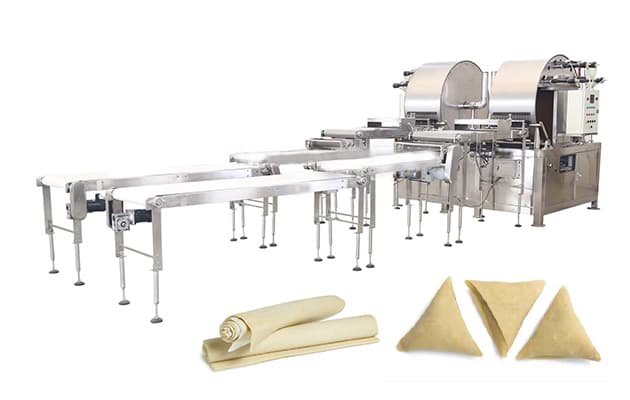
3. Equipo principal requerido
Elegir el equipo adecuado es uno de los pasos más importantes. Cada máquina juega un papel específico en el proceso..
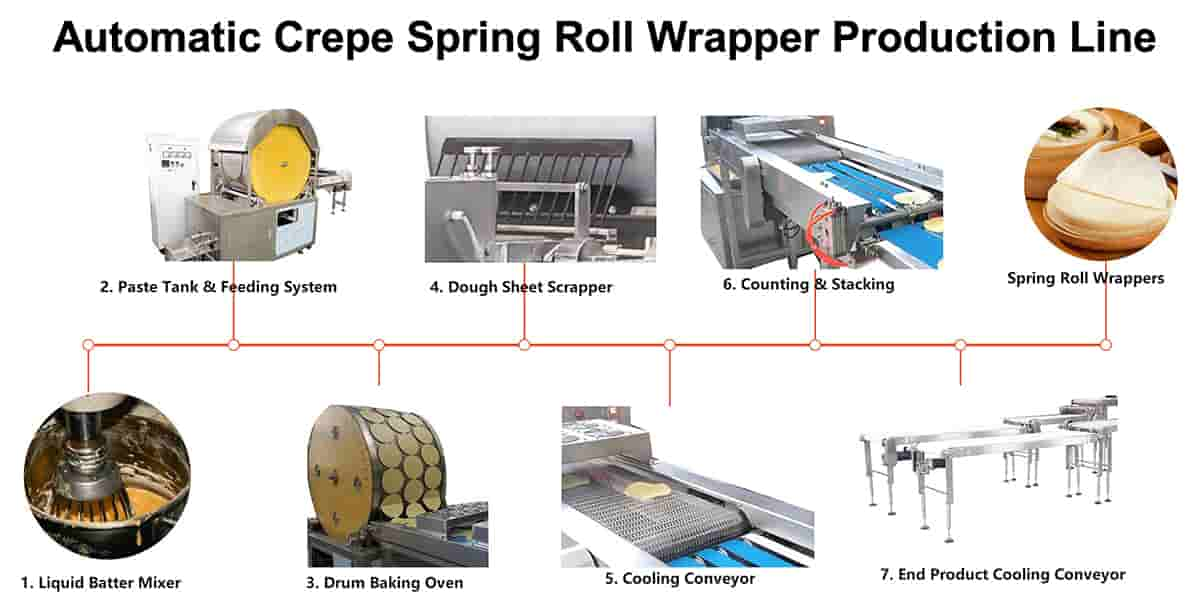
3.1 Máquina mezcladora de masa
La mezcladora prepara la masa.. Combina harina, agua, y otros ingredientes en una mezcla suave.
Un buen mezclador garantiza una calidad constante. Además, Reduce el trabajo manual y mejora la eficiencia..
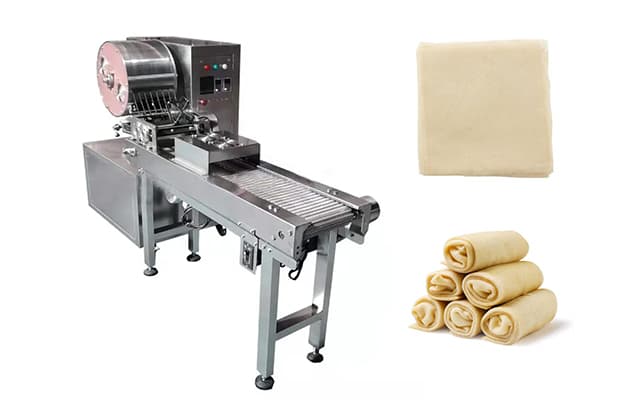
3.2 Máquina de envoltura de rollo de primavera
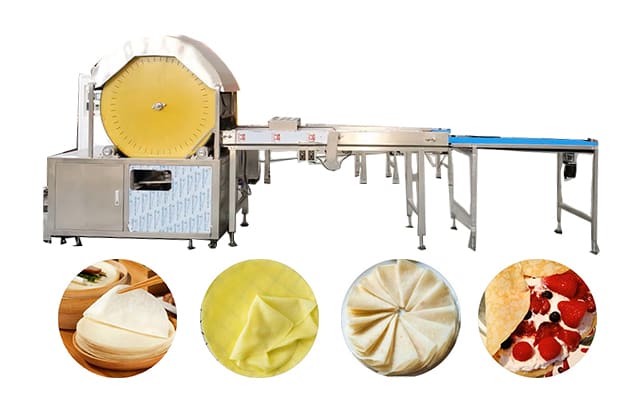
Esta máquina forma y cocina la envoltura.. Esparce la masa sobre una superficie caliente y crea láminas finas..
El control de la temperatura es muy importante aquí.. Si el calor es demasiado alto, el envoltorio puede quemarse. Por otro lado, El fuego bajo puede causar una cocción insuficiente..
3.3 Transportador de enfriamiento
Después de hornear, los envoltorios deben enfriarse. De lo contrario, pueden permanecer juntos.
Un transportador de enfriamiento ayuda a mantener la forma y la calidad. Al mismo tiempo, prepara el producto para el siguiente paso.
3.4 Sistema de corte y apilado
En muchas líneas de producción, El corte y el apilado están automatizados.. Como resultado, Los costos laborales disminuyen significativamente..
Además, la automatización mejora la consistencia y la velocidad.
3.5 Máquina de envases
Finalmente, el producto está empaquetado. Este paso es especialmente importante para productos congelados..
Por ejemplo, El embalaje sellado ayuda a prolongar la vida útil.. Además, Protege el producto durante el transporte..
4. Proceso de producción explicado
Comprender el proceso completo le ayuda a gestionar mejor la producción. Cada paso debe ser controlado cuidadosamente..
Paso 1: Preparación de Materia Prima
al principio, preparar todas las materias primas. Asegúrese de que los ingredientes cumplan con los estándares de calidad..
Paso 2: Mezcla de masa
Próximo, mezcle los ingredientes hasta obtener una masa suave. Si aparecen grumos, La calidad del producto final disminuirá..
Por lo tanto, El tiempo y la velocidad de mezclado deben controlarse adecuadamente..
Paso 3: Formar y hornear
Después de mezclar, la masa se procesa en láminas finas. La máquina reparte la masa uniformemente y la cocina..
Mientras tanto, El espesor debe permanecer constante.. De lo contrario, algunos envoltorios pueden romperse fácilmente.
Paso 4: Enfriamiento
Una vez cocido, las envolturas se mueven a la sección de enfriamiento. Durante esta etapa, el flujo de aire adecuado es importante.
Si el enfriamiento es insuficiente, pueden ocurrir problemas de adherencia. Como resultado, la calidad del producto disminuirá.
Paso 5: Cortar y apilar
Después de enfriar, los envoltorios se cortan y se apilan. En sistemas automatizados, este proceso es rápido y preciso.
Paso 6: Embalaje
Finalmente, los envoltorios están empaquetados. Dependiendo del mercado, Se pueden utilizar diferentes métodos de embalaje..
5. Elegir la capacidad de producción adecuada
La selección de capacidad depende de sus objetivos comerciales. Elegir un sistema demasiado grande puede aumentar los costos innecesariamente. Sin embargo, Elegir un sistema demasiado pequeño puede limitar el crecimiento..
Para pequeñas empresas, una línea compacta suele ser suficiente. Mientras tanto, Las fábricas medianas suelen preferir sistemas semiautomáticos.. Grandes fábricas, por otro lado, A menudo invierten en líneas totalmente automáticas..
6. Requisitos de configuración de fábrica
Una fábrica bien diseñada mejora la eficiencia y la seguridad.
Primero, dividir el espacio en diferentes áreas. Por ejemplo, incluir almacenamiento de materia prima, producción, y zonas de embalaje.
Además, es necesaria una ventilación adecuada. Un buen flujo de aire ayuda a mantener la calidad del producto y la comodidad de los trabajadores..
7. Análisis de costos
Comprender los costos es esencial antes de comenzar.
Los principales gastos incluyen maquinaria., mano de obra, y materias primas. Además, Se deben considerar los costos de servicios públicos como la electricidad y el agua..
Aunque la inversión inicial puede parecer alta, La producción eficiente puede reducir los costos a largo plazo.. Por lo tanto, planificar cuidadosamente es importante.
8. Consejos de control de calidad
Mantener la calidad garantiza la satisfacción del cliente..
Por ejemplo, El espesor constante de la masa mejora el rendimiento del producto.. Mientras tanto, El control adecuado de la temperatura previene defectos..
Si aparecen problemas, Los ajustes deben hacerse rápidamente.. De lo contrario, los residuos pueden aumentar.
9. Trabajo y Formación
Incluso las líneas automatizadas necesitan trabajadores capacitados.
Los operadores deben comprender las funciones de la máquina.. Además, Deben saber cómo manejar cuestiones básicas..
Una formación adecuada reduce los errores. Como resultado, La producción se vuelve más estable..
10. Automatización versus producción manual
La automatización ofrece muchas ventajas. Por ejemplo, Mejora la eficiencia y reduce los costes laborales..
Sin embargo, Los sistemas manuales requieren una menor inversión.. Por lo tanto, las pequeñas empresas pueden preferirlos al principio.
A la larga, la automatización generalmente proporciona mejores retornos.
11. Embalaje y almacenamiento
El embalaje juega un papel importante en la calidad del producto..
Por ejemplo, Los productos congelados requieren embalaje sellado.. En contraste, Los productos frescos pueden utilizar métodos más simples..
Las condiciones de almacenamiento también son importantes.. Las bajas temperaturas ayudan a prolongar la vida útil.
12. Comercializar su producto
Después de la producción, vender el producto es el siguiente paso.
Puedes orientar tus anuncios a restaurantes, supermercados, y distribuidores. Además, El marketing online puede ayudar a llegar a más clientes..
Ofrecer muestras también es efectivo. Como resultado, Los clientes pueden probar la calidad de su producto directamente..
13. Errores comunes para evitar
Algunos errores pueden reducir la eficiencia.
Por ejemplo, Una mala planificación puede provocar retrasos en la producción.. Además, La selección incorrecta de la máquina puede aumentar los costos..
Por lo tanto, una preparación cuidadosa es esencial.
14. Mantenimiento y soporte
El mantenimiento regular mantiene las máquinas funcionando sin problemas.
La limpieza diaria es importante. Mientras tanto, comprobar las piezas clave ayuda a prevenir averías.
Elegir un proveedor confiable también es crucial. Un buen soporte puede resolver problemas rápidamente.
15. Pensamientos finales
La instalación de una línea de producción de envoltorios para rollitos de primavera requiere una planificación cuidadosa. Sin embargo, con el enfoque correcto, puede ser un negocio rentable.
Eligiendo el equipo adecuado y manteniendo la calidad., Puedes construir un sistema de producción fuerte.. Además, La mejora continua ayudará a que su negocio crezca con el tiempo..