
La demanda mundial de frutas y verduras procesadas continúa aumentando a medida que los consumidores buscan productos más saludables., más seguro, y productos alimenticios más convenientes. Las fábricas de alimentos modernas dependen de líneas avanzadas de procesamiento de frutas y verduras para mejorar la eficiencia., mantener la calidad del producto, Reducir los costos laborales, y cumplir con los estándares internacionales de seguridad alimentaria.
Una línea de procesamiento completa puede encargarse del lavado., clasificación, peladura, corte, blanquear, el secado, congelación, fritura, embalaje, y almacenamiento. Estos sistemas son muy utilizados en la producción de hortalizas congeladas., jugos de frutas, frutas secas, salsas, productos enlatados, bocadillos, y alimentos listos para comer.
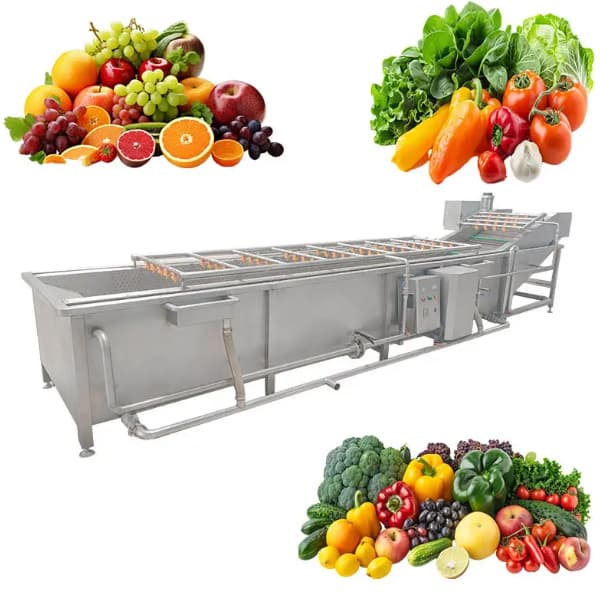
Introducción al procesamiento de frutas y verduras.
El procesamiento de frutas y verduras se refiere a la transformación industrial de productos agrícolas frescos en productos alimenticios con una vida útil más larga y un mayor valor de mercado.. Las tecnologías de procesamiento ayudan a preservar la frescura, mejorar la seguridad alimentaria, y crear productos que sean más fáciles de transportar y almacenar.
Los productos frescos son muy perecederos.. Sin un manejo adecuado, Las frutas y verduras pueden echarse a perder rápidamente durante el transporte y el almacenamiento.. Por lo tanto, Las plantas de procesamiento utilizan maquinaria especializada y sistemas automatizados para mantener la calidad y al mismo tiempo aumentar la productividad..
Hoy, Los fabricantes de alimentos procesan una amplia variedad de productos., incluido:
- Papas fritas congeladas
- Papas fritas
- Vegetales congelados
- Tomato paste
- puré de frutas
- Zumo de frutas
- Pasta de ajo
- hojuelas de cebolla
- frutos secos
- Polvos vegetales
- Mezclas de verduras listas para cocinar
Las líneas de procesamiento industrial están diseñadas para una producción continua y pueden operar a capacidades que van desde varios cientos de kilogramos por hora hasta decenas de toneladas por día..
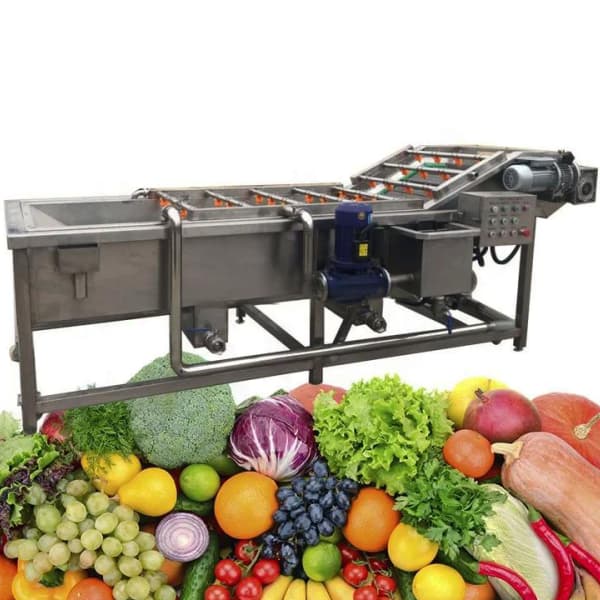
Importancia del procesamiento de frutas y verduras
La industria procesadora de alimentos desempeña un papel vital en la economía agrícola mundial.. Las tecnologías de procesamiento modernas ayudan a reducir el desperdicio de alimentos y al mismo tiempo aumentan la disponibilidad del producto durante todo el año..
Ampliación de la vida útil
Las frutas y verduras frescas se echan a perder rápidamente después de la cosecha. Métodos de procesamiento como la congelación., el secado, envase, y la pasteurización extienden significativamente el tiempo de almacenamiento.
Aumento del valor del producto
El procesamiento aumenta el valor comercial de los productos agrícolas. Por ejemplo:
- Las patatas frescas se convierten en patatas fritas o patatas fritas congeladas.
- Los tomates se convierten en ketchup o pasta de tomate.
- Los mangos frescos se convierten en zumos o snacks de frutos secos.
Los productos procesados suelen generar mayores beneficios que las materias primas agrícolas..
Mejorar la seguridad alimentaria
Los sistemas de procesamiento industrial reducen los riesgos de contaminación mediante un lavado controlado, esterilización, y procedimientos de embalaje higiénicos.
Reducir las pérdidas poscosecha
Un gran porcentaje de productos frescos se pierde durante el transporte y almacenamiento.. El procesamiento ayuda a reducir el desperdicio y mejorar la utilización de recursos..
Satisfacer la demanda del consumidor
Los consumidores prefieren cada vez más alimentos convenientes que requieren un tiempo mínimo de preparación.. Los productos hortofrutícolas procesados se adaptan perfectamente al estilo de vida moderno.
Principales equipos utilizados en el procesamiento de frutas y verduras
Las modernas plantas procesadoras de frutas y verduras utilizan una amplia gama de equipos especializados.. Cada máquina realiza una tarea específica dentro de la línea de producción..
Sistemas de recepción de materia prima
El proceso de producción comienza con el transporte de materia prima y los sistemas de alimentación..
El equipo común incluye:
- Cintas transportadoras
- Elevadores de cangilones
- Transportadores de rodillos
- alimentadores vibratorios
Estos sistemas transportan productos de manera eficiente al mismo tiempo que reducen la mano de obra y minimizan el daño al producto..
El acero inoxidable apto para uso alimentario se utiliza habitualmente porque es higiénico., durable, y resistente a la corrosión.
Lavadora
El lavado es una de las etapas más importantes en el procesamiento de alimentos porque los productos frescos a menudo contienen suciedad., bacterias, pesticidas, piedras, y restos de plantas.
Se utilizan diferentes sistemas de lavado según el tipo de producto..
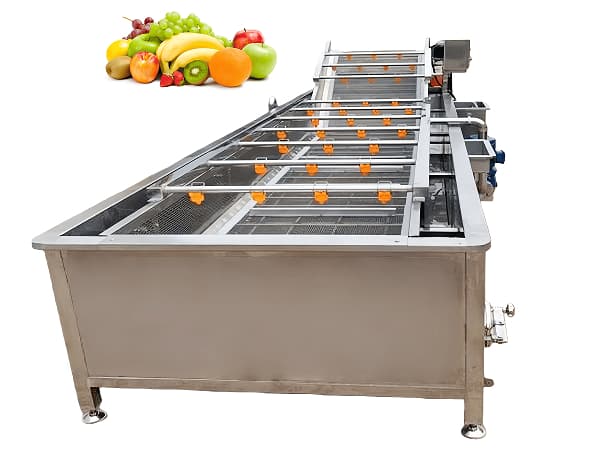
Lavadora de burbujas
Los sistemas de lavado de burbujas utilizan burbujas de aire y agua circulante para limpiar suavemente frutas y verduras delicadas..
Los productos adecuados incluyen:
- Lechuga
- Espinaca
- Manzana
- tomates
- fresas
Lavadora de rodillos de cepillo
Las lavadoras de cepillos utilizan rodillos giratorios para eliminar la suciedad y la cáscara de los tubérculos..
Las aplicaciones comunes incluyen:
- Papas
- Zanahorias
- Mandioca
- batatas
- Jengibre
Sistema de lavado por aspersión
Los sistemas de pulverización de alta presión limpian eficazmente los productos durante el transporte por cinta transportadora.
Equipo de lavado ultrasónico
La tecnología ultrasónica elimina los contaminantes con mayor precisión en productos alimenticios de primera calidad.
Máquinas clasificadoras y clasificadoras
Después del lavado, Los productos se clasifican según el tamaño., forma, color, y calidad.
Las tecnologías de clasificación modernas incluyen:
- clasificadoras de peso
- Niveladoras de rodillos
- Sistemas de clasificación óptica
- Máquinas de inspección visual con IA
La clasificación automatizada mejora la consistencia y elimina los productos defectuosos de manera eficiente.
Los sistemas de clasificación óptica pueden identificar:
- Descoloramiento
- Materiales extraños
- Productos dañados
- Variaciones de tamaño
Esto mejora la apariencia del producto final y la calidad del empaque..
Equipo de pelado
Muchas frutas y verduras requieren pelarse antes de su posterior procesamiento..
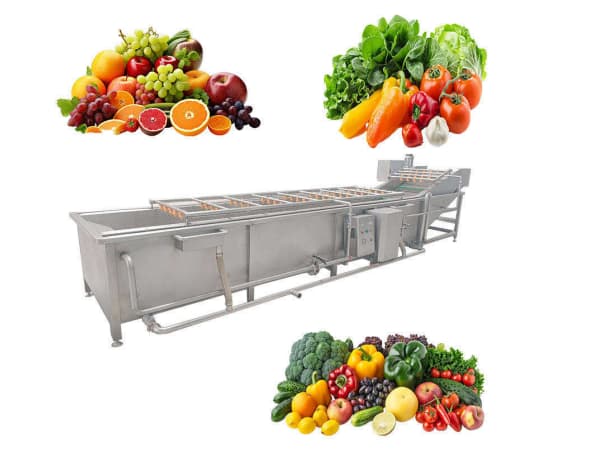
Peladora de cepillos
Los peladores con cepillo eliminan las finas capas exteriores mediante la fricción..
Apto para:
- Papas
- Zanahorias
- batatas
Peladora de vapor
Los sistemas de pelado con vapor utilizan vapor a alta presión para aflojar la piel rápidamente.
Las ventajas incluyen:
- Baja pérdida de material
- Superficie lisa del producto
- Alta eficiencia de pelado
Peladora de cuchillos
Los peladores mecánicos con cuchilla se utilizan para frutas con cáscara más gruesa..
Las aplicaciones incluyen:
- piñas
- mangos
- Manzana
Máquinas cortadoras y rebanadoras
El equipo de corte transforma productos en formas y tamaños específicos..
Los estilos de corte comunes incluyen:
- Rebanadas
- cubos
- tiras
- Dados
- Trituraciones
- cortes en juliana
Máquina de cortar papas
Utilizado para la producción de papas fritas y tiras de papa..
Máquina para cortar vegetales en cubitos
Apto para cebollas, zanahorias, pimientos, pepinos, y productos similares.
Máquina cortadora de frutas
Ampliamente utilizado para manzanas., plátanos, limones, y mangos.
El corte uniforme mejora:
- Consistencia de cocción
- Aspecto del producto
- Eficiencia de embalaje
- Velocidad de producción
Equipo de blanqueo
El escaldado es un proceso corto de tratamiento térmico que utiliza agua caliente o vapor..
Este paso ayuda:
- Inactivar enzimas
- Preservar el color natural
- mejorar la textura
- Reducir la contaminación microbiana
El escaldado se utiliza comúnmente antes:
- Congelación
- El secado
- Fritura
Sistemas de blanqueo comunes
- Escaldadoras de agua caliente
- Escaldadores de vapor
- Blanqueadoras continuas
Las fábricas de hortalizas congeladas utilizan ampliamente sistemas de escaldado continuo.
Sistemas de enfriamiento
Después de escaldar o cocinar, Los productos deben enfriarse rápidamente para evitar que se cocinen demasiado..
Los sistemas de refrigeración incluyen:
- Tanques de enfriamiento de agua fría
- Túneles de refrigeración por aire
- Sistemas de refrigeración por agua helada
El enfriamiento rápido mantiene la textura del producto y la seguridad alimentaria..
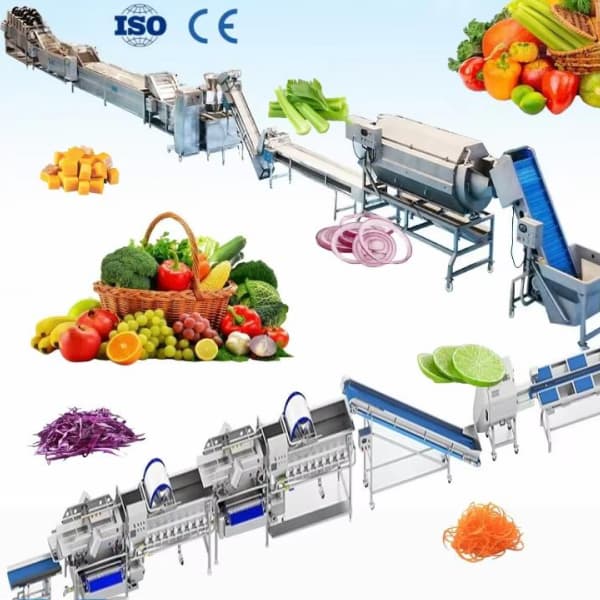
Equipos de deshidratación y secado
Eliminar el exceso de humedad mejora la calidad del producto y la eficiencia del procesamiento..
Máquina de deshidratación vibratoria
Utiliza vibración para eliminar el agua superficial..
Máquina de secado de aire
Los sistemas de cuchillas de aire eliminan la humedad mediante un flujo de aire a alta presión.
Máquina de desagüe centrífugo
La fuerza centrífuga de alta velocidad elimina el agua de manera eficiente.
Estos sistemas son importantes antes de congelar, fritura, o embalaje.
Equipo para freír
Los sistemas de fritura se utilizan ampliamente en la producción de snacks..
Los productos fritos populares incluyen:
- Papas fritas
- papas fritas
- cebollas fritas
- Chips de plátano
- Bocadillos vegetales
Freír continuo
Diseñado para la producción industrial a gran escala..
Freidora al vacío
La fritura al vacío utiliza temperaturas más bajas para conservar los nutrientes, color, y sabor.
Los sistemas de fritura avanzados incluyen:
- Filtración automática de aceite
- Control de temperatura
- Sistemas de alimentación continua
- Tecnología de circulación de aceite.
Equipo de congelación
Los productos hortofrutícolas congelados requieren tecnología de congelación rápida.
Congelador de IQF
Los sistemas de congelación rápida individuales congelan los productos por separado en lugar de hacerlo en bloques grandes.
Los productos IQF comunes incluyen:
- Guisantes
- Maíz
- fresas
- cubos de mango
- Brócoli
Congelador en espiral
Los congeladores en espiral proporcionan congelación continua de alta capacidad para grandes fábricas.
La congelación rápida ayuda:
- Preservar los nutrientes
- Mantener la textura
- Reducir la formación de cristales de hielo.
- Extender la vida útil
Equipo de procesamiento de jugo
La producción de zumos de frutas requiere maquinaria especializada.
El equipo típico de procesamiento de jugo incluye:
- Trituradoras de frutas
- Máquinas despulpadoras
- Extractores de jugo
- Sistemas de filtración
- Homogenistas
- Pasteurizadores
- Máquinas de llenado
Los productos de jugo comunes incluyen:
- Zumo de manzana
- zumo de naranja
- jugo de mango
- jugo de piña
- Jugo de tomate
La pasteurización garantiza la seguridad microbiana al tiempo que prolonga la vida útil.
Equipo de secado
Los sistemas de secado reducen la humedad del producto para el almacenamiento a largo plazo.
Secador de aire caliente
Ampliamente utilizado en la deshidratación de frutas y verduras..
Liofilizador
La liofilización conserva los nutrientes, textura, y dar sabor de manera efectiva.
Secador de microondas
Proporciona un secado rápido y energéticamente eficiente..
Los productos secos comunes incluyen:
- hojuelas de ajo
- cebolla en polvo
- mango seco
- Chips de plátano
- Polvo vegetal
Máquinas de embalaje
El embalaje protege los productos alimenticios durante el transporte y almacenamiento..
Los formatos de embalaje populares incluyen:
- Bolsas de vacío
- Bolsas de almohada
- Botellas
- latas
- Bolsas
- Bandejas de plastico
El equipo de embalaje puede incluir:
- Pesadoras multicabezal
- Envasadoras verticales
- Sistemas de sellado al vacío
- Máquinas de llenado de botellas
- Máquinas de etiquetado
Los sistemas de embalaje automatizados reducen los costes laborales y los riesgos de contaminación.
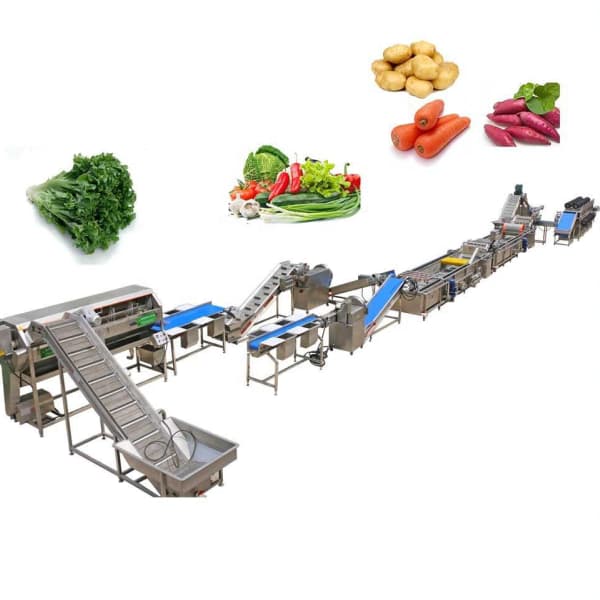
Pasos de producción en una línea de procesamiento de frutas y verduras
Aunque diferentes productos requieren diferentes tecnologías, la mayoría de las líneas de procesamiento siguen un flujo de trabajo similar.
Selección de materia prima
Las materias primas de alta calidad son esenciales para producir productos terminados de alta calidad..
Los fabricantes inspeccionan:
- Frescura
- Madurez
- Tamaño
- Color
- Condición de la superficie
Los productos dañados o estropeados se eliminan antes de procesarlos..
Lavado y Limpieza
Los productos se lavan minuciosamente para eliminar contaminantes como:
- Suelo
- Polvo
- Pesticidas
- piedras
- Residuos vegetales
Algunas fábricas utilizan múltiples etapas de lavado para un mejor rendimiento de limpieza..
Clasificación y calificación
Los productos se clasifican según el tamaño y los estándares de calidad..
Los sistemas automatizados mejoran la eficiencia y garantizan la consistencia del producto.
Peladura
Los productos que requieren eliminación de piel ingresan al equipo de pelado..
Esta etapa es común para:
- Papas
- Ajo
- cebollas
- mangos
- Manzana
Cortando o triturando
Los productos se cortan en las formas requeridas o se trituran para extraer el jugo..
El corte uniforme mejora el rendimiento del procesamiento posterior.
Blanqueamiento o pretratamiento
El tratamiento térmico estabiliza el producto antes de su posterior procesamiento..
Algunas frutas también reciben un tratamiento anti-oscurecimiento para preservar la apariencia..
Operación de procesamiento principal
El siguiente paso depende del producto final..
Los ejemplos incluyen:
- Freír para hacer patatas fritas
- Secado de vegetales en polvo
- Congelación de verduras IQF
- Pasteurización de zumos de frutas.
Enfriamiento
Los productos se enfrían rápidamente antes del envasado..
Este paso mejora la seguridad alimentaria y preserva la textura..
Embalaje
Los productos terminados se sellan mediante sistemas de embalaje automatizados..
Un embalaje adecuado previene la contaminación y prolonga la vida útil.
Almacenamiento y Distribución
Los productos se almacenan en condiciones controladas..
Los métodos de almacenamiento incluyen:
- Almacenes congelados
- Almacenamiento refrigerado
- Cuartos de almacenamiento secos
La gestión de la temperatura es fundamental para mantener la calidad de los alimentos..
Automatización en plantas de procesamiento modernas
La automatización ha transformado significativamente la industria procesadora de alimentos.
Las líneas de procesamiento modernas utilizan tecnologías avanzadas como:
- Sistemas de control del PLC
- Interfaces de pantalla táctil
- Sistemas de inspección de IA
- Embalaje robótico
- Monitoreo de IoT
Ventajas de la automatización
Mayor eficiencia
Los sistemas automatizados funcionan continuamente con un tiempo de inactividad mínimo.
Costos de mano de obra reducidos
Las fábricas requieren menos trabajadores manuales.
Mejor consistencia del producto
Las máquinas mantienen una calidad de procesamiento uniforme.
Higiene mejorada
El menor contacto humano reduce los riesgos de contaminación.
Gestión de datos más sencilla
Los sistemas digitales rastrean los registros de producción y los datos de control de calidad..
Normas de higiene y seguridad alimentaria
La seguridad alimentaria es esencial en el procesamiento de frutas y hortalizas.
Muchos fabricantes siguen estándares internacionales como:
- HACCP
- ISO 22000
- GMP
- Requisitos de la FDA
- Certificación CE
Diseño de equipos higiénicos
La maquinaria moderna para procesar alimentos incluye:
- Construcción de acero inoxidable de grado alimenticio
- Superficies lisas para una fácil limpieza
- Sistemas de limpieza CIP
- Sistemas de tuberías higiénicos
Estas características reducen el crecimiento bacteriano y mejoran la eficiencia del saneamiento..
Eficiencia Energética en Plantas de Procesamiento
Los costes energéticos son una gran preocupación para los fabricantes de alimentos.
Las plantas de procesamiento modernas utilizan tecnologías de ahorro de energía para reducir los gastos operativos..
Soluciones comunes de ahorro de energía
Sistemas de recuperación de calor
Reutilizar el calor residual de los procesos de producción.
Variadores de frecuencia
Reducir el consumo de energía del motor..
Aislamiento Térmico Eficiente
Mantenga temperaturas estables con menos pérdida de energía..
Sistemas de automatización inteligentes
Optimice el funcionamiento de la máquina automáticamente.
Las fábricas energéticamente eficientes mejoran la sostenibilidad al tiempo que reducen los costos de producción.
Aplicaciones de líneas de procesamiento de frutas y verduras
Los equipos de procesamiento de frutas y verduras se utilizan ampliamente en múltiples industrias..
Producción de vegetales congelados
Los productos comunes incluyen:
- Guisantes
- granos de elote
- Brócoli
- Zanahorias
- Espinaca
Procesamiento de papa
Los productos populares incluyen:
- Papas fritas congeladas
- Papas fritas
- hojuelas de patata
Procesamiento de tomate
Los tomates se procesan en:
- Tomato paste
- puré de tomate
- Ketchup
- Salsa de tomate
Producción de jugos de frutas
Las fábricas producen:
- Zumo de manzana
- jugo de mango
- zumo de naranja
- jugo de piña
Procesamiento de ajo y cebolla
Los productos comunes incluyen:
- Pasta de ajo
- Polvo de ajo
- cebollas fritas
- hojuelas de cebolla
Cómo elegir la línea de procesamiento adecuada
La elección del equipo adecuado depende de los objetivos de producción y los requisitos del producto..
Capacidad de producción
Los fabricantes deben determinar la capacidad de producción deseada..
Los ejemplos incluyen:
- 500 kg/hora
- 1 toneladas/h
- 5 toneladas/h
- 10 toneladas/h
Tipo de producto
Diferentes productos requieren diferentes tecnologías de procesamiento.
La producción de alimentos congelados requiere sistemas de congelación, mientras que la producción de alimentos secos requiere equipos de deshidratación.
Nivel de automatización
Las fábricas pueden elegir entre:
- Sistemas semiautomáticos
- Sistemas totalmente automáticos
Espacio de fábrica
La disposición del equipo debe adaptarse eficientemente al área de taller disponible..
Planificación presupuestaria
Los costos de inversión varían según la capacidad y el nivel de automatización..
Regulaciones alimentarias locales
El equipo debe cumplir con los estándares regionales de seguridad alimentaria y los requisitos de certificación..
Tendencias futuras en el procesamiento de frutas y verduras
La industria mundial de procesamiento de alimentos continúa evolucionando rápidamente.
Fabricación inteligente
Las tecnologías de IA e IoT son cada vez más comunes.
Producción Sostenible
Los fabricantes se centran en reducir:
- Consumo de agua
- Uso de energía
- Desperdicio de alimentos
Crecimiento de alimentos a base de plantas
La demanda de alimentos de origen vegetal sigue aumentando en todo el mundo.
Embalaje ecológico
Las soluciones de embalaje biodegradables y reciclables son cada vez más populares.
Robótica Avanzada
Los sistemas robóticos mejoran la velocidad de producción y reducen la dependencia laboral.
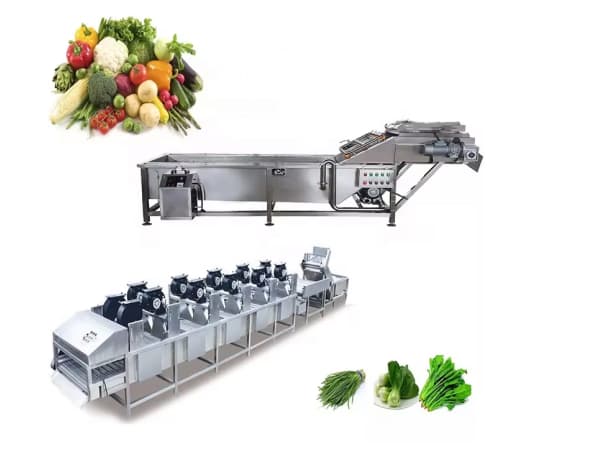
Línea de procesamiento de frutas y verduras – Fabricante
Las líneas modernas de procesamiento de frutas y verduras desempeñan un papel fundamental en la industria alimentaria actual.. Del lavado y clasificación al pelado, corte, congelación, el secado, fritura, y embalaje, Cada paso del procesamiento contribuye a la calidad del producto., seguridad alimentaria, y eficiencia de producción.
A medida que la demanda de alimentos procesados por parte de los consumidores continúa aumentando, Los fabricantes están invirtiendo en automatización avanzada., equipo higienico, y tecnologías energéticamente eficientes. Las líneas de procesamiento de alta calidad ayudan a las fábricas a mejorar la productividad, reducir el desperdicio, y seguir siendo competitivos en el mercado global.
Ya sea para producir verduras congeladas, zumo de frutas, frutas secas, salsas, o bocadillos, Seleccionar el equipo de procesamiento de frutas y verduras adecuado es esencial para el éxito a largo plazo en la industria moderna de procesamiento de alimentos..