
Designing and building a spring roll making machine is a complex engineering project that combines food machinery design, thermodynamics, automation control, stainless-steel fabrication, and safety certification. With global demand for frozen spring rolls, lumpia, egg rolls, and Vietnamese rolls increasing rapidly, more factories are considering customization or in-house development of a spring roll maker.
I will show how to build a spring roll making machine, what components it needs, how each subsystem works, and which engineering standards are required. It is written for equipment manufacturers, OEM/ODM designers, food factory engineers, and anyone researching how to design a spring roll production line.
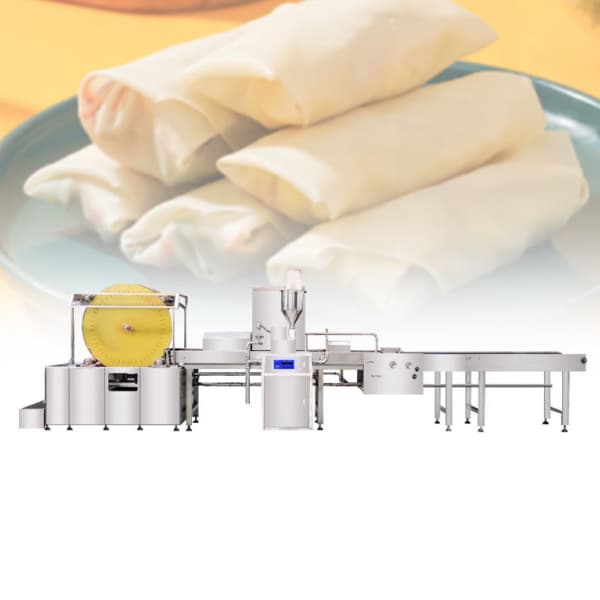
1. Understanding the Purpose of a Spring Roll Making Machine
Before designing or building any machine, you must define its purpose. A spring roll making machine must complete the following essential functions:
- Mixing and delivering batter
- Producing thin, uniform wrapper sheets
- Cooking wrapper sheets evenly
- Cooling and transferring wrappers
- Depositing filling accurately
- Rolling and folding wrappers
- Producing consistent, uniform spring rolls
1.1 Common Names and Long-Tail Keywords
A spring roll making machine may also be called:
- Spring roll production line
- Automatic spring roll maker
- Spring roll forming machine
- Egg roll making machine
- Lumpia machine
- Spring roll wrapper machine
- Pastry sheet maker
These long-tail keywords help attract customers searching for different variations of the equipment.
2. Core Engineering Principles Behind a Spring Roll Making Machine
To build a professional machine, you must understand the engineering theory behind it.
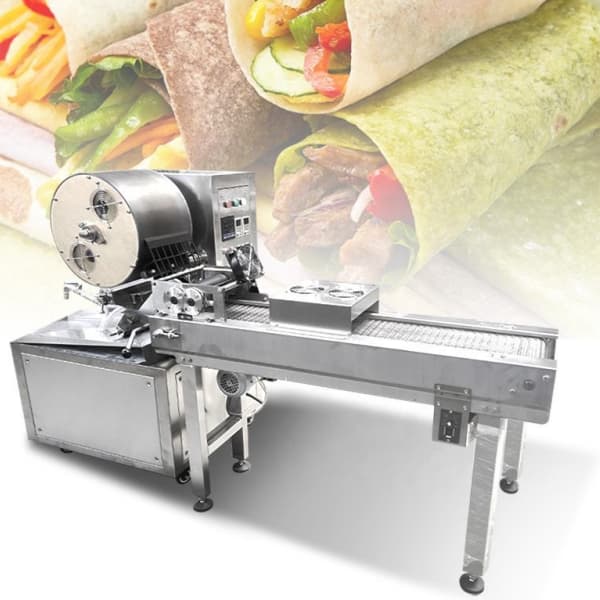
2.1 Heat Transfer and Drum Control
The system relies on a heated rotating drum that cooks the wrapper. Uniform heat distribution ensures consistent texture and thickness.
2.2 Precision Automation
The conveyor, depositor, wrapper-making mechanism, and rolling system must run on synchronized PLC control, or wrapper alignment will fail.
2.3 Food-Grade Structural Design
All food-contact components must use SUS304 or SUS316 stainless steel with sanitary welds.
3. The Components of a Spring Roll Making Machine
A complete spring roll production machine consists of nine major subsystems. Each subsystem must be designed and tuned individually.
3.1 Batter Mixing and Feeding System
This subsystem mixes batter and transfers it to the heated drum.
Main Components
- Stainless-steel mixing tank
- Agitator or high-speed mixer
- Batter pump (gear pump or lobe pump)
- Flow stabilizer
- Sanitary piping
Engineering Considerations
- Batter viscosity must stay stable
- Pump should deliver smooth, bubble-free batter
- CIP designs reduce cleaning time
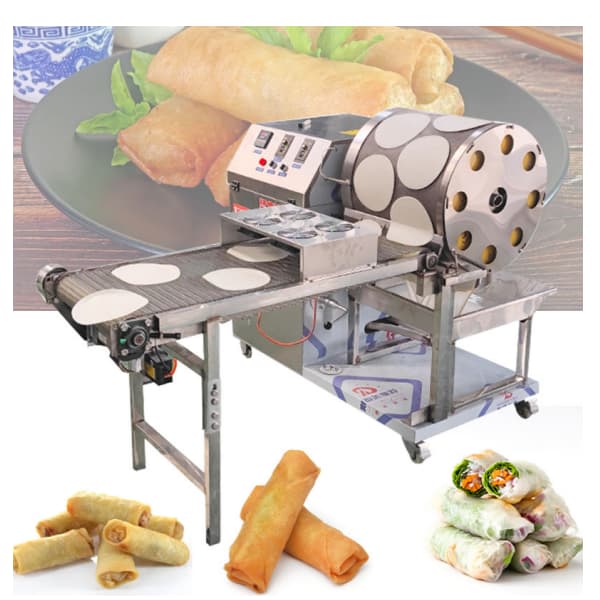
3.2 Heated Rotating Drum (Wrapper Baking System)
The drum is the core of the spring roll wrapper machine.
Key Components
- Stainless steel drum
- Gas or electric heating system
- Temperature PID controller
- Scraper blade
- Drum speed controller
Drum Requirements
- Uniform thickness
- Fully polished surface
- Even heat distribution
- Adjustable speed for capacity control
A well-designed drum can produce ultra-thin wrappers suitable for commercial spring roll production.
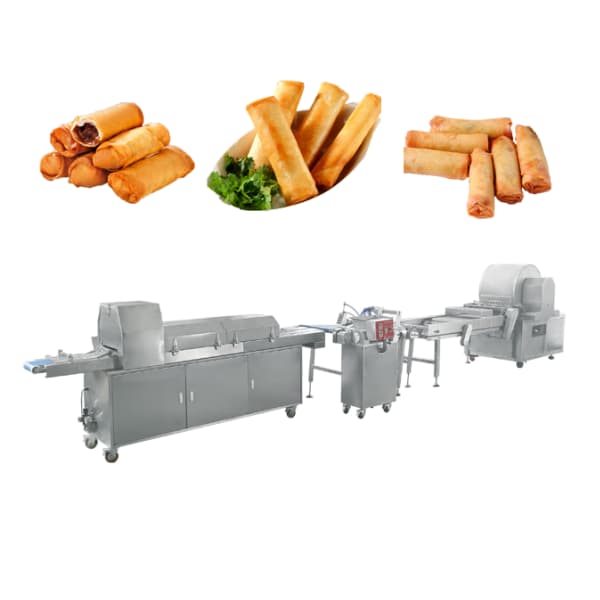
3.3 Wrapper Peeling System
Once baked, the wrapper must be peeled off the drum smoothly.
Design Requirements
- High-precision scraper
- Food-safe Teflon coating
- Adjustable scraping angle
- Heat-resistant supports
A poor peeling system results in torn wrappers, decreasing production efficiency.
3.4 Transfer Conveyor System
The conveyor moves wrappers to the filling station.
Materials
- Silicone belts
- PU food-grade belts
- Teflon-coated belts
Functions
- Cooling the wrapper
- Positioning
- Maintaining synchronization
- Feeding into filler
3.5 Filling Depositor System
Filling is the most customized part of a spring roll making machine.
Depositor Types
- Auger screw filler
- Servo-driven depositor
- Pneumatic quantitative filler
- Conveyor + cutter depositor
Challenges
- Prevent filling clogging
- Maintain accuracy
- Reduce filling waste
- Adapt to different vegetable or meat fillings
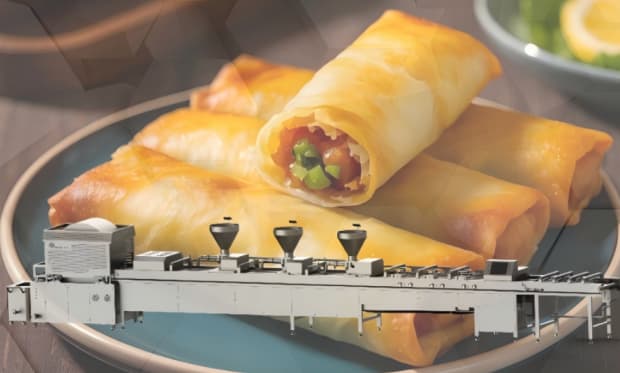
3.6 Folding and Rolling Mechanism
This mechanism gives the spring roll its final shape.
Components
- Servo-controlled folding arms
- Pneumatic cylinders
- Rolling belts
- Folding plates
Adjustable Parameters
- Wrapper size
- Rolling tightness
- Pressure control
- Final diameter
Proper rolling prevents loose ends or breakage during frying.
3.7 PLC Control System
The automatic spring roll maker requires programmable control.
PLC Features
- Recipe memory
- Temperature PID control
- Conveyor and drum synchronization
- Alarm system
- Fault diagnostics
A well-programmed PLC ensures consistent quality over long production hours.
3.8 Stainless Steel Frame and Safety System
Food-grade construction includes:
- Stainless steel frame
- Waterproof electrical cabinet
- Emergency stop buttons
- Protective covers
- Non-slip adjustable feet
- Easy-clean structures
3.9 Optional Additional Systems
Manufacturers may add optional modules:
- Automatic batter mixing line
- Food cooking system
- Continuous fryer
- Spiral freezer or IQF freezing tunnel
- Packaging equipment
4. Step-by-Step Guide: How to Build a Spring Roll Making Machine
This design roadmap explains the entire engineering process from planning to testing.
4.1 Step 1: Define Production Capacity
Common capacities:
- 2000 pcs/hour
- 5000 pcs/hour
- 8000+ pcs/hour
Capacity affects:
- Drum diameter
- Heating power
- Conveyor length
- Number of rolling stations
4.2 Step 2: Choose Heating Method
Gas Heating
- Fast heating response
- Lower operating cost
- Suitable for large factories
Electric Heating
- Easy installation
- Suitable for small workshops
- No gas piping required
4.3 Step 3: Design the Wrapper Drum
Key design elements include:
- Drum material and thickness
- Drum diameter
- Polishing level
- Heating pipe or burner layout
- Scraper blade position
The quality of the wrapper depends heavily on the drum design.
4.4 Step 4: Build the Mechanical Structure
Use:
- CNC machining
- Laser cutting
- TIG sanitary welding
Ensure:
- No dead corners
- Easy-to-clean surfaces
- Waterproofed control cabinet
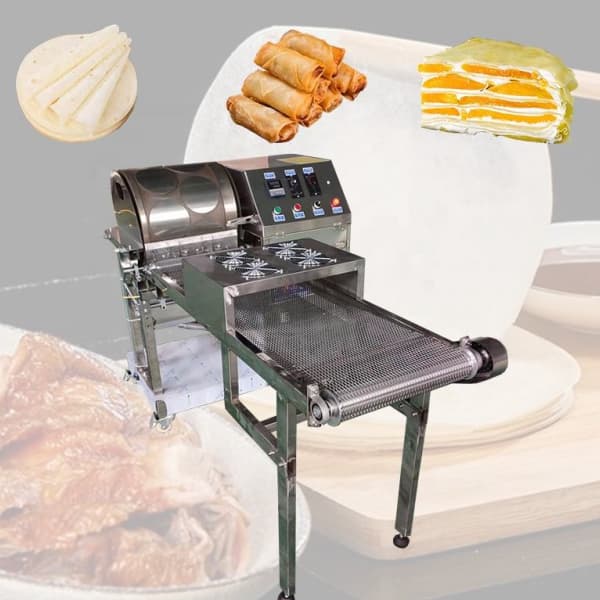
4.5 Step 5: Install Conveyor and Synchronization System
Motors must be:
- Synchronized via PLC
- Variable speed
- Matched to wrapper length and thickness
4.6 Step 6: Integrate Filling System
During this stage, engineers must fine-tune:
- Filling weight
- Filling temperature
- Flow smoothness
- Cutting precision
4.7 Step 7: Install Rolling and Folding Units
Engineers must adjust:
- Pressure
- Timing
- Rolling speed
- Folding angles
4.8 Step 8: Develop PLC Program
PLC controls:
- Drum temperature
- Conveyor timing
- Filling timing
- Rolling logic
- Motor synchronization
- Safety alarms
4.9 Step 9: Conduct Full Testing
Test for:
- Wrapper thickness consistency
- Filling accuracy
- Continuous 24-hour reliability
- Final product uniformity
- Ease of cleaning
5. Cost Estimation for Building a Spring Roll Making Machine
A professional machine generally costs:
| Component | Estimated Cost |
|---|---|
| Stainless steel materials | $3,000–$8,000 |
| Heating system | $2,000–$6,000 |
| Motors & conveyors | $3,000–$7,000 |
| Filling system | $5,000–$12,000 |
| PLC and electronics | $2,000–$5,000 |
| Fabrication labor | $8,000–$20,000 |
Total: $25,000 – $60,000 depending on complexity and capacity.
6. Should You Build or Simply Buy a Spring Roll Machine?
While building a spring roll machine is technically possible, it requires:
- Experienced mechanical engineers
- Electrical/PLC programmers
- Food safety knowledge
- Precise machining tools
- Extensive testing time
For most food factories, purchasing a professional machine is faster, cheaper, and more reliable.
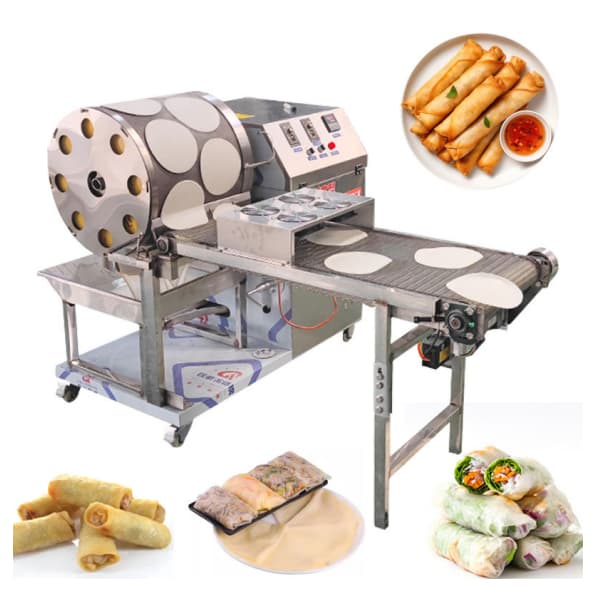
Manufacturers like DT Food Machine can provide:
- Customized wrapper size
- Customized filling system
- High-capacity production lines
- Export-grade machines
- CE / ISO / HACCP documentation
Spring roll making machine DT Food Machine
Building a spring roll making machine requires expertise in heat transfer, stainless-steel fabrication, automation design, and synchronized control. From batter mixing to wrapper baking, filling, folding, rolling, and final forming, each subsystem plays a critical role in producing consistent, commercial-grade spring rolls.
This complete guide explains the design logic, engineering principles, and step-by-step building process behind a professional spring roll production line, helping manufacturers understand how the machine works and what is required to build one from scratch.