Configurar uma linha de produção de máquina embaladora de rolinho primavera pode ser um investimento inteligente para empresas alimentícias. À medida que a procura global por alimentos convenientes continua a crescer, embalagens de rolinho primavera estão se tornando mais populares em muitos mercados. Portanto, construir um sistema de produção eficiente pode criar fortes oportunidades de negócios.
Como planejar, construir, e operar uma linha de produção passo a passo. Além disso, dicas práticas estão incluídas para ajudá-lo a evitar erros comuns e melhorar a eficiência.
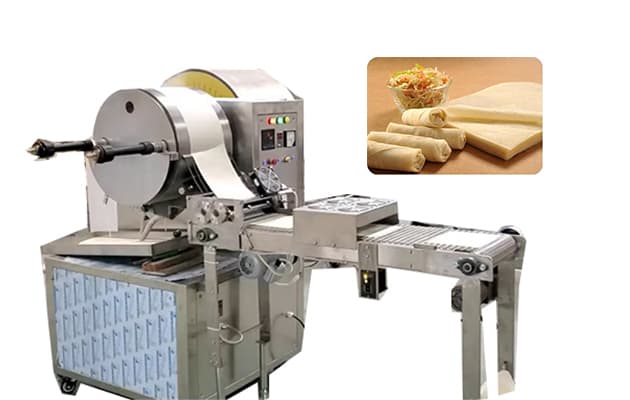
1. Compreendendo o produto e o mercado Máquina embaladora de rolinho primavera
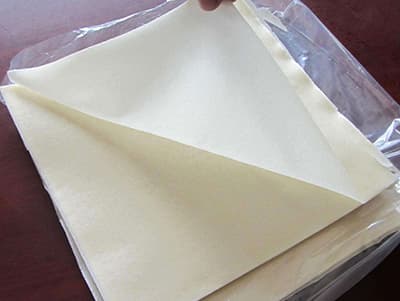
Antes de comprar equipamentos, você deve entender claramente o seu produto. As embalagens de rolinho primavera são folhas finas feitas principalmente de farinha e água. No entanto, diferentes mercados podem exigir diferentes tipos.
Por exemplo, alguns clientes preferem embalagens frescas, enquanto outros precisam de produtos congelados. Além disso, embalagens à base de arroz são populares em certas regiões.
Devido a esta, definir seu mercado-alvo é essencial. Assim que o mercado estiver claro, escolher as máquinas certas fica muito mais fácil.
2. Planejando sua linha de produção
Um plano claro ajuda a reduzir custos e melhorar a eficiência. Sem um planejamento adequado, problemas de produção podem aparecer mais tarde.
Primeiro, decida sua capacidade de produção. Por exemplo, pequenas fábricas podem escolher 100 kg/hora, enquanto fábricas maiores podem precisar de mais 300 kg/hora. Próximo, considere seu espaço disponível e orçamento.
Enquanto isso, o layout deve seguir um fluxo simples e lógico. Em outras palavras, os materiais devem se mover em apenas uma direção. Esta abordagem reduz os riscos de contaminação e economiza tempo.
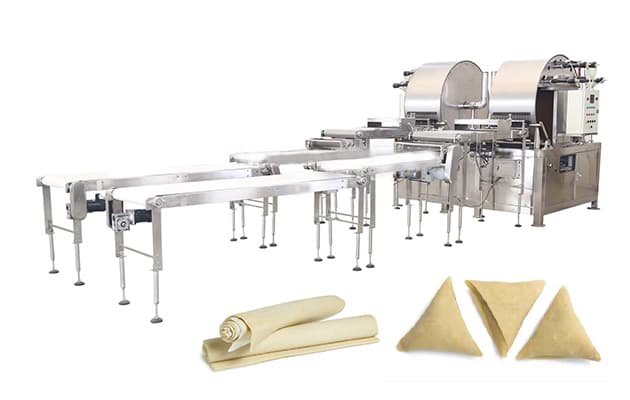
3. Equipamento principal necessário
Escolher o equipamento certo é uma das etapas mais importantes. Cada máquina desempenha um papel específico no processo.
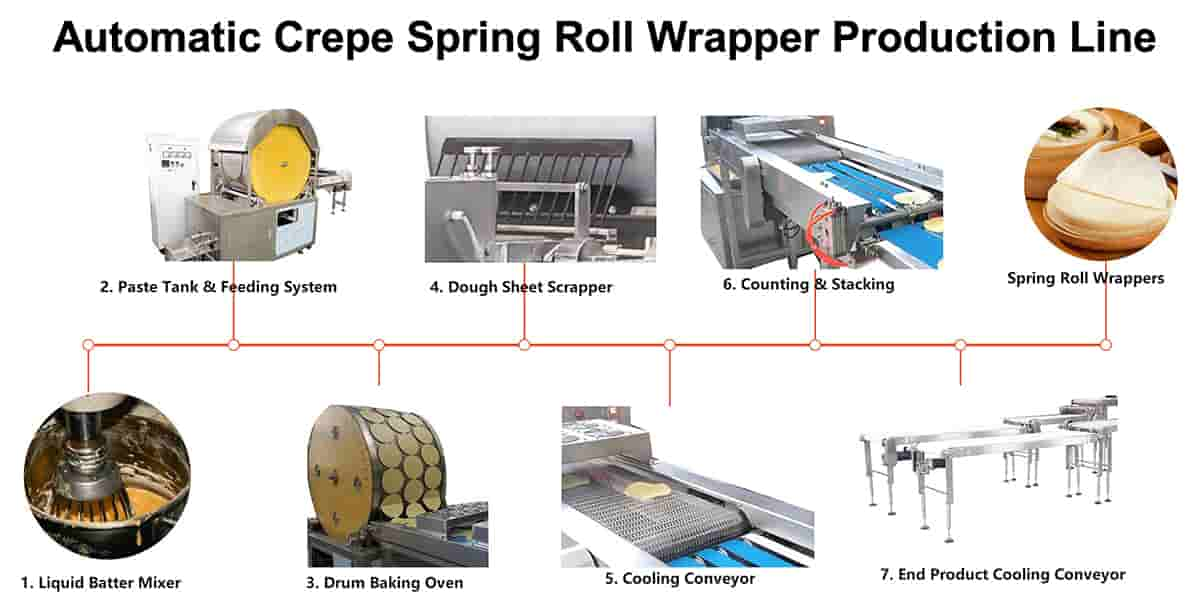
3.1 Máquina de mistura de massa
A máquina de mistura prepara a massa. Combina farinha, água, e outros ingredientes em uma mistura lisa.
Um bom mixer garante qualidade consistente. Além disso, reduz o trabalho manual e melhora a eficiência.
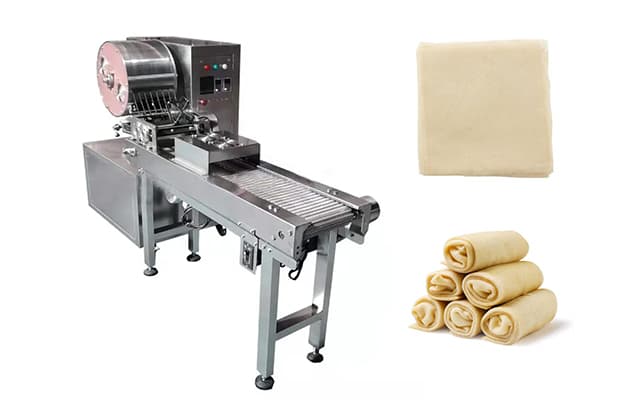
3.2 Máquina embaladora de rolinho primavera
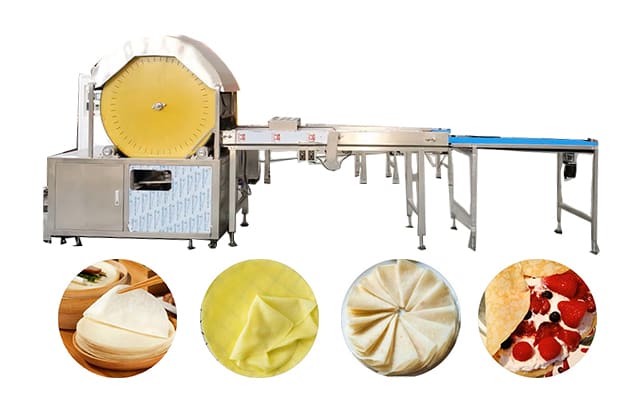
Esta máquina forma e cozinha a embalagem. Ele espalha a massa sobre uma superfície aquecida e cria folhas finas.
O controle de temperatura é muito importante aqui. Se o calor estiver muito alto, a embalagem pode queimar. Por outro lado, fogo baixo pode causar cozimento insuficiente.
3.3 Transportador de resfriamento
Depois de assar, as embalagens devem esfriar. De outra forma, eles podem ficar juntos.
Um transportador de resfriamento ajuda a manter a forma e a qualidade. Ao mesmo tempo, prepara o produto para a próxima etapa.
3.4 Sistema de corte e empilhamento
Em muitas linhas de produção, corte e empilhamento são automatizados. Como resultado, os custos trabalhistas diminuem significativamente.
Além disso, a automação melhora a consistência e a velocidade.
3.5 Máquina de embalagem
Finalmente, o produto está embalado. Esta etapa é especialmente importante para produtos congelados.
Por exemplo, embalagens seladas ajudam a prolongar a vida útil. Além disso, protege o produto durante o transporte.
4. Processo de produção explicado
Compreender todo o processo ajuda você a gerenciar melhor a produção. Cada etapa deve ser controlada cuidadosamente.
Etapa 1: Preparação de Matéria Prima
No começo, preparar todas as matérias-primas. Certifique-se de que os ingredientes atendam aos padrões de qualidade.
Etapa 2: Mistura de massa
Próximo, misture os ingredientes em uma massa lisa. Se aparecerem caroços, a qualidade do produto final diminuirá.
Portanto, o tempo e a velocidade de mistura devem ser controlados adequadamente.
Etapa 3: Moldar e assar
Depois de misturar, a massa é processada em folhas finas. A máquina espalha a massa uniformemente e cozinha.
Enquanto isso, a espessura deve permanecer consistente. De outra forma, algumas embalagens podem quebrar facilmente.
Etapa 4: Resfriamento
Depois de cozido, os invólucros se movem para a seção de resfriamento. Durante esta fase, fluxo de ar adequado é importante.
Se o resfriamento for insuficiente, podem ocorrer problemas de aderência. Como resultado, a qualidade do produto cairá.
Etapa 5: Corte e empilhamento
Depois de esfriar, as embalagens são cortadas e empilhadas. Em sistemas automatizados, este processo é rápido e preciso.
Etapa 6: Embalagem
Finalmente, os invólucros são embalados. Dependendo do mercado, diferentes métodos de embalagem podem ser usados.
5. Escolhendo a capacidade de produção certa
A seleção da capacidade depende dos seus objetivos de negócios. Escolher um sistema muito grande pode aumentar os custos desnecessariamente. No entanto, escolher um sistema muito pequeno pode limitar o crescimento.
Para pequenas empresas, uma linha compacta geralmente é suficiente. Enquanto isso, fábricas médias geralmente preferem sistemas semiautomáticos. Grandes fábricas, por outro lado, muitas vezes investem em linhas totalmente automáticas.
6. Requisitos de configuração de fábrica
Uma fábrica bem projetada melhora a eficiência e a segurança.
Primeiro, divida o espaço em diferentes áreas. Por exemplo, incluem armazenamento de matéria-prima, produção, e zonas de embalagem.
Além disso, ventilação adequada é necessária. Um bom fluxo de ar ajuda a manter a qualidade do produto e o conforto do trabalhador.
7. Análise de custos
Compreender os custos é essencial antes de começar.
As principais despesas incluem maquinário, trabalho, e matérias-primas. Além disso, custos de serviços públicos, como eletricidade e água, devem ser considerados.
Embora o investimento inicial possa parecer alto, produção eficiente pode reduzir custos a longo prazo. Portanto, planejar com cuidado é importante.
8. Dicas de controle de qualidade
Manter a qualidade garante a satisfação do cliente.
Por exemplo, espessura consistente da massa melhora o desempenho do produto. Enquanto isso, o controle adequado da temperatura evita defeitos.
Se aparecerem problemas, os ajustes devem ser feitos rapidamente. De outra forma, desperdício pode aumentar.
9. Trabalho e Treinamento
Até as linhas automatizadas precisam de trabalhadores treinados.
Os operadores devem compreender as funções da máquina. Além disso, eles devem saber como lidar com questões básicas.
O treinamento adequado reduz erros. Como resultado, a produção se torna mais estável.
10. Automação vs Produção Manual
A automação oferece muitas vantagens. Por exemplo, melhora a eficiência e reduz os custos trabalhistas.
No entanto, sistemas manuais requerem menor investimento. Portanto, as pequenas empresas podem preferi-los no início.
No longo prazo, a automação geralmente proporciona melhores retornos.
11. Embalagem e armazenamento
A embalagem desempenha um papel importante na qualidade do produto.
Por exemplo, produtos congelados requerem embalagens seladas. Em contraste, produtos frescos podem usar métodos mais simples.
As condições de armazenamento também são importantes. Baixas temperaturas ajudam a prolongar a vida útil.
12. Comercializando seu produto
Após a produção, vender o produto é o próximo passo.
Você pode segmentar restaurantes, supermercados, e distribuidores. Além disso, o marketing on-line pode ajudar a alcançar mais clientes.
Oferecer amostras também é eficaz. Como resultado, os clientes podem testar a qualidade do seu produto diretamente.
13. Erros comuns a evitar
Alguns erros podem reduzir a eficiência.
Por exemplo, O mau planejamento pode levar a atrasos na produção. Além disso, seleção incorreta de máquinas pode aumentar custos.
Portanto, preparação cuidadosa é essencial.
14. Manutenção e suporte
A manutenção regular mantém as máquinas funcionando sem problemas.
A limpeza diária é importante. Enquanto isso, verificar as peças principais ajuda a evitar quebras.
Escolher um fornecedor confiável também é crucial. Um bom suporte pode resolver problemas rapidamente.
15. Pensamentos finais
Configurar uma linha de produção de embalagem de rolinho primavera requer um planejamento cuidadoso. No entanto, com a abordagem certa, pode ser um negócio lucrativo.
Escolhendo equipamentos adequados e mantendo a qualidade, você pode construir um sistema de produção forte. Além disso, a melhoria contínua ajudará sua empresa a crescer ao longo do tempo.