
Peanut butter has become one of the most popular and versatile food products in the global market. From small artisanal producers to large-scale food factories, the demand for efficient and reliable processing equipment continues to grow. Among these machines, the peanut butter machine plays a central role in determining product quality, eficiência de produção, and overall profitability.
If you are planning to invest in a peanut butter production line, Entendendo o price range, performance, and technical factors of machines with output capacities from 30kg to 300kg per hour é essencial. This guide provides a practical and experience-based overview to help you make the right decision.
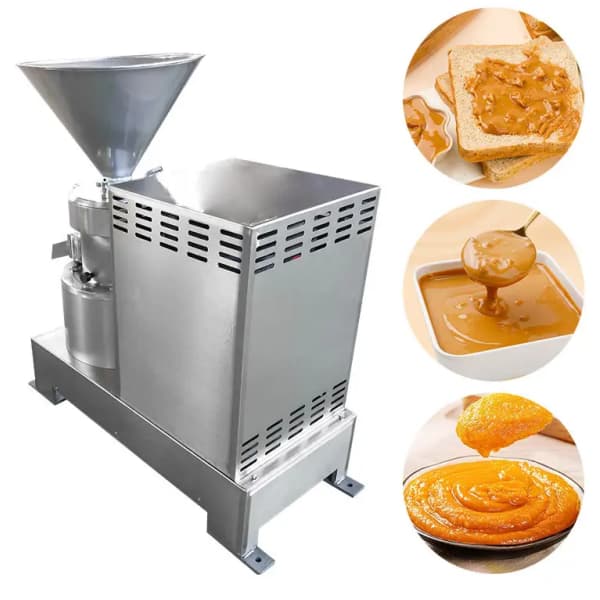
O que é uma máquina de manteiga de amendoim?
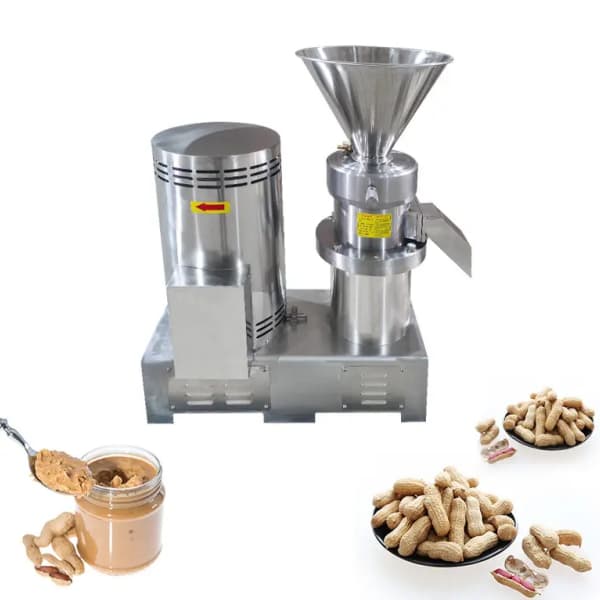
A peanut butter machine is a type of food processing equipment designed to grind roasted peanuts into a smooth or coarse paste. The most common type is a Colóide Mill, which uses high-speed rotating and fixed grinding discs to achieve ultra-fine particle size.
The process typically includes:
- Feeding roasted peanuts
- Grinding and emulsifying
- Producing smooth peanut butter paste
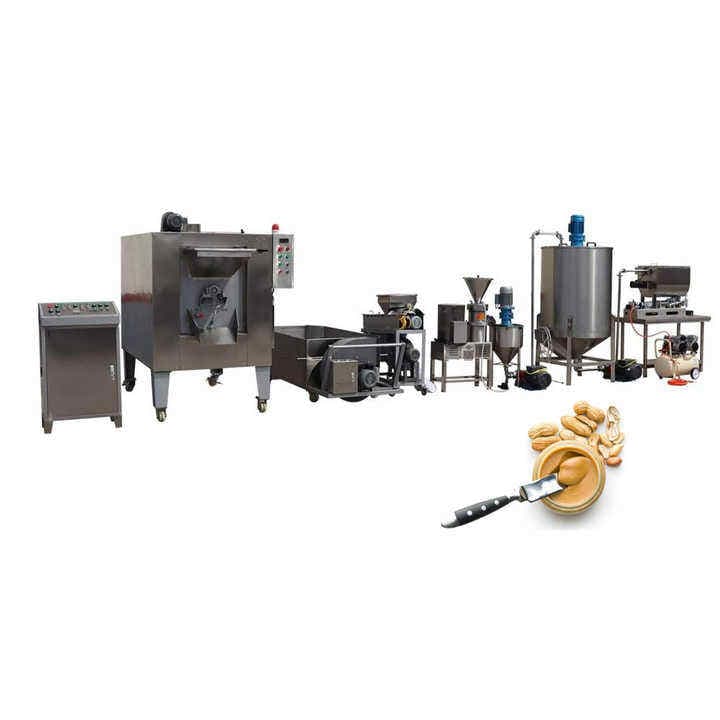
Depending on the production scale, machines can be standalone units or integrated into a full production line.
Output Range: 30kg to 300kg per Hour
Machines in this category are ideal for:
- Small food workshops
- Medium-sized factories
- Startup peanut butter businesses
- Commercial food processing units
Typical Output Categories
| Tipo de modelo | Capacidade (kg/hora) | Aplicativo |
|---|---|---|
| Small Model | 30–80 kg/h | Home industry, small shops |
| Medium Model | 100–200 kg/h | Local factories |
| Large Model | 200–300 kg/h | Produção industrial |
The output capacity directly influences the price, motor power, and structural design of the machine.
Peanut Butter Machine Price Overview
The price of a peanut butter machine varies depending on multiple factors such as material, motor power, marca, e nível de automação.
Faixa de preço estimada
| Capacidade | Poder | Faixa de preço (USD) |
|---|---|---|
| 30 kg/hora | 1.5–2.2 kW | $500 - $1,200 |
| 50 kg/hora | 2.2–3kW | $800 - $1,800 |
| 100 kg/hora | 4–5,5 kW | $1,500 - $3,500 |
| 200 kg/hora | 7.5–11 KW | $3,000 - $6,000 |
| 300 kg/hora | 11–15 kW | $5,000 - $10,000 |
These prices are typical for standard configurations. Customization or full production lines will increase the cost.
Key Factors Affecting Price
1. Qualidade do material
Machines made from aço inoxidável (304 ou 316) are more expensive but offer:
- Better hygiene
- Resistência à corrosão
- Longer service life
Cheaper machines may use lower-grade steel, which affects durability.
2. Motor Power and Efficiency
Higher output machines require stronger motors. A 300kg/h machine may use up to 15kW, which significantly impacts cost.
Energy-efficient motors may cost more initially but reduce long-term operating expenses.
3. Moer finura
Adjustable grinding systems allow:
- Manteiga de amendoim suave (fine paste)
- Crunchy peanut butter (coarser texture)
Machines with precise fineness control typically cost more due to advanced design.
4. Nível de automação
- Manual feeding machines: Lower price
- Semi-automatic machines: Medium price
- Fully automatic production lines: Maior investimento
Automation improves efficiency but increases initial cost.
5. Brand and Manufacturer
Well-established manufacturers usually offer:
- Better quality control
- Desempenho estável
- Serviço pós-venda
Lower-cost suppliers may reduce upfront cost but increase maintenance risks.
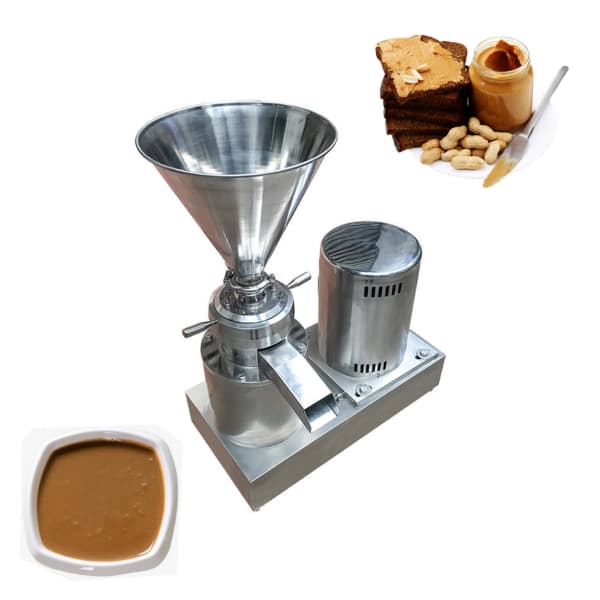
Structure of a Peanut Butter Machine
Understanding the internal structure helps explain price differences.
Componentes principais:
- Feeding hopper
- Câmara de moagem
- Rotor and stator
- Motor
- Discharge outlet
- Sistema de refrigeração (opcional)
High-end machines include water cooling systems to prevent overheating and preserve flavor.
Advantages of Machines in 30–300kg/h Range
1. Produção Flexível
These machines can be used for:
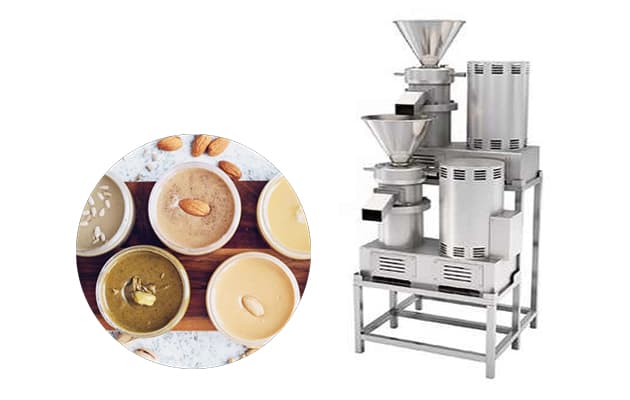
- Manteiga de amendoim
- Pasta de gergelim
- Manteiga de amêndoa
- Other nut pastes
2. Compact Design
Compared to large industrial lines, these machines:
- Occupy less space
- Are easy to install
- Require minimal infrastructure
3. Investimento econômico
They provide a balance between:
- Capacidade de produção
- Investimento inicial
- Operating cost
4. Operação fácil
Most machines are user-friendly and require minimal training.
Optional Equipment for Full Production Line
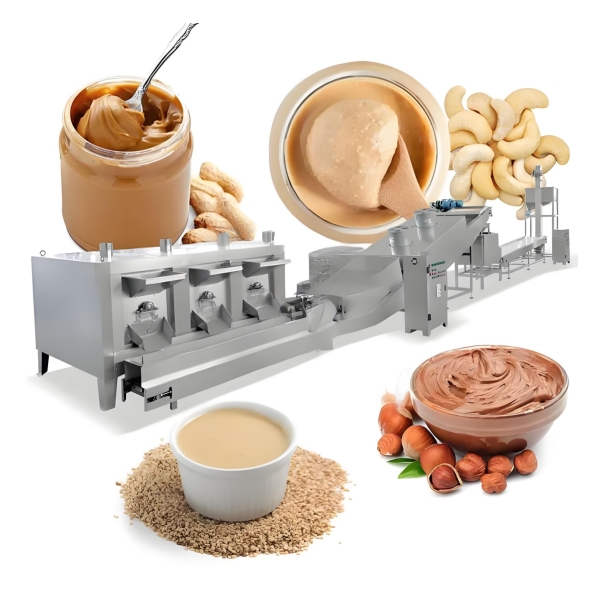
If you plan to scale production, additional machines may be required:
- Máquina de torrar amendoim
- Máquina de descascar
- Conveyor system
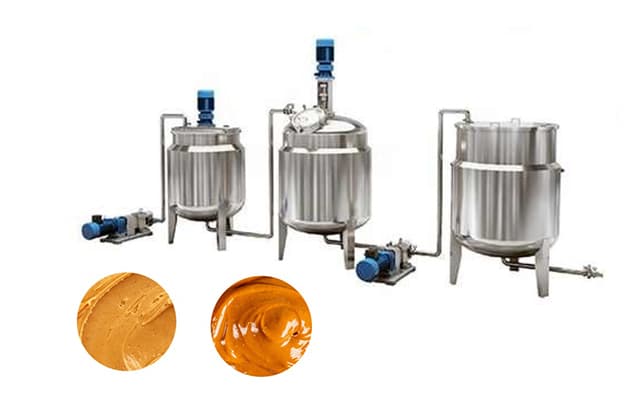
- Tanque de armazenamento
- Máquina de enchimento
Adding these components will increase total investment but improve efficiency.
Como escolher a máquina certa
1. Defina suas necessidades de produção
Ask yourself:
- How much peanut butter do I need daily?
- Will I expand production later?
2. Consider Budget vs. Desempenho
A cheaper machine may:
- Have lower durability
- Require more maintenance
A slightly higher investment often ensures better long-term returns.
3. Check Technical Specifications
Key parameters to review:
- Capacidade (kg/hora)
- Poder (kW)
- Peso
- Dimensões
- Material
4. Evaluate Supplier Support
Fornecedores confiáveis fornecem:
- Orientação de instalação
- Disponibilidade de peças de reposição
- Suporte técnico
Maintenance and Operating Costs
Beyond purchase price, consider ongoing costs:
Manutenção
- Limpeza regular
- Lubrificação
- Replacement of grinding parts
Electricity Consumption
Higher capacity machines consume more power.
Peças de reposição
Rotor and stator components wear over time.
Proper maintenance extends machine life and ensures consistent product quality.
Tendências de mercado
The peanut butter industry is evolving with increasing demand for:
- Natural products
- Organic peanut butter
- Customized flavors
This drives the need for:
- Flexible machines
- High-quality grinding systems
- Efficient production processes
Machines in the 30–300kg/h range are particularly popular among startups and medium-scale producers due to their adaptability.
Perguntas comuns do comprador
Is a 30kg/h machine enough?
It depends on your business size. Small shops may find it sufficient, but growing businesses often need at least 100kg/h.
Can one machine produce smooth and crunchy peanut butter?
Sim, most machines allow adjustment of grinding fineness.
What is the typical lifespan?
Com manutenção adequada, a high-quality machine can last 5–10 years or more.
Is stainless steel necessary?
Sim, especially for food-grade applications. It ensures hygiene and compliance with safety standards.
Pensamentos finais
Choosing a peanut butter machine with a capacity between 30kg and 300kg per hour is a strategic decision that impacts your production efficiency, qualidade do produto, e lucratividade.
While price is an important factor, it should not be the only consideration. A well-built machine with reliable performance and good after-sales support will provide far greater value over time.
Whether you are launching a new peanut butter business or upgrading your current equipment, investing in the right machine ensures a solid foundation for growth in a competitive market.