Permintaan global untuk buah-buahan dan sayur-sayuran yang diproses terus meningkat apabila pengguna mencari yang lebih sihat, lebih selamat, dan produk makanan yang lebih mudah. Kilang makanan moden bergantung pada rangkaian pemprosesan buah-buahan dan sayur-sayuran yang canggih untuk meningkatkan kecekapan, mengekalkan kualiti produk, mengurangkan kos buruh, dan memenuhi piawaian keselamatan makanan antarabangsa.
Barisan pemprosesan yang lengkap boleh mengendalikan pencucian, Menyusun, mengupas, memotong, Blanching, pengeringan, pembekuan, menggoreng, pembungkusan, dan penyimpanan. Sistem ini digunakan secara meluas dalam pengeluaran sayur-sayuran sejuk beku, jus buah-buahan, buah -buahan kering, sos, produk dalam tin, makanan ringan, dan makanan sedia untuk dimakan.
Pengenalan kepada Pemprosesan Buah-buahan dan Sayur-sayuran
Pemprosesan buah-buahan dan sayur-sayuran merujuk kepada transformasi industri produk pertanian segar kepada produk makanan dengan jangka hayat yang lebih lama dan nilai pasaran yang lebih tinggi. Teknologi pemprosesan membantu mengekalkan kesegaran, meningkatkan keselamatan makanan, dan mencipta produk yang lebih mudah untuk diangkut dan disimpan.
Hasil segar sangat mudah rosak. Tanpa pengendalian yang betul, buah-buahan dan sayur-sayuran boleh rosak dengan cepat semasa pengangkutan dan penyimpanan. Oleh itu, loji pemprosesan menggunakan mesin khusus dan sistem automatik untuk mengekalkan kualiti sambil meningkatkan produktiviti.
Hari ini, pengeluar makanan memproses pelbagai jenis produk, termasuk:
- Kentang goreng beku
- Kerepek kentang
- Sayur beku
- Tampalan tomato
- Pure buah
- Jus buah-buahan
- Paste bawang putih
- Serpihan bawang
- buah-buahan kering
- Serbuk sayur
- Campuran sayur sedia untuk dimasak
Barisan pemprosesan industri direka untuk pengeluaran berterusan dan boleh beroperasi pada kapasiti antara beberapa ratus kilogram sejam hingga berpuluh-puluh tan sehari..
Kepentingan Pemprosesan Buah-buahan dan Sayur-sayuran
Industri pemprosesan makanan memainkan peranan penting dalam ekonomi pertanian global. Teknologi pemprosesan moden membantu mengurangkan sisa makanan sambil meningkatkan ketersediaan produk sepanjang tahun.
Memanjangkan Jangka Hayat
Buah-buahan dan sayur-sayuran segar rosak dengan cepat selepas dituai. Kaedah pemprosesan seperti pembekuan, pengeringan, mengetin, dan pempasteuran memanjangkan masa penyimpanan dengan ketara.
Meningkatkan Nilai Produk
Pemprosesan meningkatkan nilai komersial produk pertanian. Contohnya:
- Kentang segar menjadi kentang goreng atau kerepek beku
- Tomato menjadi sos tomato atau pes tomato
- Mangga segar menjadi jus atau snek buah kering
Produk yang diproses biasanya menjana keuntungan yang lebih tinggi daripada bahan pertanian mentah.
Meningkatkan Keselamatan Makanan
Sistem pemprosesan industri mengurangkan risiko pencemaran melalui pencucian terkawal, pensterilan, dan prosedur pembungkusan yang bersih.
Mengurangkan Kerugian Selepas Tuai
Peratusan besar hasil segar hilang semasa pengangkutan dan penyimpanan. Pemprosesan membantu mengurangkan sisa dan meningkatkan penggunaan sumber.
Memenuhi Permintaan Pengguna
Pengguna semakin memilih makanan mudah yang memerlukan masa penyediaan yang minimum. Produk buah-buahan dan sayur-sayuran yang diproses sesuai dengan gaya hidup moden dengan sempurna.
Peralatan Utama Digunakan dalam Pemprosesan Buah-buahan dan Sayur-sayuran
Kilang pemprosesan buah-buahan dan sayur-sayuran moden menggunakan pelbagai peralatan khusus. Setiap mesin melaksanakan tugas tertentu dalam barisan pengeluaran.
Sistem Penerimaan Bahan Mentah
Proses pengeluaran bermula dengan pengangkutan bahan mentah dan sistem pemakanan.
Peralatan biasa termasuk:
- Penghantar tali pinggang
- Lif baldi
- Penghantar penggelek
- Pengumpan bergetar
Sistem ini mengangkut produk dengan cekap sambil mengurangkan buruh manual dan meminimumkan kerosakan produk.
Keluli tahan karat gred makanan biasanya digunakan kerana ia adalah kebersihan, tahan lama, dan tahan kakisan.
Mesin basuh
Mencuci adalah salah satu peringkat terpenting dalam pemprosesan makanan kerana hasil segar selalunya mengandungi kotoran, bakteria, racun perosak, batu, dan serpihan tumbuhan.
Sistem basuh yang berbeza digunakan bergantung pada jenis produk.
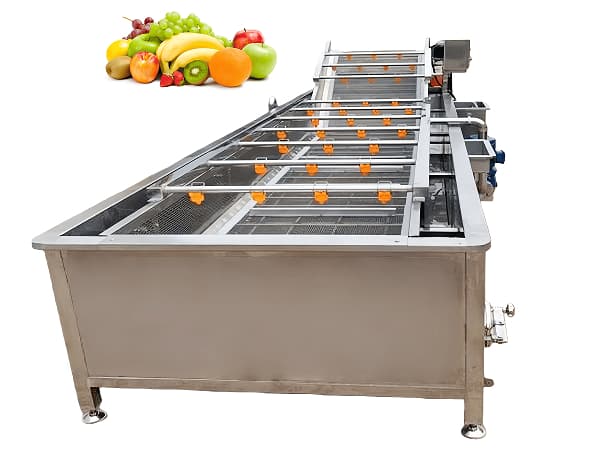
Mesin Basuh Buih
Sistem basuh buih menggunakan buih udara dan air beredar untuk membersihkan buah-buahan dan sayur-sayuran yang halus dengan lembut.
Produk yang sesuai termasuk:
- selada
- Bayam
- Epal
- tomato
- Strawberi
Mesin Basuh Roller Berus
Pencuci berus menggunakan penggelek berputar untuk mengeluarkan kotoran dan kulit dari sayuran akar.
Aplikasi biasa termasuk:
- Kentang
- lobak merah
- ubi kayu
- keledek
- halia
Sistem Pencuci Semburan
Sistem semburan tekanan tinggi membersihkan produk dengan berkesan semasa pengangkutan penghantar.
Peralatan Basuh Ultrasonik
Teknologi ultrasonik menghilangkan bahan cemar dengan lebih tepat untuk produk makanan premium.
Mesin Isih dan Penggredan
Selepas mencuci, produk disusun mengikut saiz, bentuk, warna, dan kualiti.
Teknologi pengisihan moden termasuk:
- Penggred berat
- Penggred penggelek
- Sistem pengisihan optik
- Mesin pemeriksaan visual AI
Penggredan automatik meningkatkan konsistensi dan membuang produk yang rosak dengan cekap.
Sistem pengisihan optik boleh mengenal pasti:
- Perubahan warna
- Bahan asing
- Produk rosak
- Variasi saiz
Ini meningkatkan penampilan produk akhir dan kualiti pembungkusan.
Peralatan Mengupas
Banyak buah-buahan dan sayur-sayuran memerlukan kupas sebelum diproses selanjutnya.
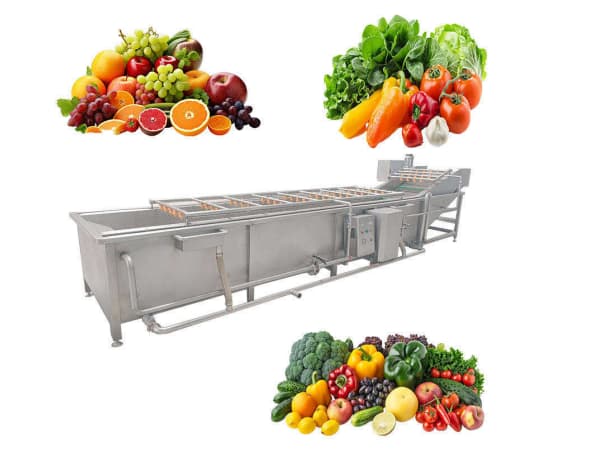
Mesin Pengupas Berus
Pengupas berus mengeluarkan kulit luar nipis melalui geseran.
Sesuai untuk:
- Kentang
- lobak merah
- keledek
Mesin Kupas Stim
Sistem pengelupasan wap menggunakan wap tekanan tinggi untuk melonggarkan kulit dengan cepat.
Kelebihan termasuk:
- Kehilangan bahan yang rendah
- Permukaan produk licin
- Kecekapan mengelupas yang tinggi
Mesin Pengupas Pisau
Pengupas pisau mekanikal digunakan untuk buah-buahan dengan kulit yang lebih tebal.
Permohonan termasuk:
- buah nanas
- buah mangga
- Epal
Mesin Memotong dan Menghiris
Peralatan pemotongan mengubah produk kepada bentuk dan saiz tertentu.
Gaya pemotongan biasa termasuk:
- hirisan
- kiub
- Jalur
- dadu
- carik-carik
- potong Julienne
Mesin pemotongan kentang
Digunakan untuk kentang goreng dan pengeluaran jalur kentang.
Mesin Memotong Sayur
Sesuai untuk bawang, wortel, lada, timun, dan produk yang serupa.
Mesin Menghiris Buah
Digunakan secara meluas untuk epal, Pisang, buah limau, dan buah mangga.
Pemotongan seragam bertambah baik:
- Konsistensi memasak
- Penampilan produk
- Kecekapan pembungkusan
- Kelajuan pengeluaran
Peralatan Blanching
Blanching adalah proses rawatan haba yang singkat menggunakan air panas atau wap.
Langkah ini membantu:
- Menyahaktifkan enzim
- Kekalkan warna semula jadi
- Memperbaiki tekstur
- Kurangkan pencemaran mikrob
Blanching biasanya digunakan sebelum ini:
- Pembekuan
- Pengeringan
- Menggoreng
Sistem Blanching Biasa
- Pencuci air panas
- Pemutih wap
- Mesin pemutihan berterusan
Kilang sayur beku secara meluas menggunakan sistem pemutihan berterusan.
Sistem penyejukan
Selepas dicelur atau dimasak, produk mesti disejukkan dengan cepat untuk mengelakkan terlalu masak.
Sistem penyejukan termasuk:
- Tangki penyejuk air sejuk
- Terowong penyejukan udara
- Sistem penyejukan air ais
Penyejukan pantas mengekalkan tekstur produk dan keselamatan makanan.
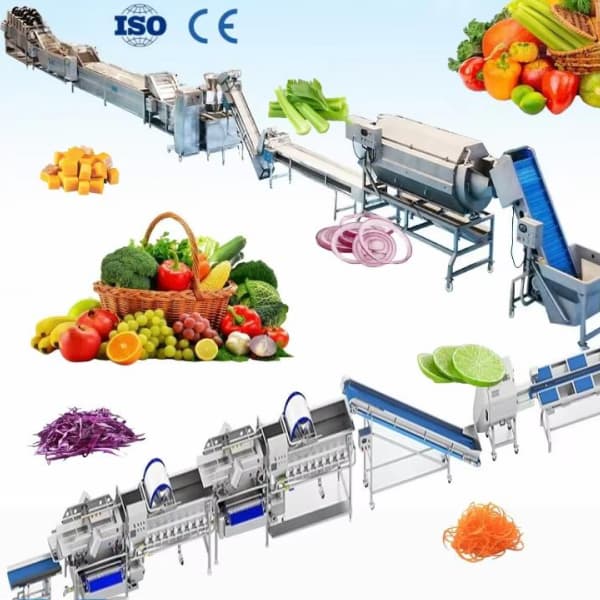
Peralatan Penyahairan dan Pengeringan
Mengeluarkan kelembapan berlebihan meningkatkan kualiti produk dan kecekapan pemprosesan.
Mesin Penyahair Bergetar
Menggunakan getaran untuk mengeluarkan air permukaan.
Mesin Pengering Udara
Sistem pisau udara mengeluarkan lembapan melalui aliran udara tekanan tinggi.
Mesin penyahairan centrifugal
Daya emparan berkelajuan tinggi mengeluarkan air dengan cekap.
Sistem ini penting sebelum membekukan, menggoreng, atau pembungkusan.
Peralatan Menggoreng
Sistem penggorengan digunakan secara meluas dalam pengeluaran makanan ringan.
Produk goreng popular termasuk:
- Kerepek kentang
- Kentang goreng
- Bawang goreng
- Cip pisang
- Snek sayur-sayuran
Mesin penggoreng berterusan
Direka untuk pengeluaran perindustrian berskala besar.
Mesin Penggorengan Vakum
Penggorengan vakum menggunakan suhu yang lebih rendah untuk mengekalkan nutrien, warna, dan rasa.
Sistem penggorengan lanjutan termasuk:
- Penapisan minyak automatik
- Kawalan suhu
- Sistem pemakanan berterusan
- Teknologi peredaran minyak
Peralatan Pembekuan
Produk buah-buahan dan sayur-sayuran beku memerlukan teknologi pembekuan yang cepat.
Peti Sejuk IQF
Sistem Quick Frozen secara individu membekukan produk secara berasingan dan bukannya dalam blok besar.
Produk IQF biasa termasuk:
- Kacang polong
- jagung
- Strawberi
- Kiub mangga
- Brokoli
Pembeku Lingkaran
Penyejuk beku lingkaran menyediakan pembekuan berterusan berkapasiti tinggi untuk kilang besar.
Pembekuan pantas membantu:
- Memelihara nutrien
- Mengekalkan tekstur
- Mengurangkan pembentukan kristal ais
- Memanjangkan jangka hayat
Peralatan Pemprosesan Jus
Pengeluaran jus buah-buahan memerlukan mesin khusus.
Peralatan pemprosesan jus biasa termasuk:
- Penghancur buah-buahan
- Mesin pulpa
- Pengekstrak jus
- Sistem penapisan
- Homogenis
- Pempasteur
- Mesin pengisian
Produk jus biasa termasuk:
- Jus epal
- Jus oren
- Jus mangga
- Jus nanas
- Jus tomato
Pempasteuran memastikan keselamatan mikrob sambil memanjangkan jangka hayat.
Peralatan Pengeringan
Sistem pengeringan mengurangkan kelembapan produk untuk penyimpanan jangka panjang.
Pengering Udara Panas
Digunakan secara meluas dalam dehidrasi sayur-sayuran dan buah-buahan.
Pengering beku
Pengeringan beku mengekalkan nutrien, tekstur, dan rasa dengan berkesan.
Pengering Gelombang Mikro
Menyediakan pengeringan yang cepat dan cekap tenaga.
Produk kering biasa termasuk:
- Serpihan bawang putih
- Serbuk bawang
- mangga kering
- Cip pisang
- Serbuk sayur
Mesin Pembungkusan
Pembungkusan melindungi produk makanan semasa pengangkutan dan penyimpanan.
Format pembungkusan popular termasuk:
- Beg vakum
- Beg bantal
- Botol
- tin
- Kantung
- Dulang plastik
Peralatan pembungkusan mungkin termasuk:
- Penimbang berbilang kepala
- Mesin pembungkusan menegak
- Sistem pengedap vakum
- Mesin mengisi botol
- Mesin pelabelan
Sistem pembungkusan automatik mengurangkan kos buruh dan risiko pencemaran.
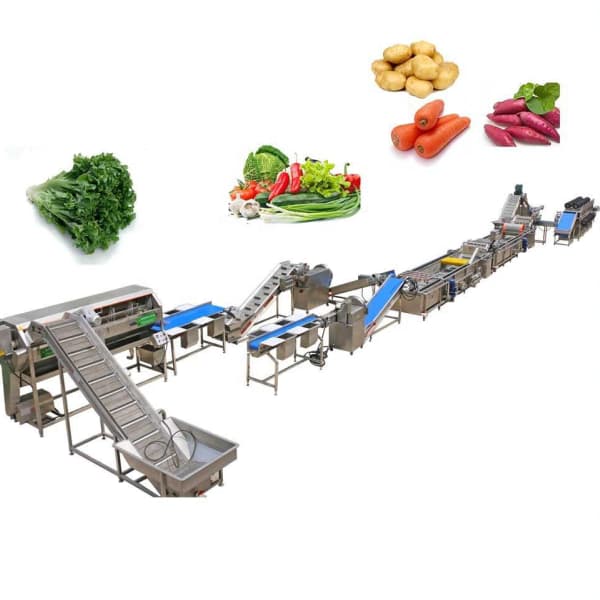
Langkah Pengeluaran dalam Barisan Pemprosesan Buah dan Sayuran
Walaupun produk yang berbeza memerlukan teknologi yang berbeza, kebanyakan baris pemprosesan mengikut aliran kerja yang serupa.
Pemilihan Bahan Mentah
Bahan mentah berkualiti tinggi adalah penting untuk menghasilkan produk siap berkualiti tinggi.
Pengeluar memeriksa:
- Kesegaran
- Kematangan
- Saiz
- Warna
- Keadaan permukaan
Produk yang rosak atau rosak dikeluarkan sebelum diproses.
Mencuci dan Membersih
Produk dicuci dengan bersih untuk menghilangkan bahan cemar seperti:
- tanah
- habuk
- Racun perosak
- Batu
- Sisa tumbuhan
Sesetengah kilang menggunakan berbilang peringkat pencucian untuk prestasi pembersihan yang lebih baik.
Pengisihan dan Penggredan
Produk disusun mengikut saiz dan standard kualiti.
Sistem automatik meningkatkan kecekapan dan memastikan konsistensi produk.
Mengupas
Produk yang memerlukan penyingkiran kulit memasuki peralatan pengelupasan.
Peringkat ini biasa untuk:
- Kentang
- Bawang putih
- Bawang besar
- buah mangga
- Epal
Memotong atau menghancurkan
Produk dipotong mengikut bentuk yang diperlukan atau dihancurkan untuk perahan jus.
Pemotongan seragam meningkatkan prestasi pemprosesan hiliran.
Blanching atau Prarawatan
Rawatan haba menstabilkan produk sebelum pemprosesan selanjutnya.
Sesetengah buah juga menerima rawatan anti-peperangan untuk mengekalkan penampilan.
Operasi Pemprosesan Utama
Langkah seterusnya bergantung pada produk akhir.
Contohnya termasuk:
- Menggoreng untuk kerepek kentang
- Pengeringan untuk serbuk sayuran
- Pembekuan untuk sayur-sayuran IQF
- Pempasteuran untuk jus buah
Penyejukan
Produk disejukkan dengan cepat sebelum dibungkus.
Langkah ini meningkatkan keselamatan makanan dan mengekalkan tekstur.
Pembungkusan
Produk siap dimeterai menggunakan sistem pembungkusan automatik.
Pembungkusan yang betul menghalang pencemaran dan memanjangkan jangka hayat.
Penyimpanan dan Pengedaran
Produk disimpan dalam keadaan terkawal.
Kaedah penyimpanan termasuk:
- Gudang beku
- Penyimpanan dalam peti sejuk
- Bilik simpanan kering
Pengurusan suhu adalah penting untuk mengekalkan kualiti makanan.
Automasi dalam Loji Pemprosesan Moden
Automasi telah mengubah industri pemprosesan makanan dengan ketara.
Barisan pemprosesan moden menggunakan teknologi canggih seperti:
- Sistem Kawalan PLC
- Antara muka skrin sentuh
- Sistem pemeriksaan AI
- Pembungkusan robotik
- Pemantauan IoT
Kelebihan Automasi
Kecekapan yang lebih tinggi
Sistem automatik beroperasi secara berterusan dengan masa henti yang minimum.
Mengurangkan kos buruh
Kilang memerlukan lebih sedikit pekerja manual.
Konsistensi Produk yang Lebih Baik
Mesin mengekalkan kualiti pemprosesan seragam.
Peningkatan Kebersihan
Mengurangkan hubungan manusia mengurangkan risiko pencemaran.
Pengurusan Data Lebih Mudah
Sistem digital menjejaki rekod pengeluaran dan data kawalan kualiti.
Piawaian Keselamatan dan Kebersihan Makanan
Keselamatan makanan adalah penting dalam pemprosesan buah-buahan dan sayur-sayuran.
Banyak pengeluar mengikut piawaian antarabangsa seperti:
- HACCP
- ISO 22000
- GMP
- Keperluan FDA
- Persijilan CE
Reka Bentuk Peralatan Kebersihan
Mesin pemprosesan makanan moden termasuk:
- Pembinaan keluli tahan karat gred makanan
- Permukaan licin untuk memudahkan pembersihan
- Sistem pembersihan CIP
- Sistem paip yang bersih
Ciri-ciri ini mengurangkan pertumbuhan bakteria dan meningkatkan kecekapan sanitasi.
Kecekapan Tenaga dalam Memproses Loji
Kos tenaga adalah kebimbangan utama bagi pengeluar makanan.
Loji pemprosesan moden menggunakan teknologi penjimatan tenaga untuk mengurangkan perbelanjaan operasi.
Penyelesaian Penjimatan Tenaga Biasa
Sistem Pemulihan Haba
Guna semula haba buangan daripada proses pengeluaran.
Pemacu Frekuensi Boleh Ubah
Kurangkan penggunaan tenaga motor.
Penebat Terma yang Cekap
Kekalkan suhu yang stabil dengan kehilangan tenaga yang lebih sedikit.
Sistem Automasi Pintar
Optimumkan operasi mesin secara automatik.
Kilang cekap tenaga meningkatkan kemampanan sambil mengurangkan kos pengeluaran.
Aplikasi Talian Pemprosesan Buah-buahan dan Sayur-sayuran
Peralatan pemprosesan buah-buahan dan sayur-sayuran digunakan secara meluas dalam pelbagai industri.
Pengeluaran Sayur Beku
Produk biasa termasuk:
- Kacang hijau
- Biji jagung
- Brokoli
- lobak merah
- Bayam
Pemprosesan Kentang
Produk popular termasuk:
- Kentang goreng beku
- Kerepek kentang
- Serpihan kentang
Pemprosesan Tomato
Tomato diproses menjadi:
- Tampalan tomato
- Pure tomato
- Ketchup
- sos tomato
Pengeluaran Jus Buah-buahan
Kilang menghasilkan:
- Jus epal
- Jus mangga
- Jus oren
- Jus nanas
Pemprosesan Bawang Putih dan Bawang Besar
Produk biasa termasuk:
- Paste bawang putih
- Serbuk bawang putih
- Bawang goreng
- Serpihan bawang
Cara Memilih Barisan Pemprosesan yang Betul
Memilih peralatan yang betul bergantung pada matlamat pengeluaran dan keperluan produk.
Kapasiti pengeluaran
Pengilang mesti menentukan kapasiti keluaran yang dikehendaki.
Contohnya termasuk:
- 500 kg/j
- 1 tan/j
- 5 tan/h
- 10 tan/h
Jenis produk
Produk yang berbeza memerlukan teknologi pemprosesan yang berbeza.
Pengeluaran makanan sejuk beku memerlukan sistem pembekuan, manakala pengeluaran makanan kering memerlukan peralatan dehidrasi.
Tahap automasi
Kilang boleh memilih antara:
- Sistem separa automatik
- Sistem automatik sepenuhnya
Ruang Kilang
Susun atur peralatan mestilah sesuai dengan kawasan bengkel yang ada dengan cekap.
Perancangan belanjawan
Kos pelaburan berbeza-beza bergantung pada tahap kapasiti dan automasi.
Peraturan Makanan Tempatan
Peralatan hendaklah mematuhi piawaian keselamatan makanan serantau dan keperluan pensijilan.
Trend Masa Depan dalam Pemprosesan Buah-buahan dan Sayur-sayuran
Industri pemprosesan makanan global terus berkembang pesat.
Pembuatan Pintar
Teknologi AI dan IoT menjadi semakin biasa.
Pengeluaran yang mampan
Pengilang memberi tumpuan kepada pengurangan:
- Penggunaan air
- Penggunaan tenaga
- Sisa makanan
Pertumbuhan Makanan Berasaskan Tumbuhan
Permintaan untuk makanan berasaskan sayuran terus meningkat di seluruh dunia.
Pembungkusan Mesra Alam
Penyelesaian pembungkusan biodegradasi dan kitar semula menjadi lebih popular.
Robotik Lanjutan
Sistem robotik meningkatkan kelajuan pengeluaran dan mengurangkan pergantungan buruh.
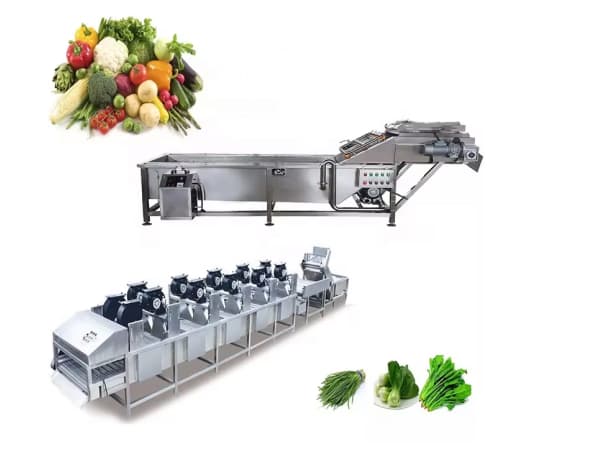
Talian Pemprosesan Buah-buahan dan Sayur-sayuran – Pengilang
Barisan pemprosesan buah-buahan dan sayur-sayuran moden memainkan peranan penting dalam industri makanan hari ini. Daripada membasuh dan mengasingkan sehinggalah kepada mengupas, memotong, pembekuan, pengeringan, menggoreng, dan pembungkusan, setiap langkah pemprosesan menyumbang kepada kualiti produk, keselamatan makanan, dan kecekapan pengeluaran.
Memandangkan permintaan pengguna terhadap makanan yang diproses terus meningkat, pengilang melabur dalam automasi termaju, peralatan kebersihan, dan teknologi cekap tenaga. Barisan pemprosesan berkualiti tinggi membantu kilang meningkatkan produktiviti, mengurangkan sisa, dan kekal berdaya saing dalam pasaran global.
Sama ada menghasilkan sayur sejuk beku, jus buah, buah -buahan kering, sos, atau makanan ringan, memilih peralatan pemprosesan buah-buahan dan sayur-sayuran yang betul adalah penting untuk kejayaan jangka panjang dalam industri pemprosesan makanan moden.