The global demand for yogurt continues to grow rapidly, driven by health-conscious consumers and the expanding dairy industry. For entrepreneurs and manufacturers, investing in commercial yogurt making equipment is the key to entering this profitable market. Whether you are operating a small yogurt shop, a medium-scale dairy plant, or a fully automated industrial production facility, understanding the equipment, process, and technology is essential.
We will walk you through everything you need to know about commercial yogurt making equipment—from basic machines to complete production lines, technical parameters, and how to choose the right system for your business.
What Is Commercial Yogurt Making Equipment?
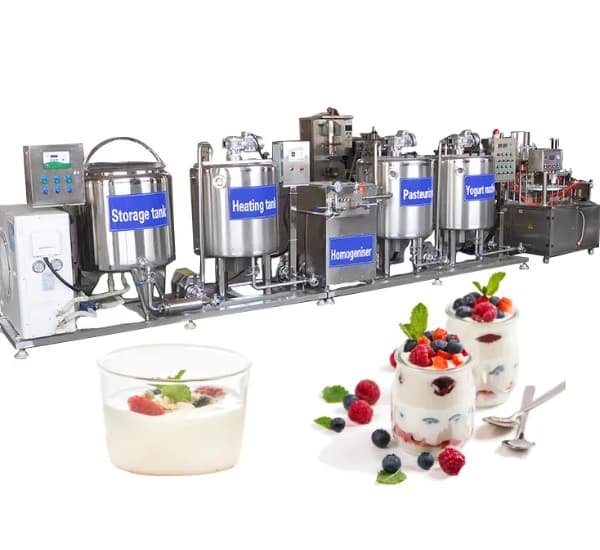
Commercial yogurt making equipment refers to a range of machines used to convert raw milk into yogurt through controlled processes such as heating, homogenization, fermentation, cooling, and packaging.
A standard commercial system ensures:
- Food safety compliance
- Consistent product quality
- Efficient large-scale production
- Automated operation
Modern yogurt machines integrate multiple functions including sterilization, fermentation, cooling, and refrigeration, making them highly efficient for commercial use.
Types of Commercial Yogurt Making Equipment
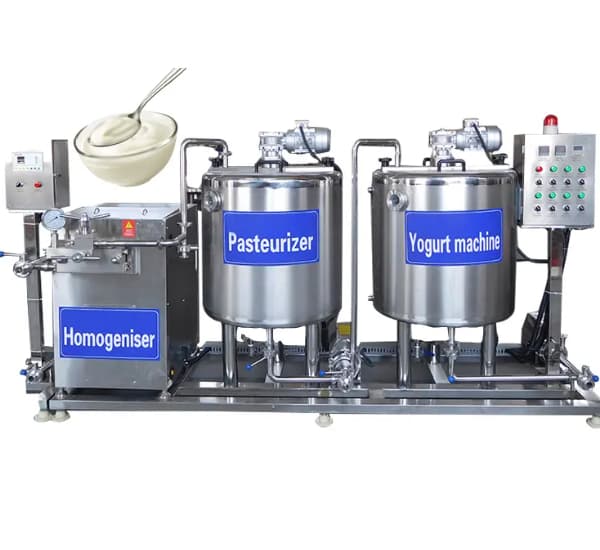
Small Commercial Yogurt Makers
These machines are designed for:
- Yogurt shops
- Cafés
- Small dairy startups
Key Features:
- Capacity: 50–100L per batch
- Fermentation time: 6–8 hours
- Temperature: around 42–43°C
- Compact design
They typically combine fermentation and cooling in one unit and are ideal for fresh yogurt production.
Batch Fermentation Tanks (Jacketed Tanks)
Used in medium-scale production:
Advantages:
- Uniform heating via jacket system
- Precise temperature control
- Suitable for repeated batch production
These tanks often include CIP (Clean-in-Place) systems for hygiene and automation.
Industrial Yogurt Production Lines
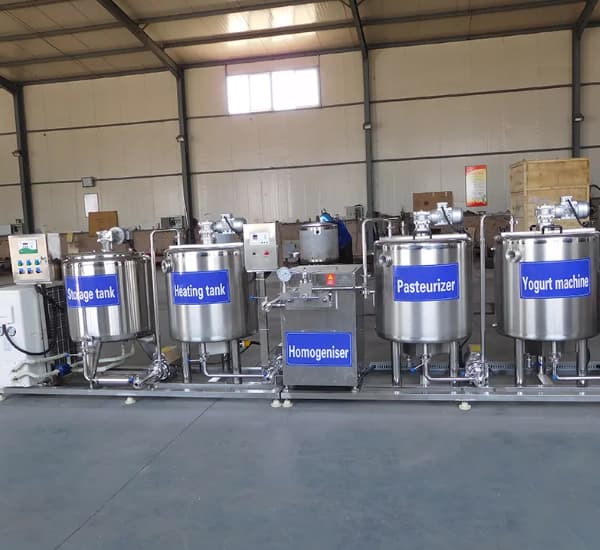
For large-scale manufacturing, a complete production line is required.
Capacity Range:
- 500L to 5000L (standard)
- Up to 15,000L for industrial plants
Includes:
- Milk storage tanks
- Homogenizers
- Pasteurizers
- Fermentation tanks
- Filling and packaging systems
These systems are usually PLC-controlled and fully automated.
Continuous Yogurt Processing Systems
Designed for:
- High-volume production
- 24/7 operation
Benefits:
- Minimal downtime
- High efficiency
- Consistent product quality
However, they require a high initial investment and technical expertise.
Cup Filling Yogurt Machines
Used for packaging yogurt into individual servings.
Functions:
- Automatic filling
- Sealing
- Labeling
These machines significantly reduce labor costs and increase production speed.
Complete Yogurt Production Process
Understanding the process helps you select the right equipment.
Step 1: Milk Reception and Storage
Fresh milk is stored in insulated tanks and filtered to remove impurities.
Step 2: Standardization and Preheating
Milk composition is adjusted, then heated to prepare for homogenization.
Step 3: Homogenization
A homogenizer breaks fat globules into smaller particles to improve texture and prevent separation.
Step 4: Pasteurization
Milk is heated to eliminate harmful bacteria:
- LTLT: 63°C for 30 minutes
- HTST: 72°C for 15 seconds
Step 5: Cooling
Milk is cooled to fermentation temperature (around 42–45°C).
Step 6: Fermentation
Starter cultures are added, converting lactose into lactic acid.
- Temperature: 35–45°C
- pH target: ~4.5
Step 7: Cooling and Storage
Fermentation stops when yogurt is cooled to around 4°C.
Step 8: Filling and Packaging
Yogurt is filled into cups, bottles, or pouches under hygienic conditions.
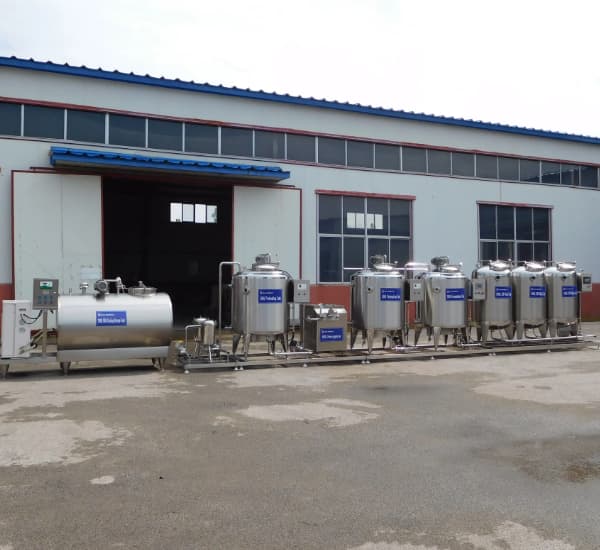
Main Components of Commercial Yogurt Making Equipment
Milk Storage Tank
- Stainless steel (SS304/SS316)
- Insulated design
- Maintains raw milk quality
Pasteurization Tank
- Eliminates bacteria
- Ensures food safety
Homogenizer
- Improves consistency
- Enhances mouthfeel
Fermentation Tank
- Precise temperature control
- Controlled bacterial growth
Cooling System
- Rapid cooling
- Maintains texture and flavor
Mixing and Flavoring Unit
- Adds fruit, sugar, or flavors
- Produces diversified yogurt products
Filling and Packaging Machine
- Automated operation
- Hygienic sealing
CIP Cleaning System
- Automated cleaning
- Reduces contamination risk
Technical Parameters of Commercial Yogurt Equipment
| Equipment Type | Capacity | Temperature Range | Power | Control System |
|---|---|---|---|---|
| Yogurt Maker | 50–100L | ~43°C | 220V | Digital |
| Fermentation Tank | 100–15000L | 35–90°C | 220V/380V | PLC |
| Production Line | 500–5000L | 35–45°C | Industrial | PLC |
| Filling Machine | Custom | Ambient | Electric | Automatic |
Key Features of Modern Yogurt Equipment
Automation
- PLC control systems
- Reduced manual labor
Hygiene Standards
- Stainless steel construction
- Aseptic processing
Energy Efficiency
- Optimized heating systems
- Lower operating costs
Multi-functionality
- Produces:
- Set yogurt
- Stirred yogurt
- Greek yogurt
- Drinking yogurt
Advantages of Commercial Yogurt Making Equipment
High Production Efficiency
Automated systems can produce large quantities in a short time.
Consistent Product Quality
Precise temperature control ensures uniform taste and texture.
Cost Reduction
- Lower labor costs
- Reduced raw material waste
Scalability
Equipment can be upgraded as your business grows.
Product Diversification
Supports multiple yogurt types and flavors.
How to Choose the Right Commercial Yogurt Equipment
Production Capacity
- Small shop: 50–100L
- Medium plant: 200–500L
- Industrial: 1000L+
Level of Automation
- Manual
- Semi-automatic
- Fully automatic
Budget Consideration
- Small machines: a few thousand USD
- Full production lines: tens of thousands USD
Space Requirements
Ensure enough space for installation and operation.
Product Type
Choose equipment based on your product:
- Greek yogurt
- Flavored yogurt
- Drinking yogurt
- Frozen yogurt
Applications of Commercial Yogurt Equipment
Commercial yogurt making equipment is widely used in:
- Dairy processing plants
- Yogurt shops
- Beverage factories
- Supermarkets
- Food startups
Future Trends in Yogurt Production Equipment
Smart Automation
AI and IoT integration for real-time monitoring.
Energy-Saving Technology
Reduced power consumption systems.
Modular Production Lines
Flexible systems for easy expansion.
Eco-Friendly Design
Water-saving and waste-reduction systems.
Why Invest in Commercial Yogurt Making Equipment?
With rising demand for healthy foods, yogurt production offers:
- High profit margins
- Strong market demand
- Scalable business opportunities
Investing in reliable commercial yogurt making equipment ensures:
- Stable production
- High-quality products
- Long-term business success
Commercial yogurt making equipment
Commercial yogurt making equipment is the backbone of any successful yogurt production business. From small yogurt makers to fully automated industrial production lines, the right equipment determines your efficiency, product quality, and profitability.
By understanding the different types of machines, production processes, and technical features, you can make an informed investment and build a competitive yogurt manufacturing operation.
If you are planning to enter the dairy industry or expand your current business, choosing the right commercial yogurt making equipment is the first and most critical step toward success.