
Proiectarea și construirea a mașină de făcut rulouri de primăvară este un proiect de inginerie complex care combină proiectarea mașinilor alimentare, termodinamica, controlul automatizării, fabricatie din otel inoxidabil, și certificare de siguranță. Cu cererea globală de chifle de primăvară congelate, rulouri de primăvară, rulouri de ou, iar rulourile vietnameze cresc rapid, mai multe fabrici iau în considerare personalizarea sau dezvoltarea internă a unui producător de rulouri de primăvară.
voi arăta cum să construiți o mașină de făcut rulouri de primăvară, ce componente are nevoie, cum funcționează fiecare subsistem, și care standarde de inginerie sunt necesare. Este scris pentru producătorii de echipamente, Designeri OEM/ODM, inginerii fabricilor de alimente, și oricine cercetează cum să proiecteze o linie de producție a rulourilor de primăvară.
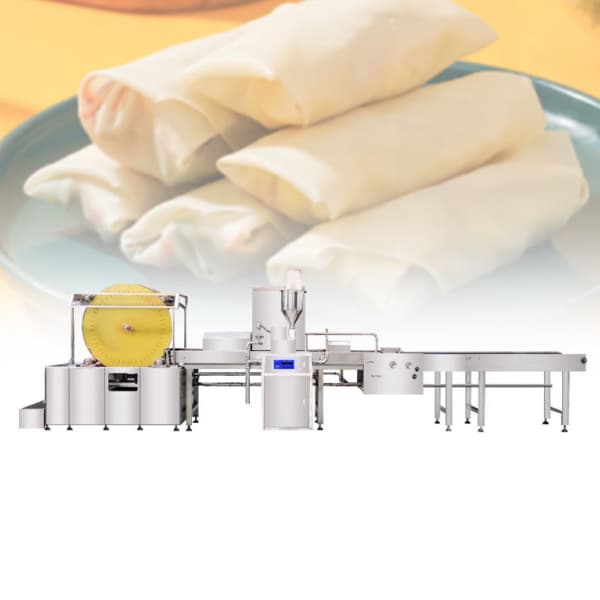
1. Înțelegerea scopului unei mașini de făcut rulouri de primăvară
Înainte de a proiecta sau construi orice mașină, trebuie să-i definiți scopul. A mașină de făcut rulouri de primăvară trebuie să îndeplinească următoarele funcții esențiale:
- Amestecarea și livrarea aluatului
- Produce subțire, foi de ambalare uniforme
- Gătiți uniform foile de ambalaj
- Răcirea și transferul ambalajelor
- Depunerea cu precizie a umpluturii
- Ambalaje de rulare și pliere
- Producerea consistentă, rulouri de primăvară uniforme
1.1 Nume comune și cuvinte cheie cu coadă lungă
Poate fi numită și o mașină de făcut rulouri de primăvară:
- Linie de producție a rulourilor de primăvară
- Producător automat de rulouri de primăvară
- Mașină de format rulou de primăvară
- Mașină de făcut rulouri de ouă
- aparat Lumpia
- Mașină de ambalat role de primăvară
- Aparat de foi de patiserie
Aceste cuvinte cheie cu coadă lungă ajută la atragerea clienților care caută diferite variante ale echipamentului.
2. Principiile de bază ale ingineriei din spatele unei mașini de fabricat rulouri de primăvară
Pentru a construi o mașină profesională, trebuie să înțelegeți teoria inginerească din spatele ei.
2.1 Transfer de căldură și control tambur
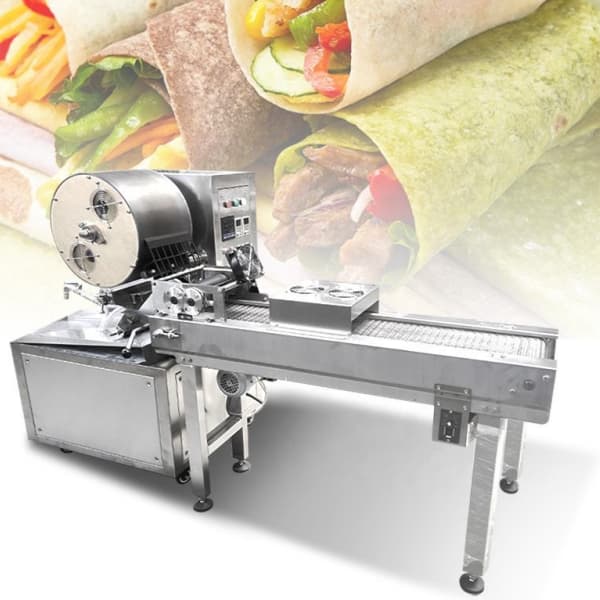
Sistemul se bazează pe a tambur rotativ încălzit care gătește ambalajul. Distribuția uniformă a căldurii asigură textura și grosimea consistente.
2.2 Automatizare de precizie
Transportorul, deponent, mecanism de fabricare a ambalajelor, iar sistemul de rulare trebuie să funcționeze sincronizat Control PLC, sau alinierea învelișului va eșua.
2.3 Proiectare structurală de calitate alimentară
Trebuie folosite toate componentele care intră în contact cu alimentele Oțel inoxidabil SUS304 sau SUS316 cu suduri sanitare.
3. Componentele unei mașini de făcut rulouri de primăvară
O completă mașină de producție a rulourilor de primăvară constă din nouă subsisteme majore. Fiecare subsistem trebuie proiectat și reglat individual.
3.1 Sistem de amestecare și alimentare a aluaturilor
Acest subsistem amestecă aluatul și îl transferă în tamburul încălzit.
Componente principale
- Rezervor de amestec din oțel inoxidabil
- Agitator sau mixer de mare viteză
- Pompa de aluat (pompă cu angrenaje sau pompă cu lobi)
- Stabilizator de debit
- Conducte sanitare
Considerații de inginerie
- Vâscozitatea aluatului trebuie să rămână stabilă
- Pompa ar trebui să fie netedă, aluat fără bule
- Modelele CIP reduc timpul de curățare
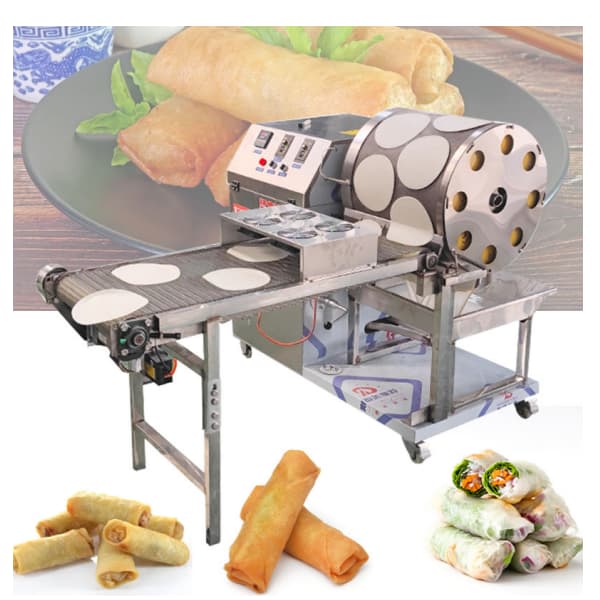
3.2 Tambur rotativ încălzit (Sistem de coacere în înveliș)
Toba este miezul mașină de ambalat role de primăvară.
Componentele cheie
- Tambur din oțel inoxidabil
- Sistem de incalzire pe gaz sau electric
- Controler PID de temperatură
- Lama de raclere
- Regulator de viteză a tamburului
Cerințe pentru tobe
- Grosimea uniformă
- Suprafață complet lustruită
- Distribuție uniformă a căldurii
- Viteza reglabila pentru controlul capacitatii
Un tambur bine proiectat poate produce ambalaje ultra-subțiri potrivite pentru producția comercială de rulouri de primăvară.
3.3 Sistem de decojire a învelișului
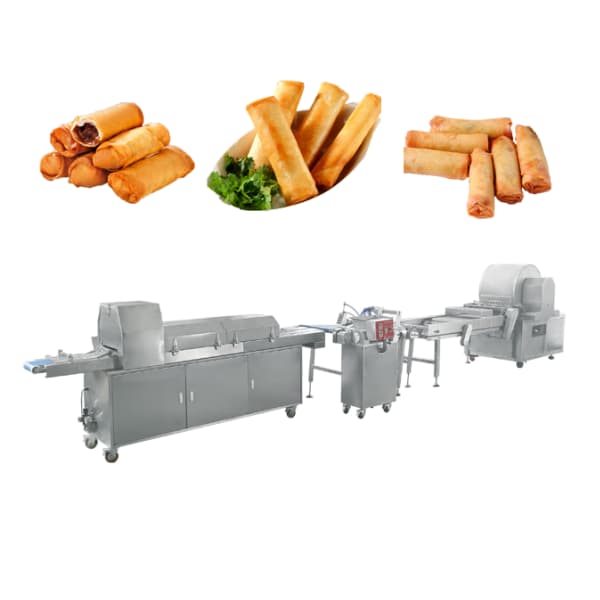
Odată copt, ambalajul trebuie desprins din tambur fără probleme.
Cerințe de proiectare
- Răzuitor de înaltă precizie
- Acoperire teflon sigură pentru alimente
- Unghi de răzuire reglabil
- Suporturi rezistente la căldură
Un sistem slab de peeling are ca rezultat împachetări rupte, scăderea eficienței producției.
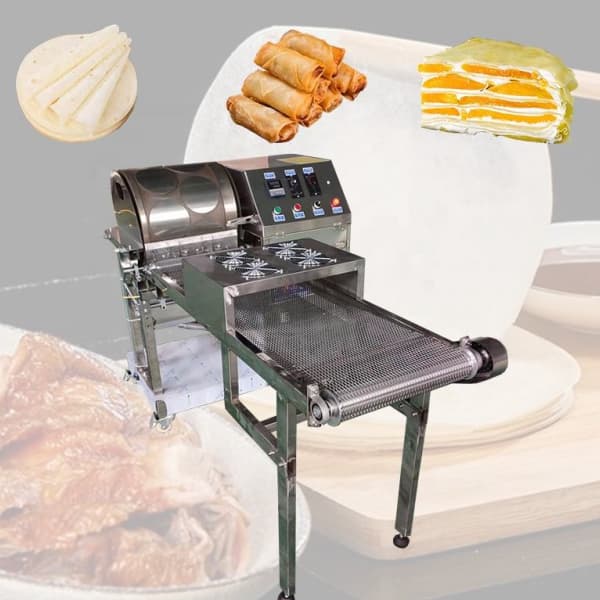
3.4 Sistem transportor de transfer
Transportorul mută ambalajele la stația de umplere.
Materiale
- Curele din silicon
- Curele alimentare din PU
- Curele acoperite cu teflon
Funcții
- Răcirea ambalajului
- Poziționare
- Menținerea sincronizării
- Alimentarea în umplutură
3.5 Sistem de umplere a depozitului
Umplerea este partea cea mai personalizată a unui mașină de făcut rulouri de primăvară.
Tipuri de depozit
- Umplere șurub melc
- Depozitar cu servomotoare
- Umplutură cantitativă pneumatică
- Transportor + depozitar cutter
Provocări
- Preveniți înfundarea umplerii
- Menține acuratețea
- Reduceți deșeurile de umplere
- Se adaptează la diferite umpluturi de legume sau carne
3.6 Mecanism de pliere și rulare
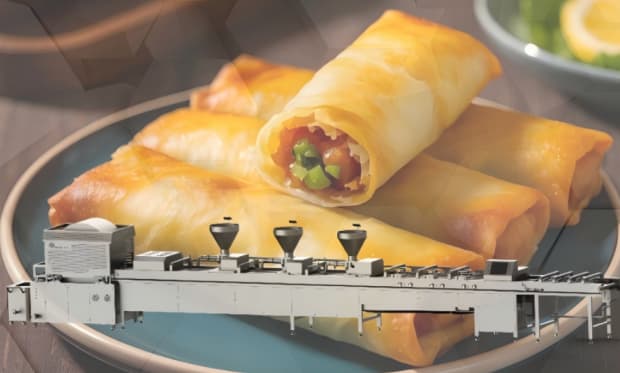
Acest mecanism dă ruloului de primăvară forma sa finală.
Componente
- Brațe rabatabile servocontrolate
- Cilindri pneumatici
- Curele de rulare
- Farfurii pliante
Parametri reglabili
- Dimensiunea învelișului
- Etanșeitate la rulare
- Controlul presiunii
- Diametrul final
Rularea corectă previne capete desfăcute sau ruperea în timpul prăjirii.
3.7 Sistem de control PLC
The aparat automat de rulouri de primăvară necesită control programabil.
Caracteristici PLC
- Memoria rețetelor
- Controlul PID al temperaturii
- Sincronizare transportor și tambur
- Sistem de alarma
- Diagnosticele de eroare
Un PLC bine programat asigură o calitate constantă pe ore lungi de producție.
3.8 Cadru din oțel inoxidabil și sistem de siguranță
Construcția alimentară include:
- Cadru din oțel inoxidabil
- Dulap electric impermeabil
- Butoane de oprire de urgență
- Huse de protectie
- Picioare reglabile antiderapante
- Structuri ușor de curățat
3.9 Sisteme suplimentare opționale
Producătorii pot adăuga module opționale:
- Linie automată de amestecare a aluaturilor
- Sistem de preparare a alimentelor
- Friteuza continua
- Congelator spiralat sau tunel de congelare IQF
- Echipamente de ambalare
4. Ghid pas cu pas: Cum să construiți o mașină de făcut rulouri de primăvară
Această foaie de parcurs de proiectare explică întregul proces de inginerie, de la planificare până la testare.
4.1 Pas 1: Definiți capacitatea de producție
Capacități comune:
- 2000 PC -uri/oră
- 5000 PC -uri/oră
- 8000+ PC -uri/oră
Capacitatea afectează:
- Diametrul tamburului
- Putere de incalzire
- Lungimea transportorului
- Numărul de stații de rulare
4.2 Pas 2: Alegeți metoda de încălzire
Încălzire pe gaz
- Răspuns rapid la încălzire
- Cost de operare mai mic
- Potrivit pentru fabrici mari
Încălzire electrică
- Instalare ușoară
- Potrivit pentru ateliere mici
- Nu este necesară conducta de gaz
4.3 Pas 3: Proiectați tamburul de ambalare
Elementele cheie de design includ:
- Materialul tamburului și grosimea
- Diametrul tamburului
- Nivel de lustruire
- Dispunerea conductei de încălzire sau a arzătorului
- Poziția lamei racletei
Calitatea ambalajului depinde în mare măsură de designul tamburului.
4.4 Pas 4: Construiți structura mecanică
Utilizare:
- Prelucrare CNC
- Tăiere cu laser
- Sudare sanitară TIG
Asigura:
- Fără colțuri moarte
- Suprafețe ușor de curățat
- Dulap de comandă impermeabilizat
4.5 Pas 5: Instalați transportor și sistem de sincronizare
Motoarele trebuie să fie:
- Sincronizat prin PLC
- Viteză variabilă
- Se potrivește cu lungimea și grosimea ambalajului
4.6 Pas 6: Integrarea sistemului de umplere
În această etapă, inginerii trebuie să ajusteze:
- Greutate de umplere
- Temperatura de umplere
- Netezimea curgerii
- Precizie de tăiere
4.7 Pas 7: Instalați unități de rulare și pliere
Inginerii trebuie să se adapteze:
- Presiune
- Sincronizare
- Viteza de rulare
- Unghiuri de pliere
4.8 Pas 8: Dezvoltați programul PLC
comenzi PLC:
- Temperatura tamburului
- Timpul transportorului
- Timpul de umplere
- Logica de rulare
- Sincronizarea motorului
- Alarme de siguranță
4.9 Pas 9: Efectuați o testare completă
Testează pentru:
- Consistența grosimii învelișului
- Precizie de umplere
- Fiabilitate continuă 24 de ore
- Omogenitatea produsului final
- Ușurință de curățare
5. Estimarea costurilor pentru construirea unei mașini de făcut rulouri de primăvară
O mașină profesională costă în general:
| Componentă | Costul estimat |
|---|---|
| Materiale din oțel inoxidabil | $3,000– 8.000 USD |
| Sistem de incalzire | $2,000– 6.000 USD |
| Motoare & transportoare | $3,000– 7.000 USD |
| Sistem de umplere | $5,000– 12.000 USD |
| PLC și electronică | $2,000– 5.000 USD |
| Manopera de fabricatie | $8,000– 20.000 USD |
Total: $25,000 - $60,000 in functie de complexitate si capacitate.
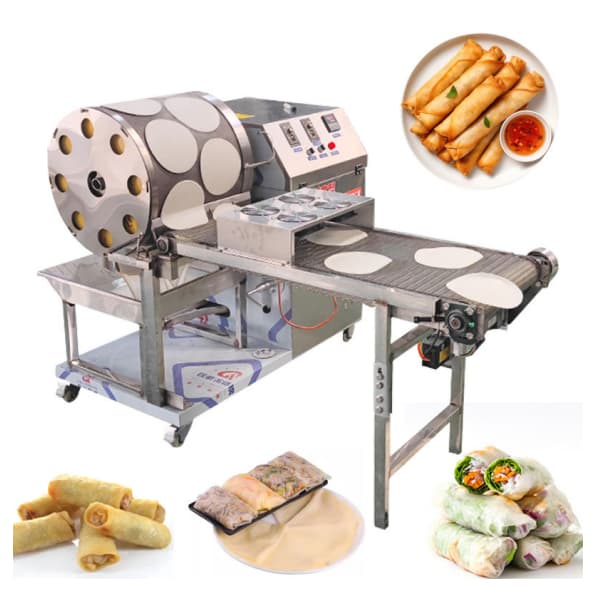
6. Ar trebui să construiți sau pur și simplu să cumpărați o mașină de rulouri de primăvară?
În timp ce construirea unei mașini de rulou de primăvară este posibilă din punct de vedere tehnic, necesită:
- Ingineri mecanici cu experiență
- Programatori electrici/PLC
- Cunoștințe privind siguranța alimentelor
- Scule de prelucrare precise
- Timp extins de testare
Pentru majoritatea fabricilor de produse alimentare, achiziționarea unui aparat profesional este mai rapidă, mai ieftin, si mai de incredere.
Producătorii ca Mașină de mâncare DT poate oferi:
- Dimensiune personalizată a ambalajului
- Sistem de umplere personalizat
- Linii de producție de mare capacitate
- Mașini de calitate pentru export
- CE / ISO / documentatie HACCP
Mașină de făcut rulouri de primăvară DT Food Machine
Clădirea a mașină de făcut rulouri de primăvară necesită expertiză în transferul de căldură, fabricatie din otel inoxidabil, proiectarea automatizării, și control sincronizat. De la amestecarea aluatului până la coacerea învelișului, umplere, pliere, rulare, și formarea finală, fiecare subsistem joacă un rol critic în producerea consistentă, rulouri de primăvară de calitate comercială.
Acest ghid complet explică logica de proiectare, principii de inginerie, și procesul de construire pas cu pas în spatele unei linii profesionale de producție a rulourilor de primăvară, ajutând producătorii să înțeleagă cum funcționează mașina și ce este necesar pentru a construi una de la zero.