Introduction
L'industrie mondiale de la transformation alimentaire continue de se développer à mesure que les consommateurs exigent des produits plus sains., plus sûr, et des produits alimentaires plus pratiques. En particulier, la transformation des légumes est devenue l'un des secteurs à la croissance la plus rapide sur le marché alimentaire international. Par conséquent, la demande de solutions avancées de machines de traitement des légumes augmente rapidement dans les restaurants, usines alimentaires surgelées, coopératives agricoles, et usines alimentaires industrielles.
Une machine moderne de transformation des légumes aide les entreprises à améliorer l'efficacité de leur production, sécurité alimentaire, cohérence du produit, économies de travail, et durée de conservation. De plus, les systèmes automatisés réduisent la manipulation manuelle tout en améliorant la productivité globale. Aujourd'hui, l'équipement de transformation des légumes est largement utilisé pour le lavage, peeling, coupe, séchage, blanchiment, friture, gel, et emballer des légumes.
Que vous exploitiez un petit atelier agroalimentaire ou une grande usine de transformation industrielle, sélectionner la bonne machine de transformation des légumes est essentiel pour un succès à long terme. Donc, comprendre les différents types de machines et technologies peut aider les entreprises à prendre de meilleures décisions d'investissement.
Qu'est-ce qu'une machine de transformation de légumes?
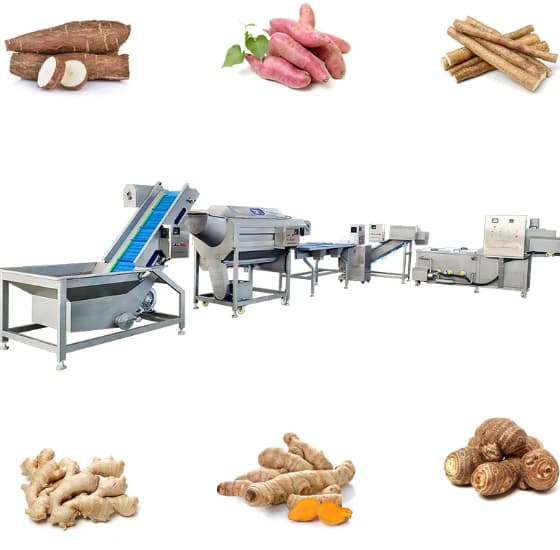
Une machine de transformation de légumes fait référence à un équipement industriel conçu pour nettoyer, préparer, couper, cuisiner, préserver, ou conditionner les légumes automatiquement ou semi-automatiquement. Ces machines sont largement utilisées dans l'industrie alimentaire commerciale car elles améliorent la vitesse de traitement et réduisent les coûts de main-d'œuvre..
Dans la plupart des usines, l'équipement de transformation des légumes traite des produits tels que:
- Pommes de terre
- Carottes
- Oignons
- Ail
- Tomates
- Épinard
- Chou
- Laitue
- Poivrons
- Concombres
- Brocoli
- Champignons
En fonction des exigences de production, les machines peuvent fonctionner indépendamment ou dans le cadre d'une chaîne de traitement complète. En outre, les systèmes modernes sont conçus pour maintenir les normes d'hygiène et de sécurité alimentaire tout en augmentant l'efficacité.
Pourquoi les machines de transformation des légumes sont importantes
La préparation traditionnelle des légumes demande beaucoup de travail et de temps. Cependant, la production alimentaire industrielle exige des solutions de transformation plus rapides et plus cohérentes. Pour cette raison, les machines automatisées de transformation des légumes sont devenues essentielles dans les usines modernes.
Efficacité de production supérieure
Les systèmes automatiques peuvent traiter de grandes quantités de légumes en continu. Par exemple, les systèmes de lavage industriels nettoient des centaines de kilogrammes de légumes chaque heure. En outre, les systèmes de convoyeurs réduisent le transport manuel à l’intérieur de l’usine.
Entre-temps, les machines de découpe à grande vitesse créent des tranches uniformes, cubes, ou des bandes d'excellente consistance. Par conséquent, la production augmente considérablement.
Sécurité alimentaire améliorée
Les réglementations en matière de sécurité alimentaire sont de plus en plus strictes dans le monde entier. Donc, les fabricants ont besoin d’équipements de traitement hygiéniques qui minimisent les risques de contamination.
Les machines modernes de transformation des légumes contribuent à réduire:
- Contamination humaine
- Croissance bactérienne
- Contamination croisée
- Dommages au produit
En plus, la plupart des machines industrielles utilisent une construction en acier inoxydable de qualité alimentaire, ce qui améliore la propreté et la résistance à la corrosion.
Réduction des coûts de main-d'œuvre
La pénurie de main-d'œuvre et la hausse des salaires ont encouragé les entreprises à investir dans l'automatisation. Au lieu de dépendre fortement des travailleurs manuels, les usines peuvent utiliser des machines automatiques pour accomplir plus efficacement les tâches répétitives.
Par conséquent, les entreprises réduisent leurs dépenses de main-d'œuvre tout en améliorant leur productivité.
Meilleure cohérence des produits
Une coupe et un traitement uniformes améliorent considérablement la qualité du produit. Par exemple, les légumes coupés uniformément cuisent plus uniformément et semblent plus attrayants dans l'emballage.
En outre, la consistance est particulièrement importante pour les légumes surgelés, Read-to-aed Meals, et chaînes d'approvisionnement des restaurants.
Principaux types de machines de transformation des légumes
L'industrie de transformation des légumes utilise de nombreux types de machines différents en fonction des exigences de production..
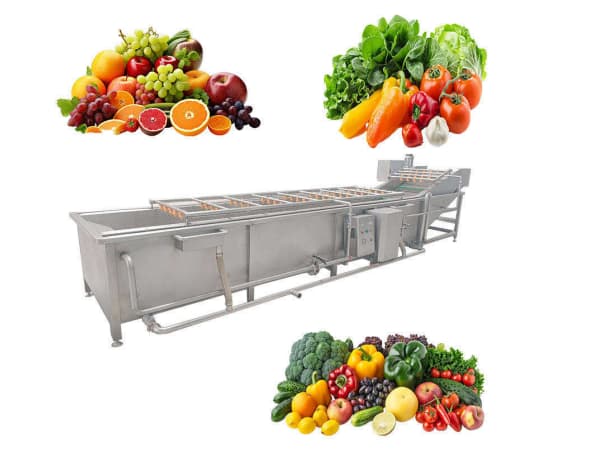
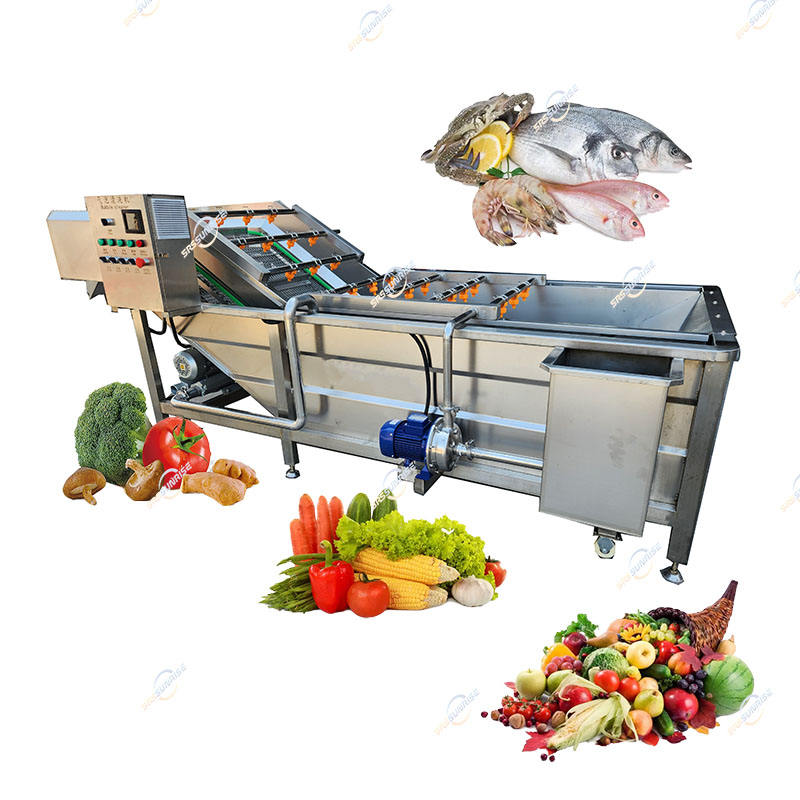
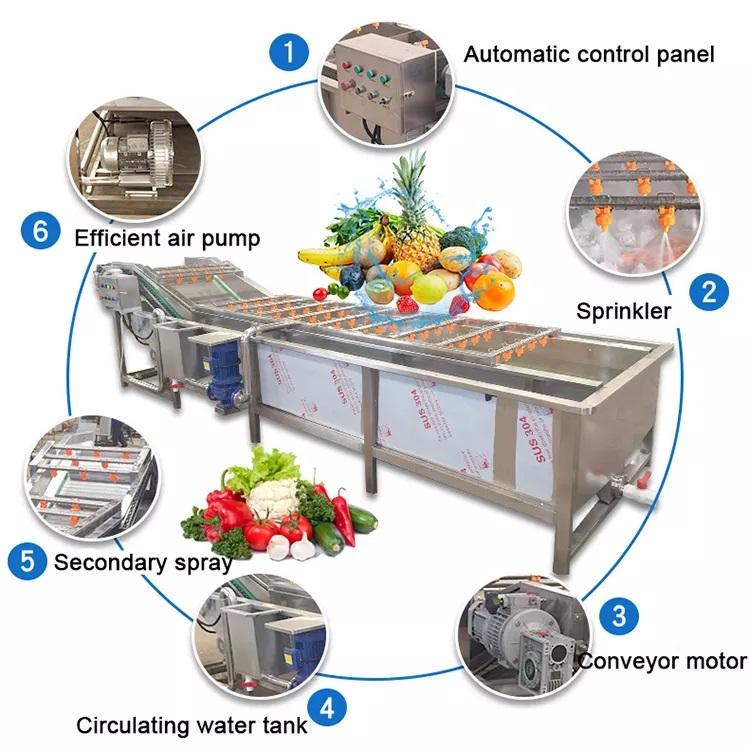
Machine à laver les légumes
Une machine à laver les légumes enlève la saleté, boue, sable, résidu de pesticides, et contamination de surface par les produits frais.
Technologies de lavage courantes
Plusieurs technologies de lavage sont couramment utilisées dans l’industrie agroalimentaire, y compris:
- Lavage à bulles
- Lavage par pulvérisation
- Lavage des brosses
- Lavage du tambour
Parmi ces options, les systèmes de lavage à bulles sont particulièrement adaptés aux légumes délicats car ils réduisent les dommages en surface.
Applications
Les machines à laver les légumes sont couramment utilisées pour:
- Légumes feuillus
- Légumes racines
- Herbes
- Fruits
En plus d'améliorer la propreté, les systèmes de lavage préparent également les légumes pour une transformation ultérieure.
Machine à éplucher les légumes
Les éplucheuses éliminent les peaux de légumes rapidement et efficacement. Comparé au peeling manuel, les systèmes industriels permettent d'économiser du temps et de la main d'œuvre.
Méthodes courantes de pelage
Les fabricants utilisent différentes technologies de pelage selon le type de produit, tel que:
- Peeling abrasif
- Peeling à la vapeur
- Épluchage au couteau
- Peeling au pinceau
Légumes populaires à éplucher
Les machines à éplucher sont largement utilisées pour:
- Pommes de terre
- Carottes
- Gingembre
- Ail
- Patates douces
À mesure que la demande d’aliments transformés augmente, l'équipement de pelage automatique est devenu de plus en plus populaire dans le monde entier.
Machine de découpe de légumes
Une machine à couper les légumes est l'un des types d'équipement de transformation des légumes les plus importants.. Il peut produire des tranches, cubes, bandes, lambeaux, dés, et coupes en julienne avec une grande précision.
Applications courantes
Ces machines sont largement utilisées dans:
- Production de frites
- Traitement de la salade
- Plantes potagères surgelées
- Cuisines centrales
En plus, les coupe-légumes modernes permettent aux opérateurs d'ajuster facilement la taille des coupes. Par conséquent, les usines peuvent produire plusieurs spécifications de produits en utilisant le même équipement.
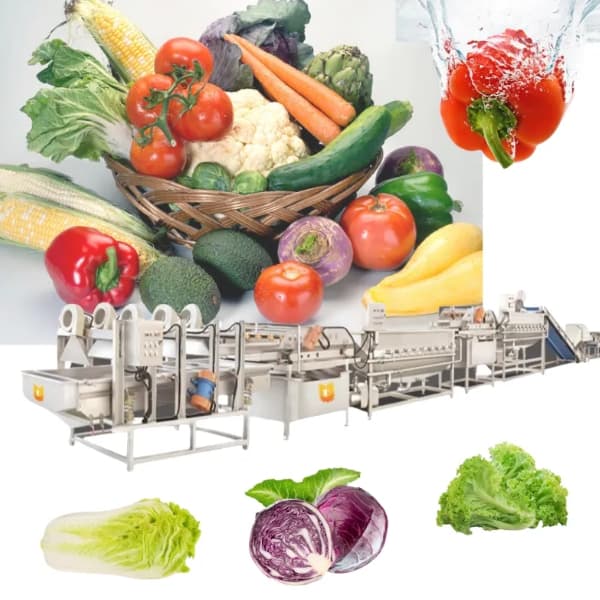
Machine à blanchir les légumes
Le blanchiment aide à préserver la couleur des légumes, texture, et nutrition avant congélation ou séchage.
Fonctions principales
Le processus de blanchiment offre plusieurs avantages importants:
- Inactivation enzymatique
- Stérilisation des surfaces
- Préservation des couleurs
Légumes typiques à blanchir
Les usines blanchissent généralement:
- Brocoli
- Épinard
- Haricots verts
- Petits pois
- Carottes
Dans la plupart des lignes de production de légumes surgelés, le blanchiment est une étape essentielle de la transformation.
Machine de déshydratation des légumes
Après lavage ou blanchiment, les légumes contiennent souvent un excès d’humidité. Donc, un équipement de déshydratation est nécessaire pour améliorer la qualité et la durée de conservation du produit.
Technologies de déshydratation courantes
Les méthodes de déshydratation populaires comprennent:
- Séchage centrifuge
- Séchage à l'air
- Assèchement vibrant
En éliminant efficacement les eaux de surface, ces machines améliorent les résultats d'emballage et réduisent la croissance bactérienne.
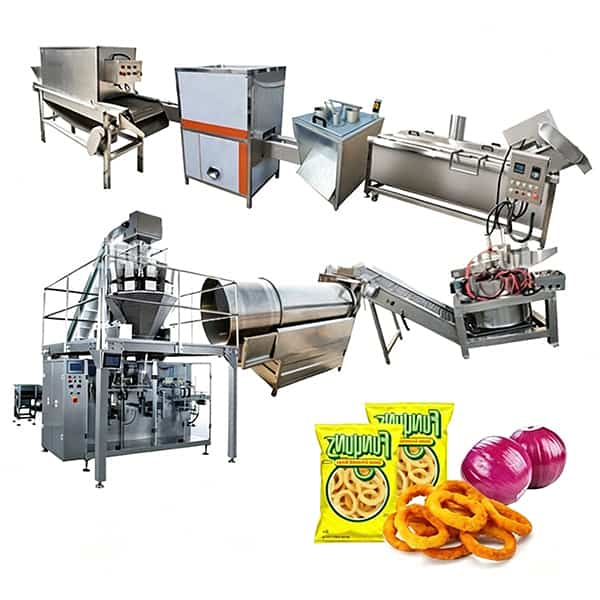
Machine à frire les légumes
Les machines à frire industrielles sont largement utilisées dans la production de snacks. En particulier, les produits de légumes frits continuent de gagner en popularité sur les marchés internationaux.
Produits frits courants
Les produits frits typiques comprennent:
- Chips
- frites
- Oignons frits
- Chips de légumes
Les systèmes de friture modernes incluent un contrôle automatique de la température, filtration à l'huile, et systèmes de convoyeurs. Par conséquent, les fabricants obtiennent une qualité de produit stable et une efficacité pétrolière améliorée.
Machine de congélation de légumes
Les légumes surgelés restent très populaires car ils offrent commodité et longue durée de conservation.. Donc, la technologie de congélation joue un rôle essentiel dans la transformation alimentaire moderne.
Systèmes de congélation courants
L'industrie utilise couramment:
- Congélateur IQF
- Tunnel de congélation
- Congélateur spirale
Parmi ces technologies, La congélation IQF est particulièrement populaire car elle empêche les légumes de coller ensemble.
Machine de conditionnement de légumes
L'emballage protège les légumes pendant le stockage et le transport. De plus, un bon emballage améliore l’apparence du produit et sa valeur marchande.
Types d'emballage courants
Les fabricants utilisent souvent:
- Emballage sous vide
- Emballage en sac d'oreiller
- Scellage des barquettes
- Emballage sous atmosphère modifiée
À mesure que la demande des consommateurs pour des aliments pratiques augmente, la technologie de l'emballage continue d'évoluer rapidement.
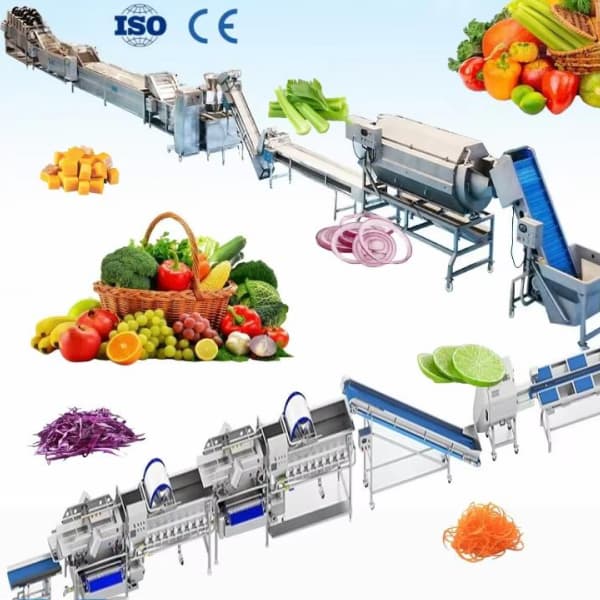
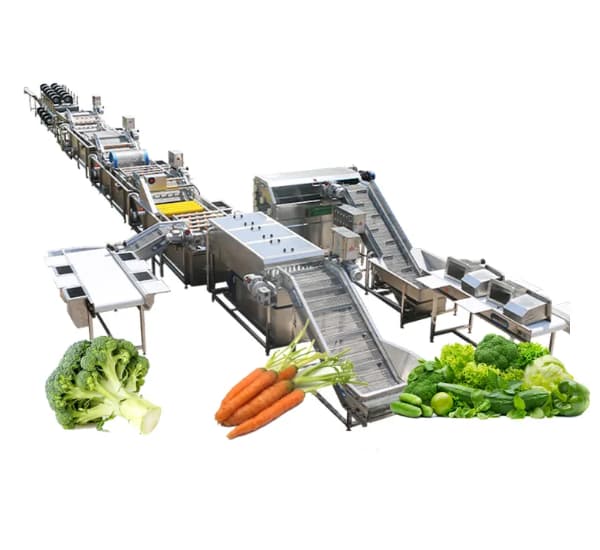
Ligne complète de transformation de légumes
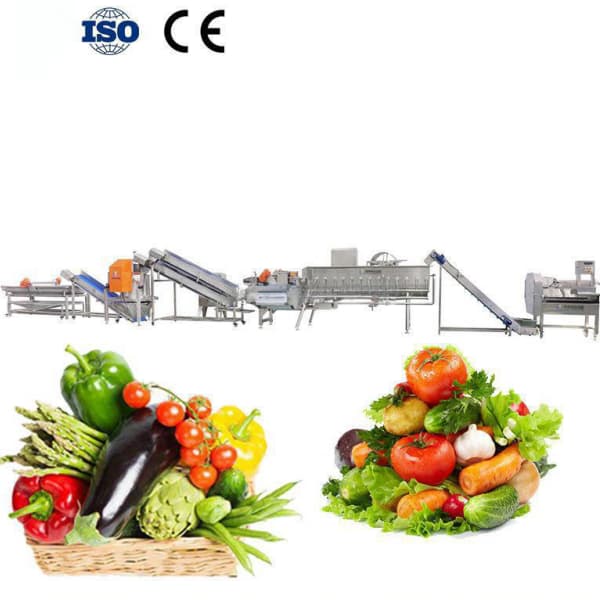
De nombreuses usines préfèrent des lignes complètes de production de légumes plutôt que des machines autonomes. Les systèmes intégrés améliorent l'automatisation tout en réduisant les besoins en main-d'œuvre.
Une ligne de transformation de légumes typique peut inclure:
- Convoyeur d'alimentation
- Machine à laver les légumes
- Machine à éplucher
- Machine de découpe
- Système de blanchiment
- Circuit de refroidissement
- Machine de déshydratation
- Machine d'emballage
Parce que chaque étape fonctionne en continu, les lignes intégrées améliorent considérablement l'efficacité globale de la production.
Applications populaires de transformation des légumes
Production de légumes surgelés
Les légumes surgelés constituent l’un des segments les plus importants de l’industrie alimentaire mondiale. Par conséquent, la demande d'équipements de transformation de légumes surgelés continue de croître.
Les produits surgelés courants comprennent:
- Brocoli surgelé
- Carottes surgelées
- Petits pois surgelés
- Mélange de légumes surgelés
Typiquement, le processus de production comprend le lavage, coupe, blanchiment, Congélation IQF, et emballage.
Production de frites
Les lignes de production de frites nécessitent plusieurs machines de traitement des légumes travaillant ensemble.
L'équipement typique comprend:
- Laveuse de pommes de terre
- Éplucheur de pommes de terre
- Coupe-bande
- Blanchir
- Frite
- Congélateur
- Machine d'emballage
Parce que les frites surgelées sont consommées dans le monde entier, ce marché reste très rentable.
Traitement de la salade
La production de salades fraîchement coupées nécessite un équipement de transformation hygiénique et une gestion stricte de la sécurité alimentaire.
Les machines importantes comprennent:
- Laveuse de légumes feuilles
- Coupeur
- Sécheur d'air
- Machine d'emballage
En plus, des environnements de transformation propres sont essentiels pour maintenir la fraîcheur et prévenir la contamination.
Transformation de l'ail et de l'oignon
Les machines de traitement de l'ail et de l'oignon sont largement utilisées dans les cuisines commerciales et les usines d'assaisonnement..
Les machines populaires incluent:
- Machine à éplucher à l'ail
- Machine à éplucher les oignons
- Machine à trancher les oignons
- Machine à pâte d'ail
Par rapport à la préparation manuelle, les systèmes automatiques améliorent à la fois l’efficacité et la cohérence.
Matériaux utilisés dans les machines de transformation des légumes
La plupart des équipements industriels de transformation des légumes utilisent de l'acier inoxydable de qualité alimentaire.
Pourquoi l'acier inoxydable est important
L'acier inoxydable offre plusieurs avantages:
- Résistance à la corrosion
- Nettoyage facile
- Longue durée de vie
- Surfaces hygiéniques
- Conformité à la sécurité alimentaire
Dans la plupart des cas, L'acier inoxydable SUS304 est couramment utilisé dans la fabrication de machines alimentaires. Cependant, certaines machines robustes utilisent de l'acier inoxydable SUS316 pour une meilleure résistance à la corrosion.
Automatisation dans la transformation des légumes
L’automatisation transforme rapidement l’industrie alimentaire mondiale. Donc, les machines modernes de transformation des légumes incluent de plus en plus de systèmes de contrôle intelligents.
Les fonctionnalités avancées incluent souvent:
- Systèmes de contrôle des PLC
- Interfaces à écran tactile
- Capteurs automatiques
- Contrôle intelligent de la température
- Surveillance à distance
Par conséquent, l'automatisation améliore la stabilité de la production, qualité du produit, et efficacité énergétique simultanément.
Avantages des machines automatiques de traitement des légumes
Les systèmes automatiques offrent de multiples avantages aux fabricants de produits alimentaires.
Travail humain réduit
L'automatisation minimise les opérations manuelles et réduit la dépendance en matière de main-d'œuvre.
Vitesse de traitement plus rapide
Les machines industrielles traitent chaque jour de grandes quantités de légumes.
Hygiène améliorée
Les systèmes fermés réduisent considérablement les risques de contamination.
Efficacité énergétique
Les équipements modernes consomment moins d’électricité et d’eau que les systèmes plus anciens.
Meilleur rendement du produit
Une coupe précise réduit le gaspillage de matières premières et améliore la rentabilité.
Machines de transformation de légumes pour les petites entreprises
Les petites entreprises peuvent également bénéficier d'équipements compacts de transformation des légumes. En fait, de nombreuses startups démarrent avec des systèmes automatiques à petite échelle.
Les machines compactes populaires incluent:
- Découpeurs de table
- Mini-laveuses
- Petits éplucheurs
- Systèmes d'emballage compacts
Ces machines conviennent pour:
- Restaurants
- Entreprises de restauration
- Startups alimentaires
- Petites fermes
En outre, les machines compactes nécessitent moins d'espace d'installation et des coûts d'investissement inférieurs.
Équipement de transformation de légumes industriels
Les grandes usines alimentaires nécessitent des systèmes industriels robustes dotés de capacités de production continue.
Les équipements industriels comportent généralement:
- Capacité de production élevée
- Fonctionnement entièrement automatique
- Traitement continu
- Systèmes de contrôle intégrés
Les capacités de production peuvent varier de:
- 100 kg/heure
- 500 kg/heure
- 1000 kg/heure
- 5000 kg/heure
Par conséquent, les fabricants peuvent choisir des équipements en fonction de la taille de l'usine et des objectifs de production.
Comment choisir la bonne machine de traitement des légumes
La sélection de la bonne machine dépend de plusieurs facteurs importants.
Capacité de production
D'abord, les entreprises devraient déterminer leurs exigences de production quotidiennes.
Type de légume
Différents légumes nécessitent différentes technologies de transformation.
Niveau d'automatisation
Les fabricants peuvent choisir entre:
- Manuel
- Semi-automatique
- Systèmes entièrement automatiques
Espace d'usine
Les dimensions de la machine doivent correspondre à l'espace d'installation disponible.
Considérations budgétaires
Les entreprises devraient évaluer:
- Prix de l'équipement
- Frais d'entretien
- Consommation d'énergie
- Économies de main d'œuvre
Normes de sécurité alimentaire
Enfin, l'équipement doit être conforme aux normes internationales telles que:
- FDA
- CE
- ISO
- Haccp
Entretien des machines de transformation de légumes
Un entretien approprié prolonge la durée de vie de la machine et améliore la fiabilité opérationnelle.
Nettoyage quotidien
Les opérateurs doivent éliminer les résidus végétaux après la production.
Lubrification
Les pièces mobiles nécessitent une lubrification régulière pour réduire l'usure.
Inspection des lames
Les lames tranchantes améliorent la qualité et l'efficacité de la coupe.
Inspection électrique
Les moteurs et les systèmes de contrôle doivent être inspectés périodiquement.
Donc, la maintenance préventive est essentielle pour les performances à long terme de la machine.
Tendances dans l’industrie de transformation des légumes
L'industrie de la transformation des légumes continue d'évoluer rapidement en raison de l'évolution des préférences des consommateurs et de l'innovation technologique..
Transformation alimentaire intelligente
Les technologies IA et IoT sont de plus en plus courantes.
Équipement économe en énergie
Les fabricants se concentrent sur la réduction de la consommation d’énergie.
Traitement durable
Les systèmes de recyclage de l’eau gagnent en popularité à l’échelle mondiale.
Conception de machines hygiéniques
Les exigences en matière de sécurité alimentaire continuent d’augmenter chaque année.
Lignes de production personnalisées
Les usines exigent de plus en plus de solutions de traitement personnalisées pour des produits spécifiques.
Machines de transformation de légumes pour les marchés d'exportation
La demande mondiale de légumes transformés continue d’augmenter régulièrement. Alors que le commerce alimentaire international se développe, les fabricants investissent massivement dans des équipements de traitement modernes.
Les principaux marchés d'exportation comprennent:
- États-Unis
- Europe
- Moyen-Orient
- Asie du Sud-Est
- l'Amérique latine
Donc, les machines de transformation des légumes de haute qualité sont devenues essentielles pour les entreprises alimentaires orientées vers l'exportation.
Problèmes courants dans la transformation des légumes
Malgré une automatisation avancée, certains problèmes de fonctionnement peuvent encore survenir.
Coupe inégale
Dans de nombreux cas, les lames émoussées provoquent des résultats de coupe incohérents.
Dommages au produit
Des réglages incorrects de la machine peuvent endommager les légumes pendant le traitement.
Excès d'eau
Une mauvaise déshydratation affecte la qualité de l’emballage et la durée de conservation.
Problèmes d'hygiène
Un nettoyage inapproprié peut augmenter les risques de contamination.
Heureusement, un entretien régulier et une formation des opérateurs contribuent à réduire considérablement ces problèmes.
L'avenir des machines de transformation de légumes
L'avenir des équipements de transformation des légumes se concentrera sur des technologies plus intelligentes, nettoyeur, et des technologies de production plus durables.
Les tendances futures incluent:
- Intelligence artificielle
- Robotique
- Systèmes de surveillance intelligents
- Traitement économe en énergie
- Fabrication écologique
Alors que la demande de produits alimentaires sains et pratiques continue d’augmenter, l’automatisation de la transformation des légumes va encore se développer dans le monde entier.
Principaux fabricants de machines de transformation de légumes
De nombreuses entreprises fournissent des équipements de transformation de légumes dans le monde.
Les fabricants bien connus incluent:
- Groupe GEA
- Groupe Bühler
- Chauffer et contrôler
- JBT Corporation
- Henan Dongtai Machine alimentaire Co., Ltée.
Les fabricants chinois sont de plus en plus populaires car ils proposent:
- Prix compétitifs
- Livraison rapide
- Solutions personnalisées
- Large choix d'équipements
Conclusion
Une machine moderne de transformation des légumes joue un rôle essentiel dans l’industrie alimentaire d’aujourd’hui. Du lavage et du pelage à la découpe, friture, gel, et emballage, ces machines aident les entreprises à améliorer leur efficacité, sécurité alimentaire, et la qualité des produits.
De plus, l'automatisation réduit les coûts de main-d'œuvre tout en augmentant la cohérence de la production. Que vous exploitiez un petit restaurant ou une grande usine industrielle, choisir le bon équipement de transformation des légumes peut améliorer considérablement la rentabilité et les performances opérationnelles.
Alors que les technologies de fabrication intelligente continuent de progresser, les machines de transformation des légumes deviendront encore plus intelligentes, hygiénique, économe en énergie, et respectueux de l'environnement à l'avenir. Par conséquent, les entreprises qui investissent aujourd’hui dans des équipements de transformation de haute qualité seront mieux placées pour rivaliser sur le marché mondial en pleine croissance de la transformation des aliments..