La mise en place d'une ligne de production de machines d'emballage de rouleaux de printemps peut être un investissement intelligent pour les entreprises alimentaires. Alors que la demande mondiale d’aliments pratiques continue de croître, les emballages de rouleaux de printemps sont de plus en plus populaires sur de nombreux marchés. Donc, la construction d'un système de production efficace peut créer de solides opportunités commerciales.
Comment planifier, construire, and operate a production line step by step. En outre, practical tips are included to help you avoid common mistakes and improve efficiency.
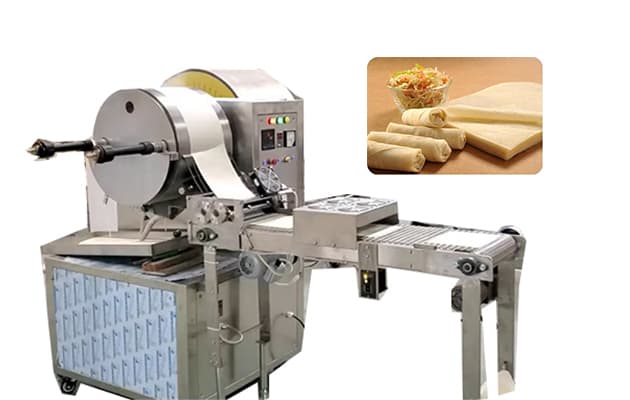
1. Understanding the Product and Market Spring Roll Wrapper Machine
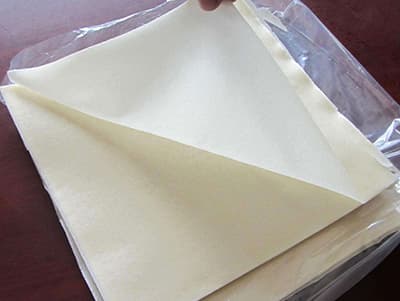
Before buying equipment, you should clearly understand your product. Spring roll wrappers are thin sheets made mainly from flour and water. Cependant, different markets may require different types.
Par exemple, some customers prefer fresh wrappers, while others need frozen products. En outre, rice-based wrappers are popular in certain regions.
À cause de ça, defining your target market is essential. Once the market is clear, choosing the right machines becomes much easier.
2. Planning Your Production Line
A clear plan helps reduce costs and improve efficiency. Without proper planning, production problems may appear later.
D'abord, decide your production capacity. Par exemple, small factories may choose 100 kg/heure, while larger factories may need over 300 kg/heure. Suivant, consider your available space and budget.
Entre-temps, the layout should follow a simple and logical flow. Autrement dit, materials should move in one direction only. This approach reduces contamination risks and saves time.
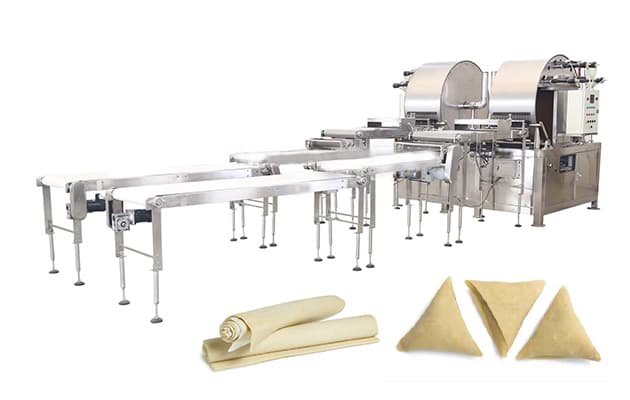
3. Main Equipment Required
Choosing the right equipment is one of the most important steps. Each machine plays a specific role in the process.
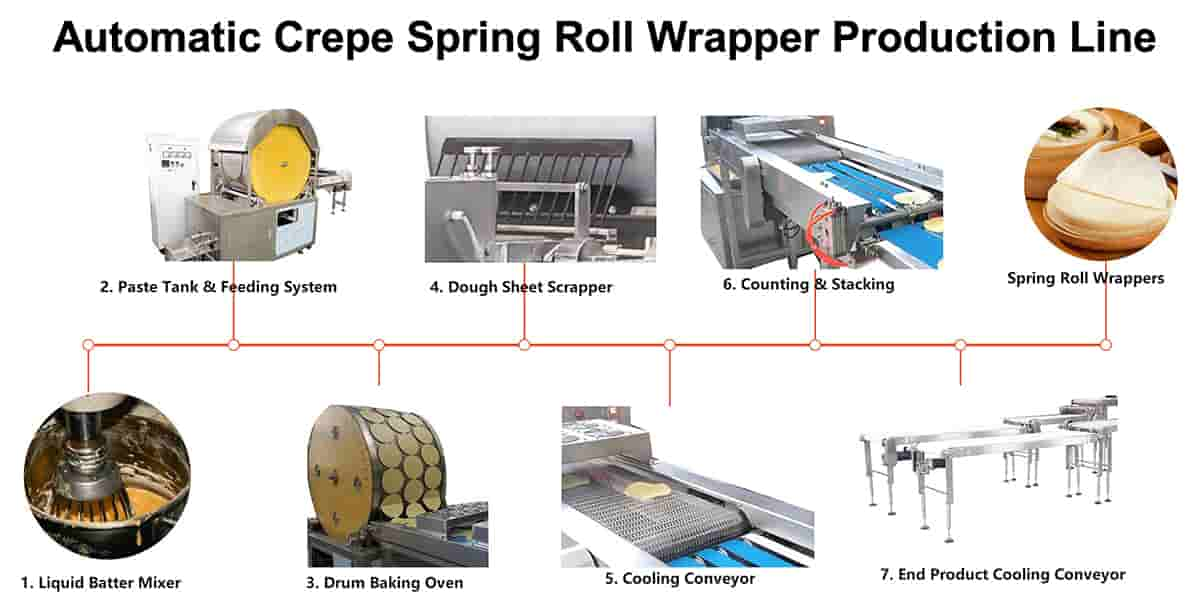
3.1 Mélangeur de pâte
The mixing machine prepares the batter. It combines flour, eau, and other ingredients into a smooth mixture.
A good mixer ensures consistent quality. En outre, it reduces manual work and improves efficiency.
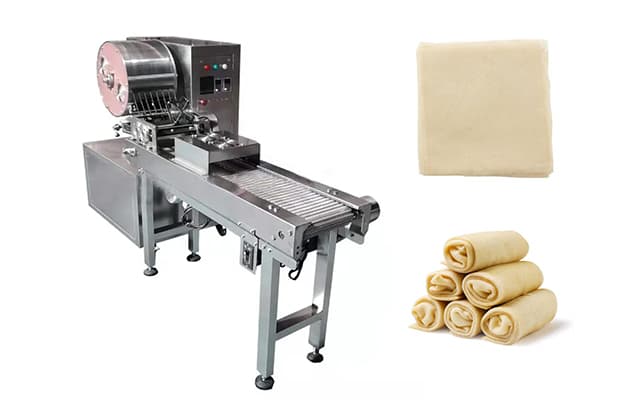
3.2 Machine d'emballage de rouleaux de printemps
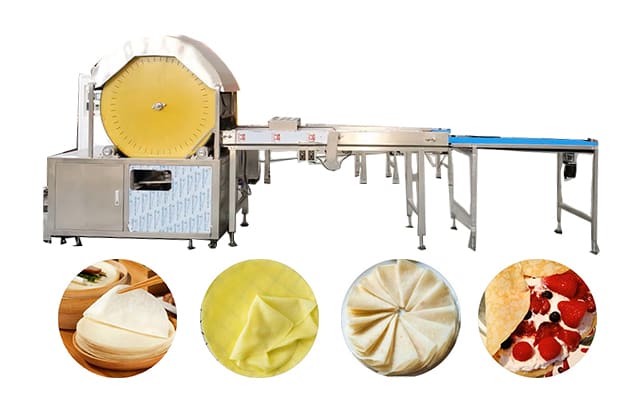
This machine forms and cooks the wrapper. It spreads batter onto a heated surface and creates thin sheets.
Temperature control is very important here. If the heat is too high, the wrapper may burn. D'autre part, low heat may cause undercooking.
3.3 Convoyeur de refroidissement
Après la cuisson, the wrappers must cool down. Sinon, they may stick together.
A cooling conveyor helps maintain shape and quality. En même temps, it prepares the product for the next step.
3.4 Cutting and Stacking System
In many production lines, cutting and stacking are automated. Par conséquent, labor costs decrease significantly.
En outre, automation improves consistency and speed.
3.5 Machine d'emballage
Enfin, the product is packaged. This step is especially important for frozen products.
Par exemple, sealed packaging helps extend shelf life. En outre, it protects the product during transportation.
4. Production Process Explained
Understanding the full process helps you manage production better. Each step must be controlled carefully.
Étape 1: Préparation des matières premières
At the beginning, prepare all raw materials. Make sure the ingredients meet quality standards.
Étape 2: Mélange de pâte
Suivant, mix the ingredients into a smooth batter. If lumps appear, the final product quality will decrease.
Donc, mixing time and speed should be controlled properly.
Étape 3: Forming and Baking
After mixing, the batter is processed into thin sheets. The machine spreads the batter evenly and cooks it.
Entre-temps, thickness must remain consistent. Sinon, some wrappers may break easily.
Étape 4: Refroidissement
Once cooked, the wrappers move to the cooling section. Durant cette étape, proper airflow is important.
If cooling is insufficient, sticking problems may occur. Par conséquent, product quality will drop.
Étape 5: Cutting and Stacking
Après refroidissement, the wrappers are cut and stacked. In automated systems, this process is fast and precise.
Étape 6: Conditionnement
Enfin, the wrappers are packaged. Depending on the market, different packaging methods can be used.
5. Choosing the Right Production Capacity
Capacity selection depends on your business goals. Choosing too large a system may increase costs unnecessarily. Cependant, choosing too small a system may limit growth.
Pour les petites entreprises, a compact line is often enough. Entre-temps, medium factories usually prefer semi-automatic systems. Large factories, d'autre part, often invest in fully automatic lines.
6. Exigences de configuration d'usine
A well-designed factory improves efficiency and safety.
D'abord, divide the space into different areas. Par exemple, include raw material storage, production, and packaging zones.
En outre, proper ventilation is necessary. Good airflow helps maintain product quality and worker comfort.
7. Analyse des coûts
Understanding costs is essential before starting.
The main expenses include machinery, travail, and raw materials. En outre, utility costs such as electricity and water should be considered.
Although initial investment may seem high, efficient production can reduce long-term costs. Donc, planning carefully is important.
8. Quality Control Tips
Maintaining quality ensures customer satisfaction.
Par exemple, consistent batter thickness improves product performance. Entre-temps, proper temperature control prevents defects.
If problems appear, adjustments should be made quickly. Sinon, waste may increase.
9. Labor and Training
Even automated lines need trained workers.
Operators must understand machine functions. En outre, they should know how to handle basic issues.
Proper training reduces errors. Par conséquent, production becomes more stable.
10. Automation vs Manual Production
Automation offers many advantages. Par exemple, it improves efficiency and reduces labor costs.
Cependant, manual systems require lower investment. Donc, small businesses may prefer them at the beginning.
In the long term, automation usually provides better returns.
11. Packaging and Storage
Packaging plays an important role in product quality.
Par exemple, frozen products require sealed packaging. En revanche, fresh products may use simpler methods.
Storage conditions are also important. Low temperatures help extend shelf life.
12. Marketing Your Product
Après la production, selling the product is the next step.
You can target restaurants, supermarchés, et distributeurs. En outre, online marketing can help reach more customers.
Offering samples is also effective. Par conséquent, customers can test your product quality directly.
13. Erreurs courantes pour éviter
Some mistakes can reduce efficiency.
Par exemple, poor planning may lead to production delays. En outre, incorrect machine selection can increase costs.
Donc, careful preparation is essential.
14. Maintenance et soutien
Regular maintenance keeps machines running smoothly.
Daily cleaning is important. Entre-temps, checking key parts helps prevent breakdowns.
Choosing a reliable supplier is also crucial. Good support can solve problems quickly.
15. Réflexions finales
Setting up a spring roll wrapper production line requires careful planning. Cependant, with the right approach, it can be a profitable business.
By choosing suitable equipment and maintaining quality, you can build a strong production system. En outre, continuous improvement will help your business grow over time.