Introduction
L'industrie alimentaire mondiale continue de croître rapidement parce que les consommateurs exigent de plus en plus des aliments plus sains., plus sûr, et des produits alimentaires plus pratiques. Par conséquent, la transformation des fruits et légumes est devenue l’un des secteurs les plus importants de la fabrication alimentaire moderne. Les fruits et légumes transformés sont largement utilisés dans les supermarchés, restaurants, usines alimentaires surgelées, usines de production de snacks, industries des boissons, et fabrication de plats prêts à consommer.
Pour les usines alimentaires, une transformation efficace des fruits et légumes peut améliorer considérablement la capacité de production tout en réduisant les coûts de main-d'œuvre et en minimisant le gaspillage de matières premières. En outre, une technologie de traitement moderne contribue à prolonger la durée de conservation des produits, maintenir la valeur nutritionnelle, et améliorer la cohérence des produits. Donc, de nombreux fabricants de produits alimentaires investissent massivement dans des machines automatisées, systèmes de contrôle intelligents, et lignes de production hygiéniques.
Qu'est-ce que la transformation des fruits et légumes?
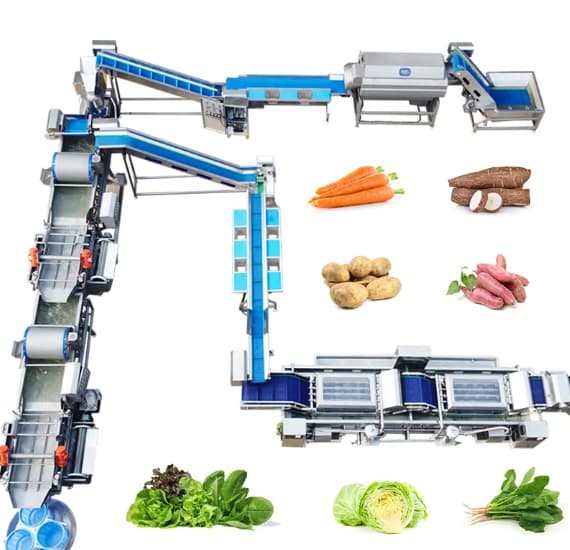
La transformation des fruits et légumes fait référence à la transformation industrielle de produits agricoles frais en aliments transformés de plus grande valeur., durée de conservation améliorée, et une meilleure commodité.
En général, les opérations de traitement comprennent:
- Lavage
- Tri
- Peeling
- Coupe
- Blanchiment
- Séchage
- Gel
- Friture
- Jus
- Purée
- Stérilisation
- Conditionnement
L'objectif principal est de préserver la fraîcheur tout en facilitant le transport des produits., magasin, et consommer. Par conséquent, les produits transformés peuvent atteindre des marchés plus larges et rester stables pendant de plus longues périodes.
Aujourd'hui, Les produits de fruits et légumes transformés courants comprennent:
- Légumes surgelés
- Fruits secs
- Jus de fruit
- Pâte de tomate
- frites
- Chips de légumes
- Purée de fruits
- Légumes en conserve
- Salades fraîchement coupées
- Légumes marinés
- Produits à base d'ail et d'oignon
Pourquoi la transformation des fruits et légumes est importante
Réduire les pertes après récolte
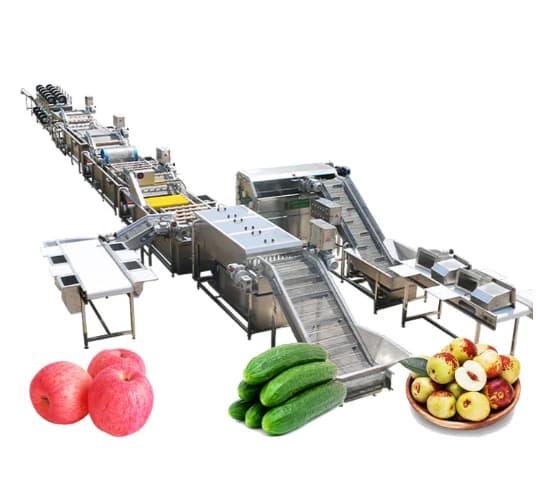
Les fruits et légumes frais se gâtent rapidement s’ils ne sont pas traités correctement. Donc, la transformation industrielle contribue à réduire le gaspillage alimentaire et à améliorer l'utilisation des produits.
Augmenter la valeur du produit
Les produits transformés génèrent généralement des bénéfices beaucoup plus élevés que les produits agricoles bruts. Par exemple, les pommes de terre peuvent devenir des frites surgelées, tandis que les tomates peuvent être transformées en ketchup ou en concentré de tomates. De la même manière, les mangues sont souvent transformées en collations séchées, jus, ou en purée.
Améliorer la sécurité alimentaire
Des équipements de transformation modernes aident les usines à maintenir des normes d'hygiène strictes. De plus, les systèmes automatisés réduisent le contact humain pendant la production, ce qui minimise encore davantage les risques de contamination.
Soutenir l’approvisionnement alimentaire mondial
Les produits alimentaires transformés peuvent être transportés sur de longues distances sans se détériorer rapidement. Par conséquent, les usines alimentaires peuvent se développer plus facilement sur les marchés internationaux.
Principaux types de transformation des fruits et légumes
Transformation des produits frais
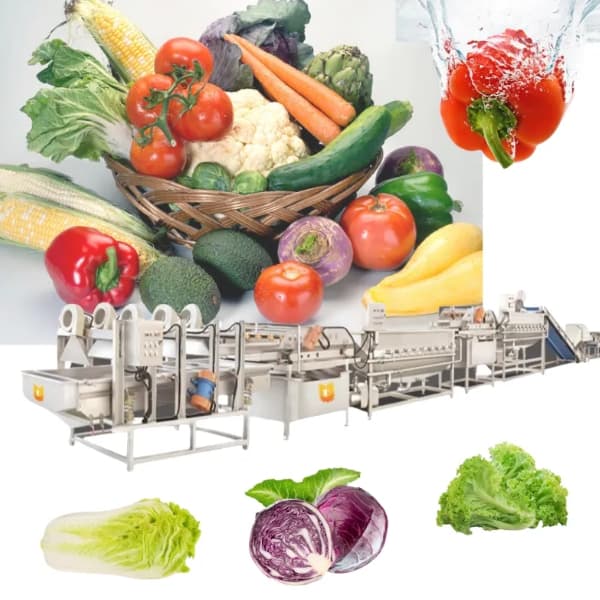
Le traitement des produits fraîchement coupés implique le lavage, peeling, coupe, et emballer des produits frais tout en conservant une apparence et une texture fraîches.
Les produits courants incluent:
- Salade de légumes
- Pommes tranchées
- Couper les carottes
- Légumes prêts à cuisiner
Avantages du traitement des produits fraîchement coupés
Les produits fraîchement coupés sont de plus en plus populaires car ils sont pratiques pour les consommateurs. En outre, ces produits nécessitent un temps de préparation minimal.
Les avantages supplémentaires incluent:
- Aspect frais
- Temps de préparation court
- Plus de commodité
- Une demande croissante du marché
Principaux équipements utilisés
Les usines utilisent généralement:
- Machines à laver à bulles
- Machines à couper les légumes
- Systèmes de séchage à l'air
- Machines d'emballage
Traitement de congélation
Les fruits et légumes surgelés sont très populaires dans le monde entier car la congélation préserve les nutriments., couleur, et texture efficacement.
Les produits surgelés typiques comprennent:
- Petits pois surgelés
- Brocoli surgelé
- Cubes de mangue surgelés
- Frites surgelées
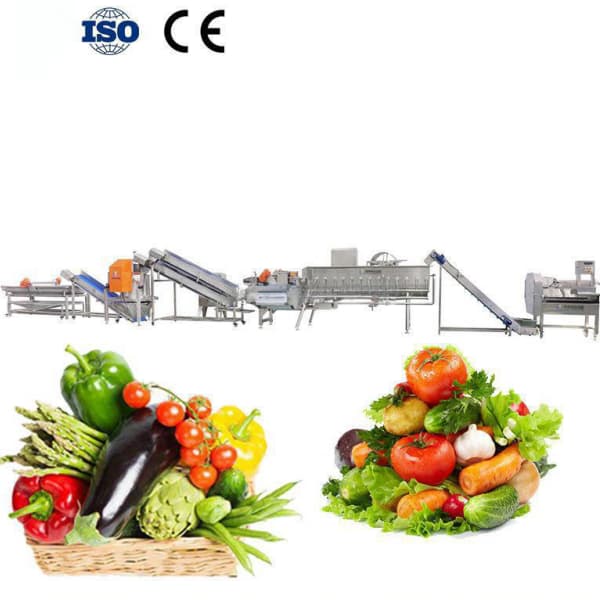
Technologie de congélation IQF
Congélation rapide individuelle (Iqf) la technologie congèle rapidement les produits séparément. Par conséquent, les produits ne collent pas ensemble et conservent une meilleure qualité.
Avantages du traitement congelé
La transformation congelée offre plusieurs avantages importants. Par exemple, les produits surgelés ont une durée de conservation plus longue et une excellente stabilité de transport.
D'autres avantages incluent:
- Meilleure conservation de la fraîcheur
- Rangement pratique
- Forte demande d’exportation
- Dégradation réduite
Équipement principal pour les lignes de congélation
Une ligne de congélation standard peut inclure:
- Machines à blanchir
- Machines de déshydratation
- Congélateurs IQF
- Systèmes d'emballage
Séchage et déshydratation
Le séchage élimine l'humidité des fruits et légumes pour empêcher la croissance microbienne et la détérioration.. Donc, les produits déshydratés peuvent rester stables pendant de longues périodes.
Les produits séchés populaires comprennent:
- Mangue séchée
- Raisins secs
- Flocons d'ail
- Poudre d'oignon
- Poudre végétale
Méthodes de séchage courantes
Séchage à l'air chaud
Le séchage à l’air chaud est largement utilisé car il est économique et adapté à une production à grande échelle..
Lyophilisation
La lyophilisation préserve plus efficacement la structure du produit et sa valeur nutritionnelle. Cependant, le coût d'investissement est nettement plus élevé.
Séchage sous vide
Le séchage sous vide est souvent utilisé pour les produits alimentaires haut de gamme soumis à des exigences de qualité strictes..
Avantages du traitement de séchage
Les produits déshydratés offrent de nombreux avantages commerciaux. En particulier, les coûts de transport et de stockage sont beaucoup plus faibles en raison de la réduction du poids et du volume.
Transformation des jus et des boissons
La transformation des jus de fruits reste l'un des secteurs les plus importants de l'industrie des boissons. De plus, la demande des consommateurs pour des boissons saines continue d’augmenter à l’échelle mondiale.
Les produits de jus populaires incluent:
- du jus d'orange
- Jus de pomme
- Jus de mangue
- Jus de légumes mélangés
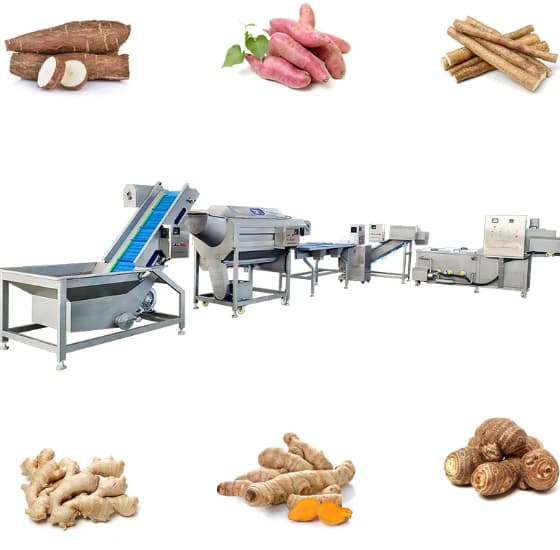
Processus de production de jus
Le processus de production typique comprend:
- Lavage
- Tri
- Écrasement
- Extraction de jus
- Filtration
- Pasteurisation
- Remplissage et emballage
Équipement de traitement de jus important
L'équipement commun comprend:
- Broyeurs de fruits
- Extracteurs de jus
- Pasteurisateurs
- Machines de remplissage
Transformation des conserves
Les fruits et légumes en conserve restent importants car ils offrent une excellente stabilité de stockage sans réfrigération.
Les exemples incluent:
- Pêches en conserve
- Champignons en conserve
- Maïs sucré en conserve
- Tomates en conserve
Avantages de la mise en conserve
La technologie de mise en conserve offre plusieurs avantages. Par exemple, les produits en conserve peuvent maintenir une qualité stable pendant de longues périodes.
Les avantages supplémentaires incluent:
- Longue durée de conservation
- Transport pratique
- Dégradation réduite
- Rangement facile
Exigences clés pour la mise en conserve
Pour garantir la sécurité des produits, les usines doivent contrôler:
- Stérilisation
- Scellage sous vide
- Hygiène des emballages
- Gestion de la température
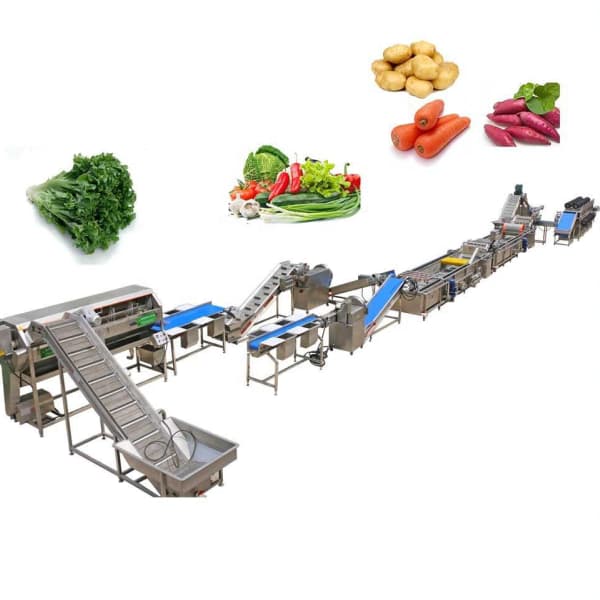
Traitement de friture
Les snacks aux fruits et légumes frits deviennent de plus en plus populaires sur les marchés internationaux. Donc, de nombreuses usines agroalimentaires investissent dans des lignes de production de friture automatisées.
Les produits populaires incluent:
- Chips
- Croustilles de banane
- Oignons frits
- Chips de légumes
Principales étapes de production
Le processus comprend généralement:
- Lavage
- Peeling
- Tranchage
- Blanchiment
- Friture
- Dé-pétrole
- Assaisonnement
- Conditionnement
Équipement de friture important
Les usines utilisent couramment:
- Machines à trancher
- Friteuses continues
- Systèmes de déshuilage
- Machines à assaisonner
Ligne complète de transformation de fruits et légumes
Les usines alimentaires modernes combinent généralement plusieurs machines dans des systèmes de traitement entièrement automatiques.. Par conséquent, l'efficacité de la production et la cohérence du produit s'améliorent considérablement.
Réception des matières premières
Les usines inspectent d’abord soigneusement les produits entrants. Typiquement, les inspecteurs de la qualité évaluent:
- Fraîcheur
- Taille
- Maturité
- Dommages superficiels
- Matières étrangères
Des matières premières de haute qualité sont essentielles à la production de produits finis de qualité supérieure.
Lavage et nettoyage
Un lavage adéquat élimine les contaminants et améliore la sécurité alimentaire. En outre, un nettoyage efficace améliore l'apparence du produit.
Les usines suppriment généralement:
- Saleté
- Sable
- Pierres
- Résidus de pesticides
- Débris végétaux
Équipement de lavage commun
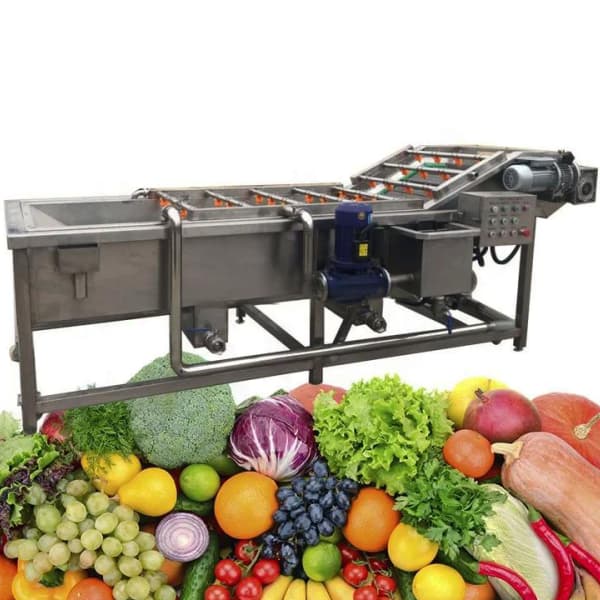
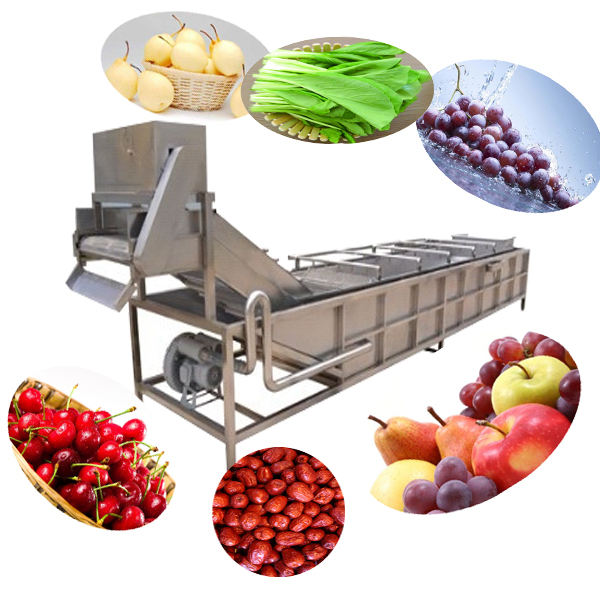
Machines à laver à bulles
Ces machines utilisent des bulles d'air et une circulation d'eau pour un nettoyage en douceur.
Machines à laver les brosses
Les lave-brosses conviennent aux pommes de terre, carottes, et légumes racines.
Laveuses par pulvérisation
Les laveuses à pulvérisation utilisent des systèmes d’eau à haute pression pour le nettoyage des surfaces.
Tri et classement
Les systèmes de tri améliorent la cohérence des produits et réduisent les défauts. Aujourd'hui, de nombreuses usines utilisent une technologie de tri optique automatisée.
Méthodes de tri courantes
- Tri manuel
- Classement du poids
- Classement des tailles
- Tri optique des couleurs
Parce que les systèmes de vision IA sont de plus en plus avancés, la précision du tri s’améliore continuellement.
Peeling
Différents fruits et légumes nécessitent différentes technologies d'épluchage.
Méthodes courantes de pelage
Peeling mécanique
L'épluchage mécanique est couramment utilisé pour les pommes de terre et les carottes..
Peeling à la vapeur
Le pelage à la vapeur offre une efficacité élevée pour les lignes de production industrielle.
Peeling chimique
Certaines applications de transformation des fruits utilisent des méthodes de pelage chimique.
Couper et trancher
La découpe de précision améliore l'uniformité du produit et l'apparence finale. En outre, une coupe uniforme contribue à améliorer les performances de cuisson et de congélation.
Types de coupe
- Découper en dés
- Tranchage
- Cube
- Déchiquetage
- Découpe de bandes
Les machines de découpe modernes offrent des tailles réglables et des capacités de traitement à grande vitesse.
Blanchiment
Le blanchiment utilise de la vapeur ou de l'eau chaude pour améliorer la stabilité du produit avant la congélation ou le séchage..
Ce processus aide:
- Inactiver les enzymes
- Préserver la couleur
- Améliorer la texture
- Réduire les bactéries
Donc, le blanchiment est une étape essentielle dans de nombreuses lignes de production.
Séchage ou friture
En fonction du produit final, les usines peuvent utiliser des séchoirs, friteuses, lyophilisateurs, ou friteuses sous vide. Entre-temps, l’efficacité énergétique est devenue de plus en plus importante dans ces opérations.
Conditionnement
L'emballage protège la qualité des aliments et prolonge la durée de conservation. De plus, un emballage attrayant améliore la compétitivité du marché.
Types d'emballage courants
- Sacs sous vide
- Sacs d'oreiller
- Plateaux en plastique
- Pochettes stand-up
- Canettes métalliques
Technologies d'emballage avancées
Les usines modernes utilisent souvent:
- Scellage sous vide
- Rinçage d'azote
- Emballage sous atmosphère modifiée
Équipement de transformation de fruits et légumes important
Machines à laver
Les systèmes de lavage modernes améliorent l’efficacité du nettoyage tout en minimisant les dommages aux produits.
Caractéristiques principales
- Construction en acier inoxydable
- Systèmes de recyclage de l'eau
- Contrôle de vitesse réglable
- Filtration automatique
Machines de tri
Les systèmes de tri optique utilisent des caméras et des capteurs pour détecter automatiquement les produits défectueux.
Principaux avantages
- Réduction des coûts de main-d'œuvre
- Précision de tri plus élevée
- Meilleure cohérence du produit
Coupeurs industriels
Les machines de découpe à grande vitesse traitent efficacement de gros volumes de production.
Applications typiques
- frites
- Cubes de légumes
- Tranches de fruits
- Ingrédients de la salade
Machines à blanchir
Les blanchisseurs industriels offrent un contrôle stable de la température pour une qualité de traitement constante.
Types courants
- Blanchisseurs continus
- Blanchisseurs à vapeur
- Blanchisseurs à eau chaude
Machines de séchage
Les séchoirs sont essentiels pour la production d'aliments déshydratés.
Types de séchoirs populaires
- Sécheurs à bande
- Séchoirs à plateaux
- Sécheurs sous vide
- Lyophilisateurs
Friteuses industrielles
Les friteuses en continu sont largement utilisées dans les lignes de production de snacks.
Caractéristiques principales
- Contrôle automatique de la température
- Systèmes de filtration d'huile
- Alimentation continue
- Conception économe en énergie
Équipement de congélation
Les congélateurs IQF congèlent rapidement les produits tout en conservant leur qualité et leur apparence.
Principaux avantages
- Meilleure texture
- Apparence améliorée
- Durée de conservation plus longue
Sécurité alimentaire dans la transformation des fruits et légumes
La sécurité alimentaire est extrêmement importante pour chaque usine alimentaire. Donc, les usines de transformation doivent suivre des normes internationales strictes.
Système HACCP
Analyse des risques et points critiques pour leur maîtrise (Haccp) aide les usines à identifier et à contrôler efficacement les risques liés à la sécurité alimentaire.
Zones de contrôle critiques
- Inspection des matières premières
- Qualité de lavage
- Contrôle de la température
- Détection de métaux
- Hygiène des emballages
Normes BPF
Les bonnes pratiques de fabrication garantissent des environnements de production hygiéniques.
Exigences BPF
- Installations propres
- Hygiène des employés
- Lutte antiparasitaire
- Assainissement des équipements
Équipement en acier inoxydable
L'acier inoxydable de qualité alimentaire est largement utilisé car il résiste à la corrosion et prévient la contamination.. En plus, l'équipement en acier inoxydable est facile à nettoyer et à entretenir.
304 l'acier inoxydable est particulièrement courant dans les usines alimentaires.
Automatisation dans les usines alimentaires modernes
L’automatisation transforme l’industrie de transformation des fruits et légumes dans le monde entier.
Avantages de l'automatisation
Coûts de main-d'œuvre réduits
Les lignes de production automatisées réduisent la dépendance au travail manuel.
Efficacité de production supérieure
Les machines peuvent fonctionner en continu avec des performances stables.
Meilleure cohérence des produits
L'automatisation améliore l'uniformité de la taille et le contrôle de la qualité.
Réduction du gaspillage alimentaire
Un traitement précis minimise les pertes de matières premières.
Technologies d'usine intelligente
Les usines modernes adoptent de plus en plus des technologies avancées telles que:
- Systèmes de contrôle des PLC
- Interfaces à écran tactile
- Inspection visuelle IA
- Emballage robotisé
- Systèmes de surveillance IoT
Par conséquent, la gestion de la production devient plus efficace et fiable.
Efficacité énergétique dans les usines de transformation
Les coûts énergétiques restent une préoccupation majeure pour les fabricants de produits alimentaires. Par conséquent, les usines investissent dans des technologies d’économie d’énergie.
Solutions d'économie d'énergie
Systèmes de récupération de chaleur
Ces systèmes récupèrent la chaleur des friteuses ou des séchoirs pour la réutiliser.
Variateurs de fréquence
Les variateurs de fréquence réduisent la consommation électrique des moteurs.
Équipement isolé
L'isolation améliore l'efficacité thermique et réduit les pertes d'énergie.
Systèmes de recyclage de l'eau
Les systèmes de recyclage de l'eau contribuent à réduire la consommation d'eau lors des opérations de lavage.
La production durable devient un avantage concurrentiel majeur dans l’industrie alimentaire mondiale.
Produits de fruits et légumes populaires pour les usines alimentaires
Produits à base de pommes de terre
Les pommes de terre comptent parmi les légumes les plus transformés au monde.
Produits courants à base de pommes de terre
- frites
- Chips
- Flocons de pommes de terre
- Pommes de terre surgelées
Produits à base de tomates
Les tomates sont largement transformées en:
- Pâte de tomate
- Ketchup
- Sauce tomate
- Purée
Produits à base d'oignon et d'ail
Les produits populaires à base d'oignon et d'ail comprennent:
- Oignons frits
- Ail en poudre
- Flocons d'oignon
- Pâte d'ail
Produits à base de mangue
La transformation de la mangue comprend:
- Purée de mangue
- Mangue séchée
- Cubes de mangue surgelés
- Jus de mangue
Produits Apple
Les pommes sont couramment transformées en:
- Jus
- Collations séchées
- Compote de pommes
- Tranches surgelées
Les défis de la transformation des fruits et légumes
Approvisionnement saisonnier en matières premières
Les usines doivent gérer les fluctuations des saisons de récolte et de la disponibilité des matières premières.
Durée de conservation du produit
Maintenir la fraîcheur et la valeur nutritionnelle reste un défi majeur.
Hausse des coûts de main-d'œuvre
Parce que les dépenses de main d’œuvre continuent d’augmenter, l'automatisation devient de plus en plus importante.
Règlement sur la sécurité alimentaire
Les usines doivent se conformer à des normes internationales strictes en matière de sécurité alimentaire.
Consommation d'énergie
Les usines de transformation consomment des quantités importantes d’électricité et d’énergie thermique.
Tendances futures dans la transformation des fruits et légumes
Automatisation accrue
L'IA et la robotique continueront de remplacer les opérations manuelles dans les usines alimentaires.
Demande de collations saines
Les consommateurs préfèrent de plus en plus les snacks naturels à base de fruits et légumes.
Fabrication durable
Les usines investissent dans:
- Énergie renouvelable
- Recyclage de l'eau
- Emballage écologique
Fabrication intelligente
Les usines numériques dotées de systèmes de surveillance en temps réel sont de plus en plus courantes.
Croissance alimentaire à base de plantes
Les ingrédients végétaux transformés sont de plus en plus utilisés dans les produits alimentaires à base de plantes.
Comment choisir l'équipement de transformation des fruits et légumes
Les usines alimentaires doivent évaluer plusieurs facteurs avant d’acheter des machines.
Capacité de production
Les usines doivent sélectionner des équipements qui correspondent aux exigences de production quotidiennes.
Type de produit
Différents produits nécessitent des technologies de traitement spécialisées.
Niveau d'automatisation
Les fabricants doivent équilibrer les économies de main-d’œuvre et les coûts d’investissement.
Qualité des matériaux
Les équipements en acier inoxydable de qualité alimentaire sont essentiels pour l'hygiène et la durabilité.
Service après-vente
Un support technique fiable est essentiel pour la production industrielle.
Consommation d'énergie
Les machines économes en énergie contribuent à réduire les coûts d’exploitation à long terme.
Avantages d'investir dans des lignes de traitement modernes
Les systèmes de traitement modernes aident les usines:
- Augmenter la productivité
- Améliorer la sécurité alimentaire
- Réduire les coûts de main d’œuvre
- Améliorer la qualité des produits
- Élargir les opportunités d’exportation
- Améliorer la rentabilité
Donc, les usines utilisant une automatisation avancée atteignent souvent une plus grande compétitivité sur le marché.
Transformation des fruits et légumes- Machine alimentaire DT
La transformation des fruits et légumes est devenue l’un des secteurs les plus importants de la fabrication alimentaire moderne.. Alors que la demande mondiale de commodités, en bonne santé, et les produits alimentaires à longue durée de conservation continuent d'augmenter, les usines alimentaires doivent adopter des technologies de transformation efficaces et hygiéniques pour rester compétitives.
Du lavage et tri à la congélation, séchage, friture, et emballage, chaque étape de transformation joue un rôle essentiel dans la sécurité alimentaire et la qualité des produits. En outre, des lignes de production automatisées modernes aident les usines à améliorer leur efficacité, réduire les déchets, réduire les coûts de main-d'œuvre, et atteindre des normes de production cohérentes.
Dans les années à venir, automatisation intelligente, fabrication durable, et les technologies économes en énergie continueront de façonner l’industrie de la transformation des fruits et légumes. Par conséquent, les usines alimentaires qui investissent dans des équipements de transformation avancés et des systèmes de production modernes seront mieux positionnées pour une croissance à long terme et un succès sur le marché international..