
Einführung
Die globale Lebensmittelverarbeitungsindustrie wächst weiter, da die Verbraucher eine gesündere Ernährung fordern, sicherer, und praktischere Lebensmittelprodukte. Insbesondere, Die Gemüseverarbeitung hat sich zu einem der am schnellsten wachsenden Sektoren auf dem internationalen Lebensmittelmarkt entwickelt. Infolge, Die Nachfrage nach fortschrittlichen Maschinenlösungen für die Gemüseverarbeitung steigt in Restaurants rasant, Gefrorene Lebensmittelfabriken, landwirtschaftliche Genossenschaften, und industrielle Lebensmittelbetriebe.
Eine moderne Gemüseverarbeitungsmaschine hilft Unternehmen, die Produktionseffizienz zu verbessern, Lebensmittelsicherheit, Produktkonsistenz, Arbeitsersparnis, und Haltbarkeit. Darüber hinaus, Automatisierte Systeme reduzieren die manuelle Handhabung und verbessern gleichzeitig die Gesamtproduktivität. Heute, Gemüseverarbeitungsgeräte werden häufig zum Waschen verwendet, Peeling, Schneiden, Trocknen, blanchieren, Braten, Einfrieren, und Verpackung von Gemüse.
Egal, ob Sie eine kleine Lebensmittelwerkstatt oder eine große industrielle Verarbeitungsfabrik betreiben, Die Auswahl der richtigen Gemüseverarbeitungsmaschine ist für den langfristigen Erfolg von entscheidender Bedeutung. daher, Das Verständnis verschiedener Maschinentypen und Technologien kann Unternehmen dabei helfen, bessere Investitionsentscheidungen zu treffen.
Was ist eine Gemüseverarbeitungsmaschine??
Eine Gemüseverarbeitungsmaschine bezieht sich auf Industrieanlagen, die zum Reinigen bestimmt sind, vorbereiten, schneiden, kochen, bewahren, oder Gemüse automatisch oder halbautomatisch verpacken. Diese Maschinen werden häufig in der kommerziellen Lebensmittelindustrie eingesetzt, da sie die Verarbeitungsgeschwindigkeit verbessern und die Arbeitskosten senken.
In den meisten Fabriken, Gemüseverarbeitungsgeräte verarbeiten Produkte wie:
- Kartoffeln
- Karotten
- Zwiebeln
- Knoblauch
- Tomaten
- Spinat
- Kohl
- Kopfsalat
- Paprika
- Gurken
- Brokkoli
- Pilze
Abhängig von den Produktionsanforderungen, Maschinen können unabhängig oder als Teil einer kompletten Verarbeitungslinie betrieben werden. Außerdem, Moderne Systeme sind darauf ausgelegt, Hygiene- und Lebensmittelsicherheitsstandards einzuhalten und gleichzeitig die Effizienz zu steigern.
Warum Gemüseverarbeitungsmaschinen wichtig sind
Die traditionelle Gemüsezubereitung erfordert viel Arbeit und Zeit. Jedoch, Die industrielle Lebensmittelproduktion erfordert schnellere und konsistentere Verarbeitungslösungen. Aus diesem Grund, Automatisierte Gemüseverarbeitungsmaschinen sind in modernen Fabriken unverzichtbar geworden.
Höhere Produktionseffizienz
Automatische Systeme können große Gemüsemengen kontinuierlich verarbeiten. Zum Beispiel, Industrielle Waschanlagen reinigen jede Stunde Hunderte Kilogramm Gemüse. Zusätzlich, Fördersysteme reduzieren den manuellen Transport innerhalb der Fabrik.
In der Zwischenzeit, Hochgeschwindigkeitsschneidemaschinen erzeugen gleichmäßige Scheiben, Würfel, oder Streifen mit ausgezeichneter Konsistenz. Folglich, Die Produktionsleistung steigt erheblich.
Verbesserte Lebensmittelsicherheit
Weltweit werden die Vorschriften zur Lebensmittelsicherheit immer strenger. daher, Hersteller benötigen hygienische Verarbeitungsgeräte, die das Kontaminationsrisiko minimieren.
Moderne Gemüseverarbeitungsmaschinen tragen zur Reduzierung bei:
- Menschliche Kontamination
- Bakterienwachstum
- Kreuzkontamination
- Produktschaden
Zusätzlich, Die meisten Industriemaschinen bestehen aus lebensmittelechtem Edelstahl, was die Sauberkeit und Korrosionsbeständigkeit verbessert.
Reduzierte Arbeitskosten
Arbeitskräftemangel und steigende Löhne haben Unternehmen dazu ermutigt, in Automatisierung zu investieren. Anstatt sich stark auf Arbeiter zu verlassen, Fabriken können automatische Maschinen einsetzen, um sich wiederholende Aufgaben effizienter zu erledigen.
Infolge, Unternehmen senken die Arbeitskosten und steigern gleichzeitig die Produktivität.
Bessere Produktkonsistenz
Gleichmäßiges Schneiden und Bearbeiten verbessern die Produktqualität erheblich. Zum Beispiel, Gleichmäßig geschnittenes Gemüse gart gleichmäßiger und sieht in der Verpackung attraktiver aus.
Außerdem, Bei gefrorenem Gemüse ist die Konsistenz besonders wichtig, Fertiggerichte, und Restaurant-Lieferketten.
Haupttypen von Gemüseverarbeitungsmaschinen
In der gemüseverarbeitenden Industrie kommen je nach Produktionsanforderung viele unterschiedliche Maschinentypen zum Einsatz.
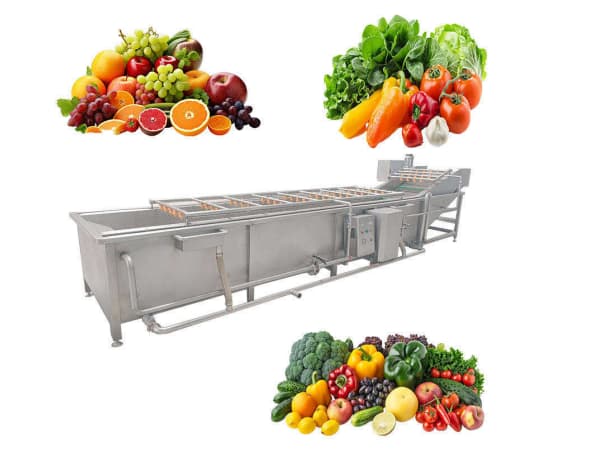
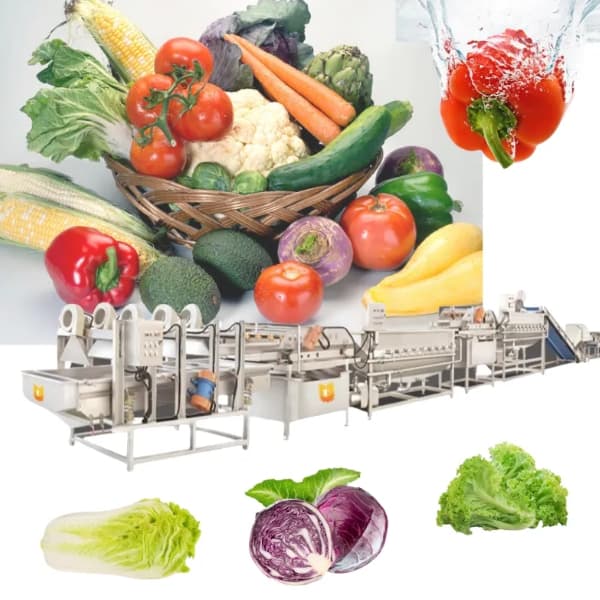
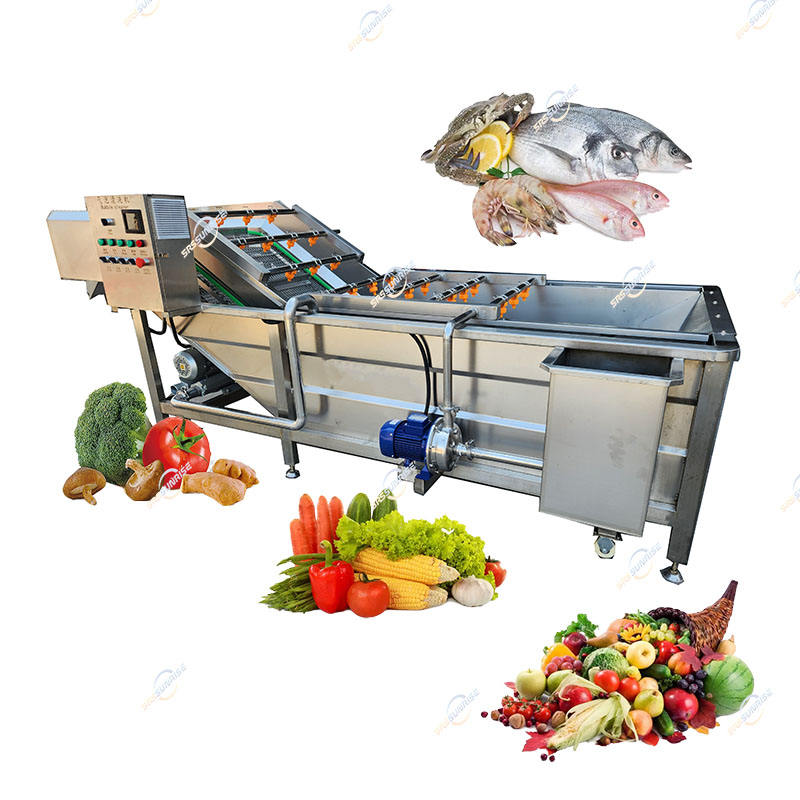
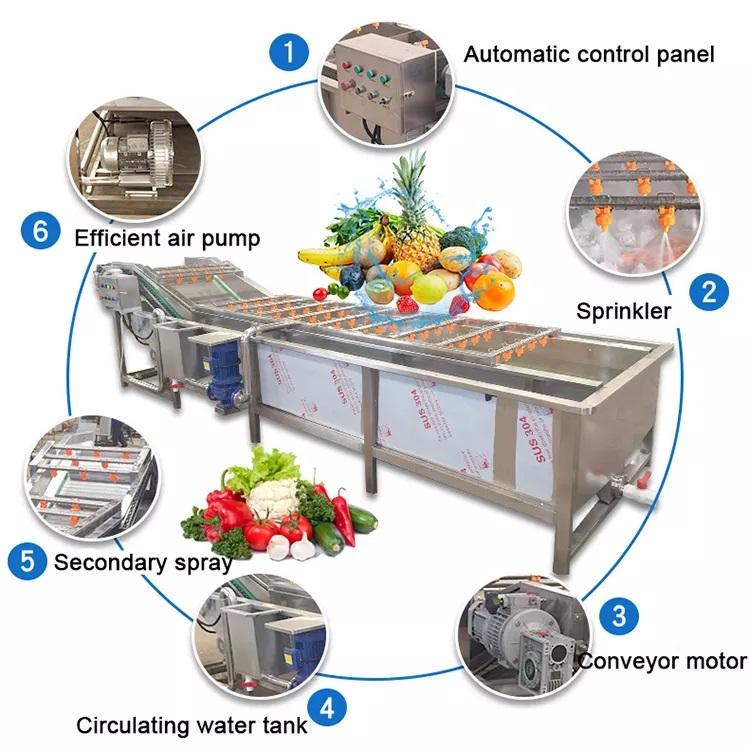
Gemüsewaschmaschine
Eine Gemüsewaschmaschine entfernt Schmutz, Dreck, Sand, Pestizidrückstände, und Oberflächenverunreinigungen durch frische Produkte.
Gängige Waschtechnologien
In der Lebensmittelindustrie werden häufig mehrere Waschtechnologien eingesetzt, einschließlich:
- Blasenwaschen
- Sprühwaschen
- Bürstenwaschen
- Trommelwaschen
Unter diesen Optionen, Blasenwaschanlagen eignen sich besonders für empfindliches Gemüse, da sie Oberflächenschäden reduzieren.
Anwendungen
Gemüsewaschmaschinen werden häufig für verwendet:
- Blattgemüse
- Wurzelgemüse
- Kräuter
- Früchte
Neben der Verbesserung der Sauberkeit, Waschanlagen bereiten Gemüse auch für die Weiterverarbeitung vor.
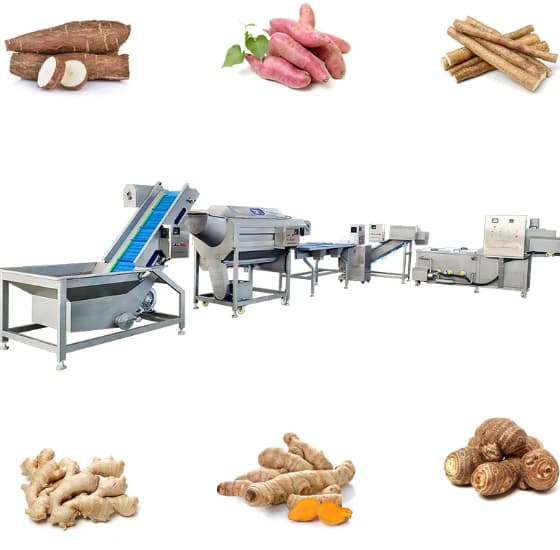
Gemüseschälmaschine
Schälmaschinen entfernen Gemüseschalen schnell und effizient. Im Vergleich zum manuellen Schälen, Industriesysteme sparen Zeit und Arbeit.
Gängige Peeling-Methoden
Je nach Produktart nutzen die Hersteller unterschiedliche Schältechnologien, wie zum Beispiel:
- Abrasives Peeling
- Dampfpeeling
- Messerschälen
- Bürstenpeeling
Beliebtes Gemüse zum Schälen
Schälmaschinen werden häufig verwendet für:
- Kartoffeln
- Karotten
- Ingwer
- Knoblauch
- Süßkartoffeln
Da die Nachfrage nach verarbeiteten Lebensmitteln steigt, Automatische Schälgeräte erfreuen sich weltweit immer größerer Beliebtheit.
Gemüseschneidemaschine
Eine Gemüseschneidemaschine ist eine der wichtigsten Arten von Gemüseverarbeitungsgeräten. Es können Scheiben entstehen, Würfel, Streifen, Fetzen, Würfel, und Julienne-Schnitte mit hoher Präzision.
Allgemeine Anwendungen
Diese Maschinen sind in großem Umfang verwendet in:
- Pommes-Frites-Produktion
- Salatverarbeitung
- Gefrorene Gemüsepflanzen
- Zentrale Küchen
Zusätzlich, Moderne Gemüseschneider ermöglichen dem Bediener eine einfache Anpassung der Schnittgrößen. Folglich, Fabriken können mit derselben Ausrüstung mehrere Produktspezifikationen herstellen.
Gemüseblanchierungsmaschine
Durch Blanchieren bleibt die Pflanzenfarbe erhalten, Textur, und Ernährung vor dem Einfrieren oder Trocknen.
Hauptfunktionen
Der Blanchierungsprozess bietet mehrere wichtige Vorteile:
- Enzyminaktivierung
- Oberflächensterilisation
- Farbkonservierung
Typisches Gemüse zum Blanchieren
Fabriken erbleichen häufig:
- Brokkoli
- Spinat
- Grüne Bohnen
- Erbsen
- Karotten
In den meisten Produktionslinien für Tiefkühlgemüse, Blanchieren ist ein wesentlicher Verarbeitungsschritt.
Gemüseentwässerungsmaschine
Nach dem Waschen oder Blanchieren, Gemüse enthält oft überschüssige Feuchtigkeit. daher, Entwässerungsanlagen sind erforderlich, um die Produktqualität und Haltbarkeit zu verbessern.
Gängige Entwässerungstechnologien
Zu den beliebten Entwässerungsmethoden gehören::
- Zentrifugaltrocknung
- Lufttrocknung
- Vibrationsentwässerung
Durch effektive Entfernung von Oberflächenwasser, Diese Maschinen verbessern die Verpackungsergebnisse und reduzieren das Bakterienwachstum.
Gemüsebratmaschine
Industrielle Frittiermaschinen werden häufig in der Snack-Food-Produktion eingesetzt. Insbesondere, frittierte Gemüseprodukte erfreuen sich auf den internationalen Märkten immer größerer Beliebtheit.
Gängige frittierte Produkte
Zu den typischen frittierten Produkten gehören::
- Kartoffelchips
- Pommes frites
- Röstzwiebeln
- Gemüsechips
Moderne Frittiersysteme verfügen über eine automatische Temperaturregelung, Ölfiltration, und Förderanlagen. Infolge, Hersteller erreichen eine stabile Produktqualität und eine verbesserte Öleffizienz.
Gemüsegefriermaschine
Gefrorenes Gemüse erfreut sich nach wie vor großer Beliebtheit, da es praktisch und lange haltbar ist. daher, Die Gefriertechnik spielt in der modernen Lebensmittelverarbeitung eine entscheidende Rolle.
Gängige Gefriersysteme
Die Industrie verwendet häufig:
- IQF-Gefrierschrank
- Tunnel-Gefrierschrank
- Spiralgefrierschrank
Unter diesen Technologien, Besonders beliebt ist das IQF-Einfrieren, da es das Zusammenkleben von Gemüse verhindert.
Gemüseverpackungsmaschine
Die Verpackung schützt Gemüse bei Lagerung und Transport. Darüber hinaus, Eine gute Verpackung verbessert das Erscheinungsbild und den Marktwert des Produkts.
Gängige Verpackungsarten
Hersteller verwenden oft:
- Vakuumverpackung
- Verpackung im Kissenbeutel
- Trayversiegelung
- Verpackung mit modifizierter Atmosphäre
Da die Nachfrage der Verbraucher nach praktischen Lebensmitteln steigt, Die Verpackungstechnologie entwickelt sich rasant weiter.
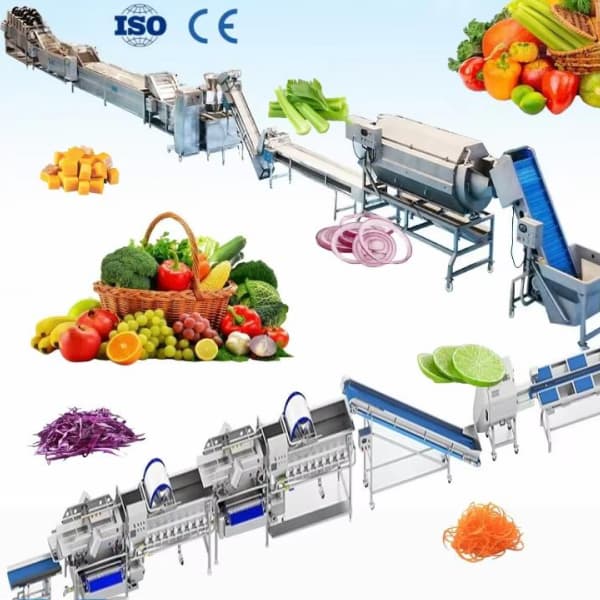
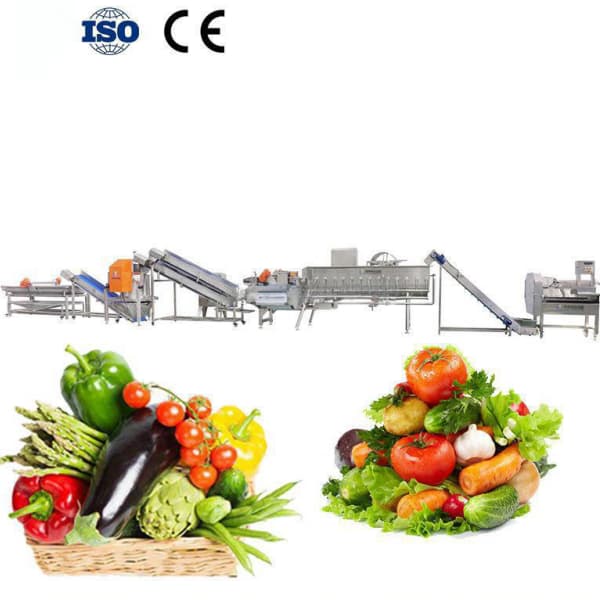
Komplette Gemüseverarbeitungslinie
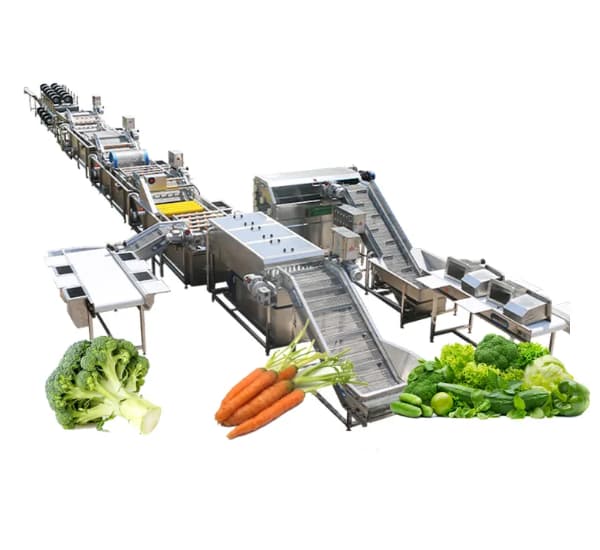
Viele Fabriken bevorzugen komplette Gemüseproduktionslinien anstelle von Einzelmaschinen. Integrierte Systeme verbessern die Automatisierung und reduzieren gleichzeitig den Arbeitsaufwand.
Eine typische Gemüseverarbeitungslinie kann Folgendes umfassen::
- Zuführband
- Gemüsewaschmaschine
- Schälmaschine
- Schneidemaschine
- Blanchiersystem
- Kühlsystem
- Entwässerungsmaschine
- Verpackungsmaschine
Weil jede Stufe kontinuierlich arbeitet, Integrierte Linien verbessern die Gesamteffizienz der Produktion erheblich.
Beliebte Anwendungen in der Gemüseverarbeitung
Tiefkühlgemüseproduktion
Tiefkühlgemüse ist eines der größten Segmente der globalen Lebensmittelindustrie. Folglich, Die Nachfrage nach Geräten zur Verarbeitung von Tiefkühlgemüse wächst weiter.
Zu den gängigen Tiefkühlprodukten gehören::
- Gefrorener Brokkoli
- Gefrorene Karotten
- Gefrorene Erbsen
- Gefrorenes gemischtes Gemüse
Typischerweise, Der Produktionsprozess umfasst das Waschen, Schneiden, blanchieren, IQF-Einfrieren, und Verpackung.
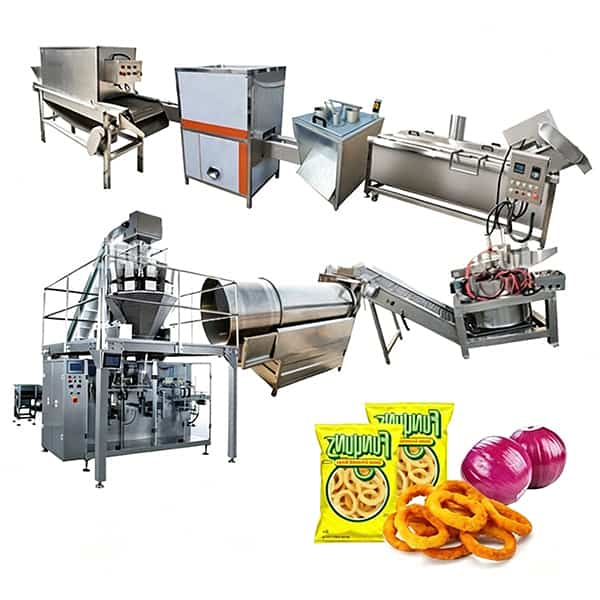
Pommes-Frites-Produktion
Produktionslinien für Pommes Frites erfordern die Zusammenarbeit mehrerer Gemüseverarbeitungsmaschinen.
Typische Ausrüstung umfasst:
- Kartoffelwaschmaschine
- Kartoffelschäler
- Streifenschneider
- Blanches
- Friteuse
- Gefrierschrank
- Verpackungsmaschine
Denn gefrorene Pommes frites werden weltweit konsumiert, Dieser Markt bleibt hochprofitabel.
Salatverarbeitung
Die Produktion frisch geschnittener Salate erfordert hygienische Verarbeitungsanlagen und ein strenges Lebensmittelsicherheitsmanagement.
Wichtige Maschinen sind u.a:
- Blattgemüsewaschmaschine
- Cutter
- Lufttrockner
- Verpackungsmaschine
Zusätzlich, Saubere Verarbeitungsumgebungen sind für die Erhaltung der Frische und die Vermeidung von Kontaminationen unerlässlich.
Verarbeitung von Knoblauch und Zwiebeln
Knoblauch- und Zwiebelverarbeitungsmaschinen werden häufig in Großküchen und Gewürzfabriken eingesetzt.
Zu den beliebten Maschinen gehören:
- Knoblauchschälmaschine
- Zwiebelschälmaschine
- Zwiebelschneidemaschine
- Knoblauchpastenmaschine
Im Vergleich zur manuellen Vorbereitung, Automatische Systeme verbessern sowohl die Effizienz als auch die Konsistenz.
Materialien, die in Gemüseverarbeitungsmaschinen verwendet werden
Die meisten industriellen Gemüseverarbeitungsgeräte verwenden lebensmittelechten Edelstahl.
Warum Edelstahl wichtig ist
Edelstahl bietet mehrere Vorteile:
- Korrosionsbeständigkeit
- Einfache Reinigung
- Lange Lebensdauer
- Hygienische Oberflächen
- Einhaltung der Lebensmittelsicherheit
In den meisten Fällen, Edelstahl SUS304 wird häufig im Lebensmittelmaschinenbau verwendet. Jedoch, Einige Hochleistungsmaschinen verwenden Edelstahl SUS316 für eine verbesserte Korrosionsbeständigkeit.
Automatisierung in der Gemüseverarbeitung
Die Automatisierung verändert die globale Lebensmittelindustrie rasant. daher, Moderne Gemüseverarbeitungsmaschinen verfügen zunehmend über intelligente Steuerungssysteme.
Zu den erweiterten Funktionen gehören häufig::
- SPS-Steuerungssysteme
- Touchscreen-Schnittstellen
- Automatische Sensoren
- Intelligente Temperaturregelung
- Fernüberwachung
Infolge, Automatisierung verbessert die Produktionsstabilität, Produktqualität, und Energieeffizienz zugleich.
Vorteile automatischer Gemüseverarbeitungsmaschinen
Automatische Systeme bieten Lebensmittelherstellern zahlreiche Vorteile.
Reduzierte menschliche Arbeit
Die Automatisierung minimiert den manuellen Betrieb und verringert die Arbeitsabhängigkeit.
Schnellere Verarbeitungsgeschwindigkeit
Industriemaschinen verarbeiten täglich große Mengen Gemüse.
Verbesserte Hygiene
Geschlossene Systeme reduzieren das Kontaminationsrisiko erheblich.
Energieeffizienz
Moderne Geräte verbrauchen weniger Strom und Wasser als ältere Systeme.
Bessere Produktausbeute
Präzises Schneiden reduziert die Verschwendung von Rohstoffen und verbessert die Rentabilität.
Gemüseverarbeitungsmaschinen für kleine Unternehmen
Auch kleine Unternehmen können von kompakten Gemüseverarbeitungsgeräten profitieren. Tatsächlich, Viele Startups beginnen mit kleinen automatischen Systemen.
Zu den beliebten Kompaktmaschinen gehören:
- Tischschneider
- Mini-Waschmaschinen
- Kleine Schäler
- Kompakte Verpackungssysteme
Diese Maschinen sind geeignet für:
- Restaurants
- Gastronomiebetriebe
- Food-Startups
- Kleine Bauernhöfe
Außerdem, Kompakte Maschinen benötigen weniger Bauraum und geringere Investitionskosten.
Industrielle Gemüseverarbeitungsausrüstung
Große Lebensmittelfabriken benötigen leistungsstarke Industriesysteme mit kontinuierlicher Produktionsfähigkeit.
Typische Merkmale sind Industrieanlagen:
- Hohe Produktionskapazität
- Vollautomatischer Betrieb
- Kontinuierliche Verarbeitung
- Integrierte Steuerungssysteme
Die Produktionskapazitäten können zwischen variieren:
- 100 kg/h
- 500 kg/h
- 1000 kg/h
- 5000 kg/h
Folglich, Hersteller können die Ausrüstung basierend auf der Fabrikgröße und den Produktionszielen auswählen.
So wählen Sie die richtige Gemüseverarbeitungsmaschine aus
Die Auswahl der richtigen Maschine hängt von mehreren wichtigen Faktoren ab.
Produktionskapazität
Erste, Unternehmen sollten den täglichen Produktionsbedarf ermitteln.
Gemüsesorte
Unterschiedliches Gemüse erfordert unterschiedliche Verarbeitungstechnologien.
Automatisierungsstufe
Hersteller können zwischen wählen:
- Handbuch
- Halbautomatisch
- Vollautomatische Systeme
Fabrikraum
Die Maschinenabmessungen sollten dem verfügbaren Installationsraum entsprechen.
Budgetüberlegungen
Unternehmen sollten evaluieren:
- Ausrüstungspreis
- Instandhaltungskosten
- Energieverbrauch
- Arbeitsersparnis
Lebensmittelsicherheitsstandards
Endlich, Die Ausrüstung sollte internationalen Standards entsprechen, z:
- FDA
- Ce
- ISO
- Haccp
Wartung von Gemüseverarbeitungsmaschinen
Eine ordnungsgemäße Wartung verlängert die Lebensdauer der Maschine und verbessert die Betriebssicherheit.
Tägliche Reinigung
Nach der Produktion sollten Betreiber Gemüsereste entfernen.
Schmierung
Bewegliche Teile müssen regelmäßig geschmiert werden, um den Verschleiß zu reduzieren.
Klingeninspektion
Scharfe Klingen verbessern die Schnittqualität und Effizienz.
Elektrische Inspektion
Motoren und Steuerungssysteme sollten regelmäßig überprüft werden.
daher, Vorbeugende Wartung ist für die langfristige Maschinenleistung unerlässlich.
Trends in der gemüseverarbeitenden Industrie
Die gemüseverarbeitende Industrie entwickelt sich aufgrund veränderter Verbraucherpräferenzen und technologischer Innovationen weiterhin rasant weiter.
Intelligente Lebensmittelverarbeitung
KI- und IoT-Technologien werden immer häufiger eingesetzt.
Energiesparende Ausrüstung
Hersteller konzentrieren sich auf die Reduzierung des Energieverbrauchs.
Nachhaltige Verarbeitung
Wasserrecyclingsysteme erfreuen sich weltweit zunehmender Beliebtheit.
Hygienisches Maschinendesign
Die Anforderungen an die Lebensmittelsicherheit steigen von Jahr zu Jahr.
Maßgeschneiderte Produktionslinien
Fabriken verlangen zunehmend maßgeschneiderte Verarbeitungslösungen für bestimmte Produkte.
Gemüseverarbeitungsmaschinen für Exportmärkte
Die weltweite Nachfrage nach verarbeitetem Gemüse steigt weiterhin stetig. Da der internationale Lebensmittelhandel expandiert, Hersteller investieren stark in moderne Verarbeitungsanlagen.
Zu den wichtigsten Exportmärkten gehören:
- Vereinigte Staaten
- Europa
- Naher Osten
- Südostasien
- Lateinamerika
daher, Hochwertige Gemüseverarbeitungsmaschinen sind für exportorientierte Lebensmittelunternehmen unverzichtbar geworden.
Häufige Probleme bei der Gemüseverarbeitung
Trotz fortgeschrittener Automatisierung, Es können dennoch einige Betriebsprobleme auftreten.
Ungleichmäßiger Schnitt
In vielen Fällen, Stumpfe Klingen führen zu ungleichmäßigen Schnittergebnissen.
Produktschaden
Durch falsche Maschineneinstellungen kann das Gemüse während der Verarbeitung beschädigt werden.
Überschüssiges Wasser
Eine schlechte Entwässerung beeinträchtigt die Verpackungsqualität und die Haltbarkeit.
Hygieneprobleme
Eine unsachgemäße Reinigung kann das Kontaminationsrisiko erhöhen.
Glücklicherweise, Regelmäßige Wartung und Bedienerschulung tragen dazu bei, diese Probleme deutlich zu reduzieren.
Zukunft der Gemüseverarbeitungsmaschinen
Die Zukunft der Gemüseverarbeitungsgeräte wird sich auf intelligentere Geräte konzentrieren, Reiniger, und nachhaltigere Produktionstechnologien.
Zu den zukünftigen Trends gehören:
- Künstliche Intelligenz
- Robotik
- Intelligente Überwachungssysteme
- Energieeffiziente Verarbeitung
- Umweltfreundliche Herstellung
Da die Nachfrage nach gesunden und praktischen Lebensmitteln weiter steigt, Die Automatisierung der Gemüseverarbeitung wird weltweit noch weiter expandieren.
Führende Hersteller von Gemüseverarbeitungsmaschinen
Viele Unternehmen liefern weltweit Geräte zur Gemüseverarbeitung.
Zu den namhaften Herstellern zählen u.a:
- GEA-Gruppe
- Bühler-Gruppe
- Wärme und Kontrolle
- JBT Corporation
- Henan Dongtai Food Machine Co., GmbH.
Chinesische Hersteller erfreuen sich aufgrund ihres Angebots immer größerer Beliebtheit:
- Wettbewerbspreise
- Schnelle Lieferung
- Maßgeschneiderte Lösungen
- Große Auswahl an Geräten
Abschluss
Eine moderne Gemüseverarbeitungsmaschine spielt in der heutigen Lebensmittelindustrie eine entscheidende Rolle. Vom Waschen und Schälen bis zum Schneiden, Braten, Einfrieren, und Verpackung, Diese Maschinen helfen Unternehmen, ihre Effizienz zu steigern, Lebensmittelsicherheit, und Produktqualität.
Darüber hinaus, Automatisierung senkt die Arbeitskosten und erhöht gleichzeitig die Produktionskonsistenz. Egal, ob Sie ein kleines Restaurant oder eine große Industriefabrik betreiben, Die Wahl der richtigen Gemüseverarbeitungsausrüstung kann die Rentabilität und Betriebsleistung erheblich verbessern.
Da intelligente Fertigungstechnologien immer weiter voranschreiten, Gemüseverarbeitungsmaschinen werden noch intelligenter, hygienisch, energieeffizient, und umweltfreundlich in die Zukunft. Folglich, Unternehmen, die heute in hochwertige Verarbeitungsanlagen investieren, werden besser positioniert sein, um auf dem wachsenden globalen Lebensmittelverarbeitungsmarkt zu konkurrieren.