
1. Einführung
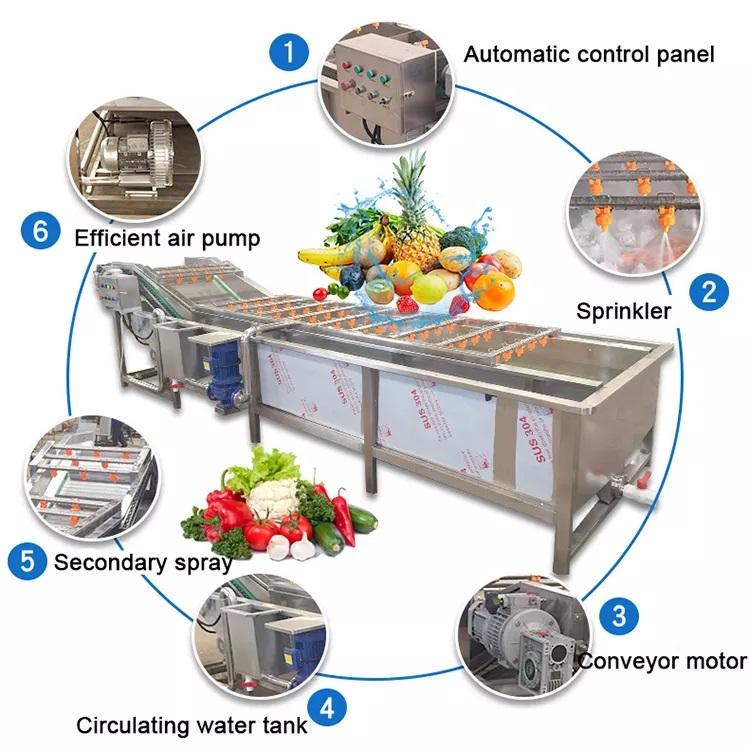
Der bubble washing machine vegetable and fruit is an advanced piece of equipment designed for cleaning fresh produce using a combination of water immersion Und air bubble agitation. This cleaning method is sanft, effizient, and environmentally friendly, making it suitable for both delicate and firm produce.
As global consumers increasingly demand verzehrfertig, pre-washed, and organic-certified produce, processors are upgrading from traditional manual washing to fully automated bubble washing systems.
1.1 Why Bubble Washing Matters in Modern Food Processing
- Einhaltung der Lebensmittelsicherheit
Regulatory agencies such as the FDA, EU Commission, and CFIA require food producers to minimize microbial contamination, Pestizidrückstände, and physical debris. - Product Quality Preservation
Bubble washing prevents bruising, discoloration, and nutrient loss, especially important for export markets. - Betriebseffizienz
Handles high volumes — from 500 kg/h for small plants Zu 10,000+ kg/h for large industrial facilities.
2. How a Bubble Washing Machine Works
A bubble washing machine vegetable and fruit uses air bubbles generated by a blower to gently agitate produce in water, loosening dirt and contaminants.
2.1 The Process Flow
- Loading
Produce enters via a conveyor or manual hopper. - Water Tank Immersion
Fruits and vegetables are fully submerged. - Bubble Injection
Compressed air enters through perforated pipes, creating turbulence. - Dirt Separation
Heavy particles settle, light debris floats away. - Final Rinse
Clean water sprays remove any residual contaminants. - Entladung
A conveyor transfers produce to the next processing stage.
2.2 Key Science Behind Bubble Cleaning
- Hydrodynamic Effect: Bubbles create micro-currents that penetrate leaf folds.
- Surface Tension Reduction: Air bubbles reduce adhesion between dirt and produce skin.
- Oxygen Enrichment: Helps maintain freshness during cleaning.
3. Machine Design & Komponenten
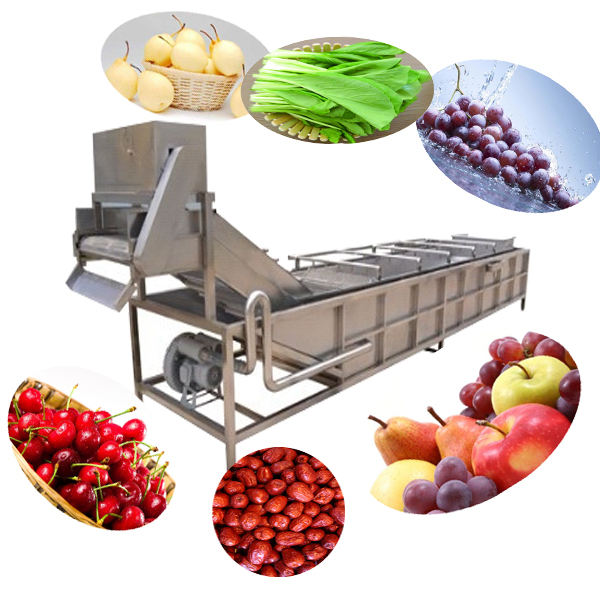
Der bubble washing machine vegetable and fruit is engineered for Haltbarkeit, Hygiene, and easy cleaning.
| Komponente | Funktion |
|---|---|
| Water Tank | Holds the washing solution. |
| Luftgebläse | Generates air for bubble production. |
| Mesh Conveyor | Moves produce through the cleaning zone. |
| Sediment Trap | Collects heavy debris. |
| Overflow Outlet | Removes floating impurities. |
| Rinse Section | Provides final clean water spray. |
| Bedienfeld | Manages speed, air flow, and water circulation. |
Material: Edelstahl SUS304 (Standard), SUS316 for highly acidic produce.
4. Tabelle technischer Parameter
| Modell | Kapazität (kg/h) | Leistung (kW) | Water Volume (L) | Abmessungen (mm) | Gewicht (kg) | Material |
|---|---|---|---|---|---|---|
| DT-500 | 500 | 2.2 | 400 | 3000×1000×1300 | 280 | SUS304 |
| DT-1000 | 1000 | 3.7 | 600 | 4000×1200×1300 | 380 | SUS304 |
| DT-2000 | 2000 | 5.5 | 900 | 5000×1400×1350 | 520 | SUS304 |
| DT-3000 | 3000 | 7.5 | 1200 | 6000×1500×1400 | 650 | SUS304 |
| DT-5000 | 5000 | 11 | 1500 | 8000×1600×1450 | 950 | SUS304 |
5. Product Applications
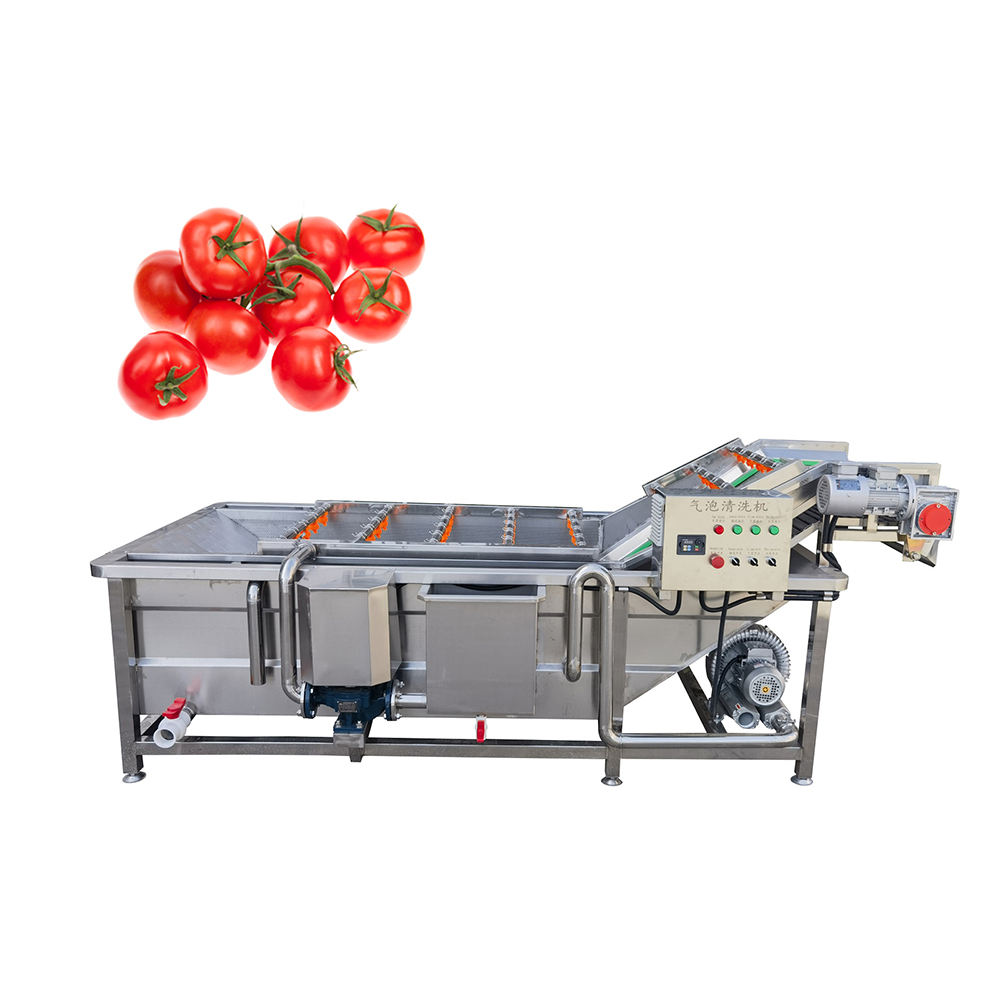
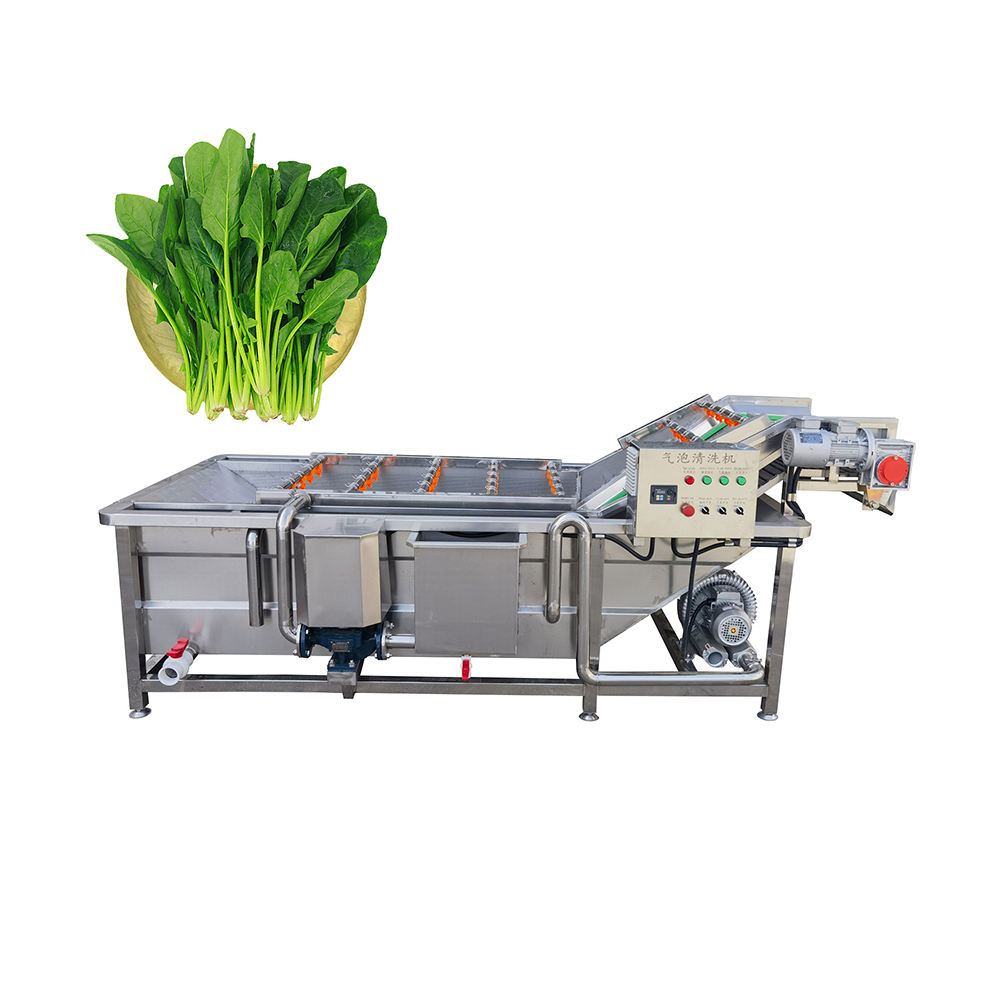
- Leafy Greens: Kopfsalat, Spinat, kale, Kohl.
- Root Vegetables: Karotten, Kartoffeln, radishes, beets.
- Fruits: Erdbeeren, grapes, Äpfel, citrus.
- Kräuter: Mint, Basilikum, coriander.
- Medicinal Plants: Ginseng, chrysanthemum.
6. Benefits Over Other Washing Methods
| Besonderheit | Blasenwaschmaschine | Spray Washing | Manuelles Waschen |
|---|---|---|---|
| Damage to Produce | Sehr niedrig | Medium | Variable |
| Cleaning Thoroughness | Hoch | Medium | Niedrig |
| Arbeitsbedarf | Niedrig | Medium | Hoch |
| Water Use Efficiency | Hoch | Medium | Niedrig |
7. Installationsanleitung
- Select Location – Level floor, near water & drainage.
- Install Utilities – Connect 3-phase power, water inlets, and drainage.
- Assembly – Attach blower, Förderer, and rinse sections.
- Testing – Run with water only to check for leaks.
8. Operation Tips
- Pre-rinse heavily soiled produce before loading.
- Adjust bubble intensity for delicate items.
- Keep water temperature low to maintain freshness.
9. Maintenance Schedule
| Frequenz | Action |
|---|---|
| Täglich | Drain & clean tank, rinse filters. |
| Wöchentlich | Inspect blower and pump. |
| Monatlich | Remove scaling, sanitize tank. |
| Yearly | Dichtungen ersetzen, bearings. |
10. Wasser & Energy Saving Features
- Recirculation system reuses up to 80% of water.
- Automatic debris removal extends water life.
- Variable blower speed reduces power use.
11. Fallstudien
Fall 1 – Leafy Green Processor in California
- Kapazität: 3000 kg/h
- Ergebnis: Reduced labor by 70%, water use by 40%.
- ROI: Achieved in 14 Monate.
Fall 2 – Berry Exporter in Chile
- Kapazität: 2000 kg/h
- Ergebnis: Reduced bruising damage from 6% to under 1%.
12. Markttrends
- Steigende Nachfrage nach organic-certified washed produce.
- Increasing adoption in Asiatisch-pazifik due to export markets.
- Integration mit optical sorting machines.
13. So wählen Sie die richtige Maschine
- Capacity Requirements
- Produkttyp
- Platzverfügbarkeit
- Budget and ROI Goals
- Kundendienst
14. Price Ranges
- Klein (500–1000 kg/h): $2,500–5.000 $
- Medium (2000–3000 kg/h): $6,000–10.000 $
- Groß (5000+ kg/h): $12,000– 20.000 $+
15. Extended FAQs
Q: Can it be used for seafood?
A: Ja, with proper corrosion protection.
Q: Can it connect to peeling machines?
A: Ja, commonly integrated in full processing lines.
Q: Is ozone disinfection available?
A: Ja, as an optional add-on.
16. Troubleshooting Guide
| Problem | Mögliche Ursache | Lösung |
|---|---|---|
| Weak bubbles | Low blower pressure | Check blower filter |
| Poor cleaning | Overloaded tank | Reduce feed rate |
| Water overflow | Blocked drain | Clean outlet |
17. Abschluss
A bubble washing machine vegetable and fruit is not just a cleaning device — it’s a Produktivität, Qualität, and safety investment. With the right model, you can increase throughput, Hygiene verbessern, and reduce operational costs.