Einführung in die automatische Keksproduktionslinie
Ein Automatische Keksproduktionslinie ist ein vollständig integriertes System, das für die kontinuierliche Herstellung von Keksen in großem Maßstab konzipiert ist. Es rationalisiert den gesamten Keksherstellungsprozess – vom Teigmischen und Ausrollen bis zum Formen, Backen, Kühlung, und Verpackung. Da globale Lebensmittelhersteller auf Effizienz setzen, Hygiene, und konsistente Produktqualität, die Nachfrage nach Vollautomatische Keksherstellungslinien Und Ausrüstung für die industrielle Herstellung von Keksen steigt weiter.
Im Vergleich zu herkömmlichen halbautomatischen oder manuellen Methoden, ein moderner kommerzielle Keksproduktionslinie sorgt für eine höhere Produktivität, stabile Qualitätskontrolle, reduzierte Arbeitskosten, und verbesserte Lebensmittelsicherheitsstandards. Ob bei der Herstellung von Hartkeksen, weiche Kekse, Kekse, Butterkekse, Marie-Kekse oder Sahnecracker, Eine automatisierte Linie kann sich an verschiedene Rezepte anpassen, Formen, und Produktionsanforderungen.
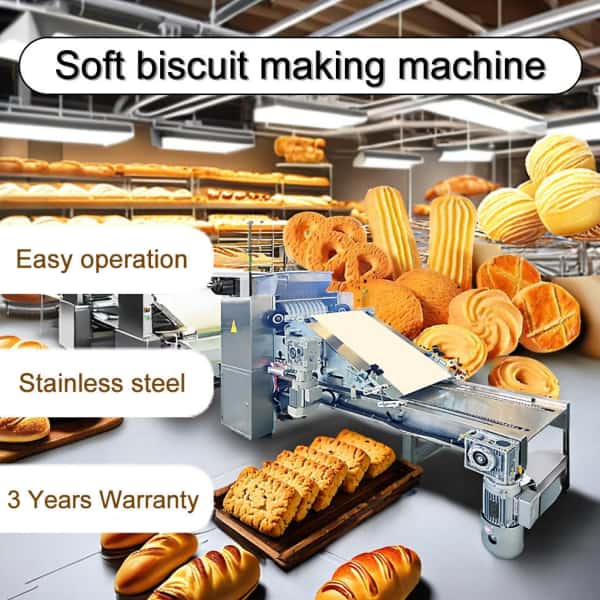
So funktioniert eine automatische Keksproduktionslinie
Ein typisches Automatische Keksproduktionslinie Integriert mehrere Maschinen in einen kontinuierlichen Betrieb, synchronisiertes System. Nachfolgend finden Sie den vollständigen Arbeitsablauf:
1. Teigzubereitungssystem
Dazu gehört die Teigmischer, vertikaler oder horizontaler Teigkneter, Und Gärtank (optional).
- Sorgt für eine gleichmäßige Hydratation der Inhaltsstoffe
- Unterstützt verschiedene Keksformeln
- Bietet eine kontinuierliche Zufuhr, um eine unterbrechungsfreie Produktion aufrechtzuerhalten
Long-Tail-Keywords: Industrielle Teigmischgeräte für Kekse, kommerzieller Teigkneter für Keksfabrik
2. Teigfütterung & Abschnitt für Blechbearbeitung
Der vorbereitete Teig wird zum transportiert Teigausrollmaschine Dabei pressen Walzen den Teig zu einer gleichmäßigen Platte.
- Das Design mit mehreren Rollen sorgt für eine glatte Oberfläche
- Einstellbare Dicke für verschiedene Keksarten
Long-Tail-Keywords: Automatische Teigausrollmaschine für Keksfabrik, Teigblatt-Rollsystem
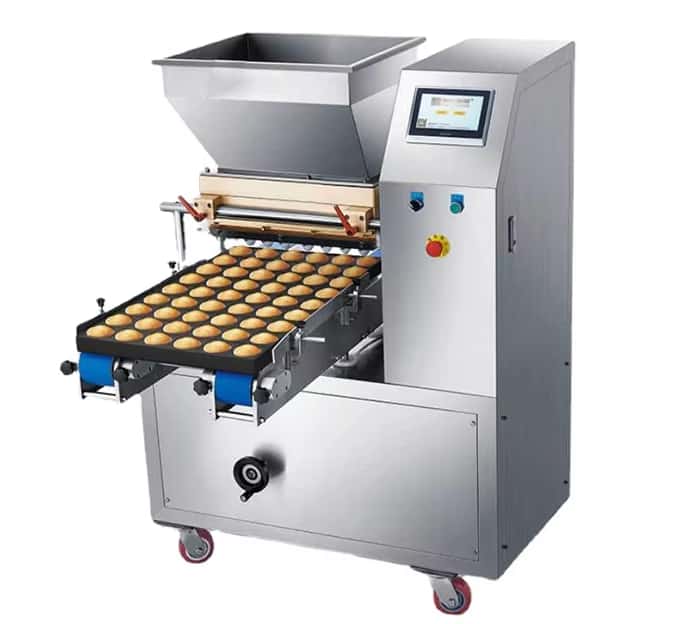
3. Keksformmaschine (Formeinheit)
Das Teigblatt gelangt in die Rotationsformer oder Schneidemaschine, je nach Kekssorte:
- Rotationsformer → Weich, klebrig, oder Getreidekekse
- Rollschneider → Harte Kekse mit präzisen Formen
Zu den verfügbaren Formen gehören runde Formen, Quadrat, Tierformen, Blumenmuster, und kundenspezifische Formen.
Long-Tail-Keywords: automatische Keksformmaschine, rotierender Keksschneider, Keksformmaschine
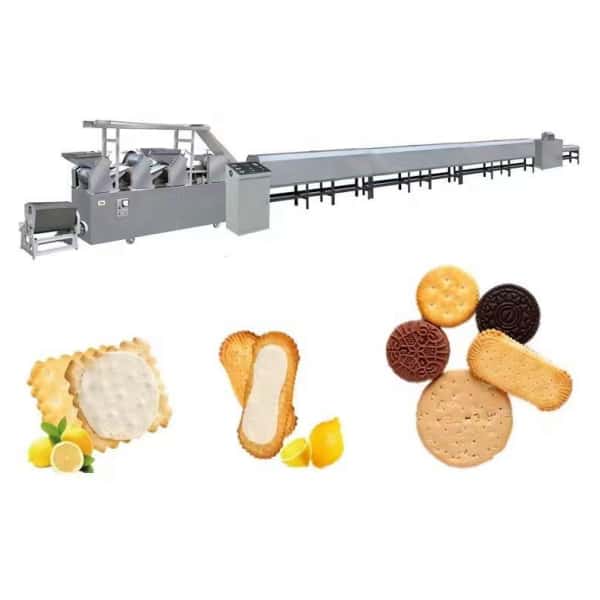
4. Backlinie (Tunnelofen)
Die geformten Teigstücke wandern in einen Gas, Diesel, Elektro- oder Hybrid-Tunnelofen.
- Die lange Tunnelstruktur sorgt für kontinuierliches Backen
- Einstellbare Temperaturzonen
- Hocheffiziente Wärmezirkulation
Dies gilt als die Herzstück einer automatischen Keksbacklinie weil es die Textur bestimmt, Knusprigkeit, und Farbe.
Long-Tail-Keywords: Industrieller Tunnelofen für Kekse, kontinuierliches Backsystem
5. Ölspritzen & Kühlförderer
Nach dem Backen:
- Für Glanz und Geschmack kann ein feiner Sprühnebel Speiseöl aufgetragen werden
- Kühlbänder aus Edelstahl ermöglichen eine natürliche Abkühlung der Kekse
- Gewährleistet Feuchtigkeitsstabilität vor dem Verpacken
Long-Tail-Keywords: Keksöl-Sprühsystem, automatische Kekskühllinie
6. Verpackungsmaschine
Der letzte Abschnitt integriert automatische Keksverpackungsmaschinen, einschließlich:
- Kissenverpackungsmaschine
- Hochmodernes Keksverpackungssystem
- Bündelmaschine für Familienpakete
Automatisiertes Verpacken verhindert Kontaminationen und verbessert die Logistikeffizienz.
Long-Tail-Keywords: automatische Keksverpackungsmaschine, Keksverpackungsausrüstung
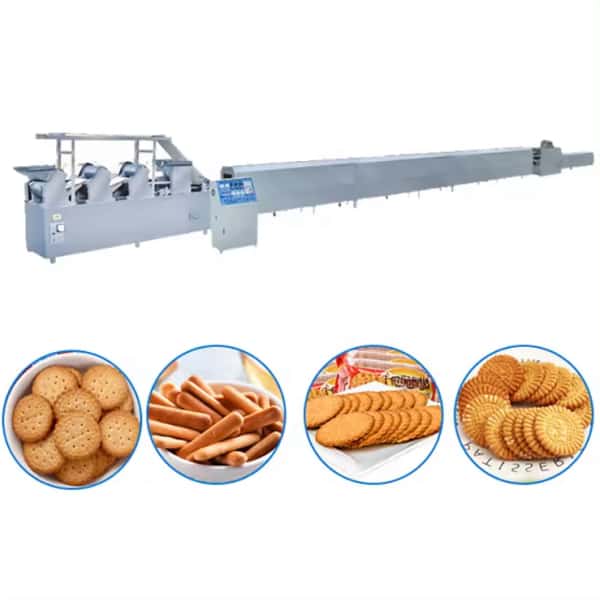
Vorteile der automatischen Keksproduktionslinie
Auswählen a Vollautomatische Keksproduktionslinie bietet große Vorteile für gewerbliche Hersteller:
1. Hohe Produktionskapazität
Die Linie kann Hunderte Kilogramm Kekse pro Stunde produzieren und über lange Schichten kontinuierlich laufen.
2. Konsistente Qualität
Die automatische Steuerung sorgt für eine gleichmäßige Backtemperatur, Feuchtigkeitsgehalt, Farbe, und Größe.
3. Niedrigere Arbeitskosten
Das gesamte System erfordert nur wenige Bediener zur Überwachung und Wartung.
4. Vielseitigkeit
Unterstützt verschiedene Kekskategorien:
- Harte Kekse
- Weiche Kekse
- Kekse
- Cracker
- Sahnekekse
5. Hygienisch und leicht zu reinigen
Lebensmittelechter Edelstahl gewährleistet die Einhaltung internationaler Hygienestandards.
6. Anpassbares Layout
Hersteller können die Leitungslänge konfigurieren, Tunnelofengröße, Verpackungsmodell, und Formform.
Arten automatischer Keksproduktionslinien
Unterschiedliche Fabriken erfordern unterschiedliche Konfigurationen. Zu den gängigen Typen gehören::
1. Kleine automatische Keksproduktionslinie
Geeignet für Startups, kleine Bäckereien, und lokale Fabriken
- Geringere Kapazität: 50–200 kg/Stunde
- Kompaktes Design, einfache Installation
2. Mittelgroße Keksproduktionsanlage
Beliebt bei wachsenden Herstellern
- Kapazität: 200–500 kg/Stunde
- Flexible Keksformen und -formeln
3. Groß angelegte industrielle Keksproduktionslinie
Wird von nationalen Marken und multinationalen Lebensmittelfabriken verwendet
- Kapazität: 500–1000+ kg/Stunde
- Hochautomatisierte und energieeffiziente Tunnelöfen
Long-Tail-Keywords: kommerzielle Keksproduktionsanlage, Industrielle Keksproduktionslinie, Großformatige Keksmaschinen
Hauptmerkmale und Technologien
Modern Automatische Keksverarbeitungssysteme umfassen fortschrittliche Technologien wie z:
1. SPS-Bedienfeld
- Touchscreen-Monitor
- Intelligente Diagnose
- Temperatur- und Fördergeschwindigkeitsanpassung in Echtzeit
2. Energiesparender Tunnelofen
- Optimierte Heizung
- Bessere Isolierung
- Geringerer Kraftstoffverbrauch
3. Servomotorsteuerung
Sorgt für präzises Formen, Folie, und schneiden.
4. Modularer Aufbau
Leicht zu transportieren, Installation, und zukünftige Erweiterung.
Long-Tail-Keywords: fortschrittliche Keksherstellungstechnologie, SPS-Steuerungssystem für Kekslinien
Anwendungen der automatischen Keksproduktionslinie
Die Linie ist weit verbreitet in:
- Lebensmittelfabriken
- Bäckereigruppen
- Snack-Produktionsanlagen
- Industrielle Keksfabriken
- Keksexportunternehmen
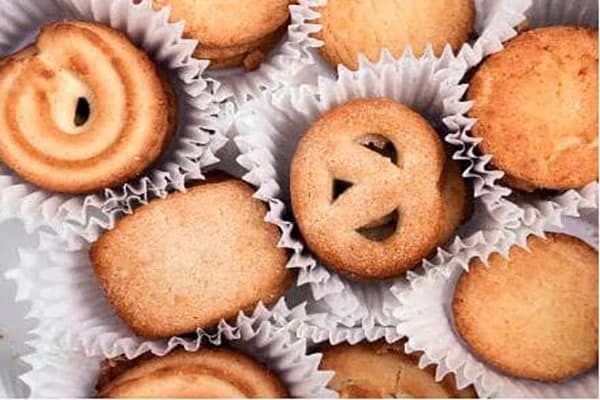
Es können Hunderte von Keksvariationen hergestellt werden, einschließlich:
- Butterkekse
- Marie-Kekse
- Süße Kekse
- Verdauungskekse
- Soda-Cracker
- Kekse mit Schokoladenüberzug
Technische Parameter (Beispiel)
Nachfolgend finden Sie eine beispielhafte technische Spezifikation für einen typischen Typ Automatische Keksproduktionslinie:
| Modell | Kapazität (kg/h) | Länge des Tunnelofens (M) | Leistung (kW) | Gasverbrauch (kg/h) | Produktionsfläche erforderlich |
|---|---|---|---|---|---|
| DTB-200 | 200 | 28 | 150 | 12–18 | 40I Q × 5m |
| DTB-300 | 300 | 32 | 180 | 15–21 | 50I Q × 5m |
| DTB-500 | 500 | 40 | 240 | 20–30 | 70m × 8 m |
| DTB-800 | 800 | 50 | 300 | 30–45 | 90m × 10m |
Die Werte variieren je nach Rezept, Energietyp, und Anpassungsanforderungen.
So wählen Sie die richtige automatische Keksproduktionslinie aus
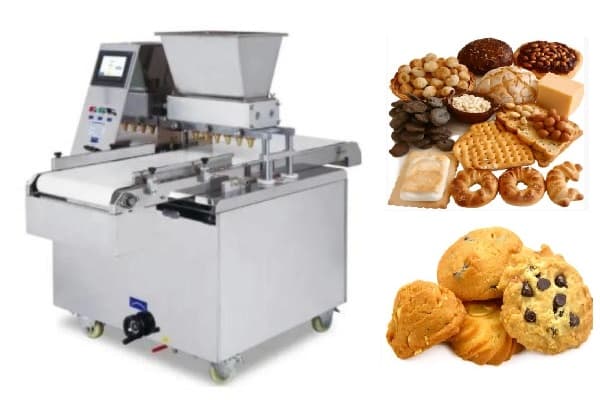
Bei der Auswahl Keksherstellungsmaschinen, halten:
1. Erforderliche Kapazität
Passen Sie die Kapazität an Ihr erwartetes Verkaufsvolumen an.
2. Kekssorte
Die Wahl des richtigen Rotationsformers oder -schneiders wirkt sich auf die Art des Kekses aus.
3. Energiequelle
Zu den Optionen gehören elektrische Antriebe, Gas, Diesel, oder Hybrid-Tunnelöfen.
4. Fabrikgröße
Stellen Sie sicher, dass ausreichend Platz für die Installation und zukünftige Erweiterungen vorhanden ist.
5. Automatisierungsstufe
Von halbautomatisch bis vollautomatisch mit Verpackungsintegration.
6. Zuverlässiger Hersteller
Wählen Sie einen Anbieter mit Erfahrung, technische Unterstützung, und After-Sales-Service.
Warum automatische Keksproduktionslinien immer beliebter werden
Der weltweite Keksmarkt wächst aufgrund von weiterhin:
- Steigende Nachfrage nach Snacks
- Schnelllebige Lebensstile
- Supermarkt- und Exportausbau
- Technologische Fortschritte
Infolge, Weitere Fabriken rüsten auf auf Automatische Ausrüstung zur Herstellung von Keksen konkurrenzfähig zu bleiben.
DT Food Machine – Professioneller Hersteller einer automatischen Keksproduktionslinie
DT-Lebensmittelmaschine ist ein führender Hersteller und globaler Lieferant, spezialisiert auf Automatische Keksproduktionslinien, Industrielle Keksmaschinen, Und kommerzielle Keksproduktionssysteme. Wir bieten komplette schlüsselfertige Lösungen einschließlich Teigknetmaschinen, Querschneider, Former, Tunnelöfen, Kühlförderer, und Verpackungsmaschinen. Mit jahrelanger Ingenieurserfahrung, hochwertige Edelstahlkonstruktion, und internationale Serviceunterstützung, DT Food Machine hilft Kunden, effizient zu bauen, hygienisch, und profitable Keksproduktionsanlagen. Ob für kleine Startups oder große Industriefabriken, Wir liefern maßgeschneiderte Lösungen mit zuverlässiger Leistung und wettbewerbsfähigen Preisen.